This article is part of the Hidden Architecture series “A Hard Rain’s A-Gonna Fall”, where we will try to publish and bring back to current days forgotten texts and manifestos written by architects which are essential to understand the discipline of Architecture within our social context.
Este artículo forma parte de la serie desarrollada por Hidden Architecture llamada “A Hard Rain’s A-Gonna Fall”, donde intentaremos publicar y poner de actualidad nuevamente textos y manifiestos olvidados, escritos por arquitectos y fundamentales para entender la arquitectura dentro de nuestro contexto social.
***
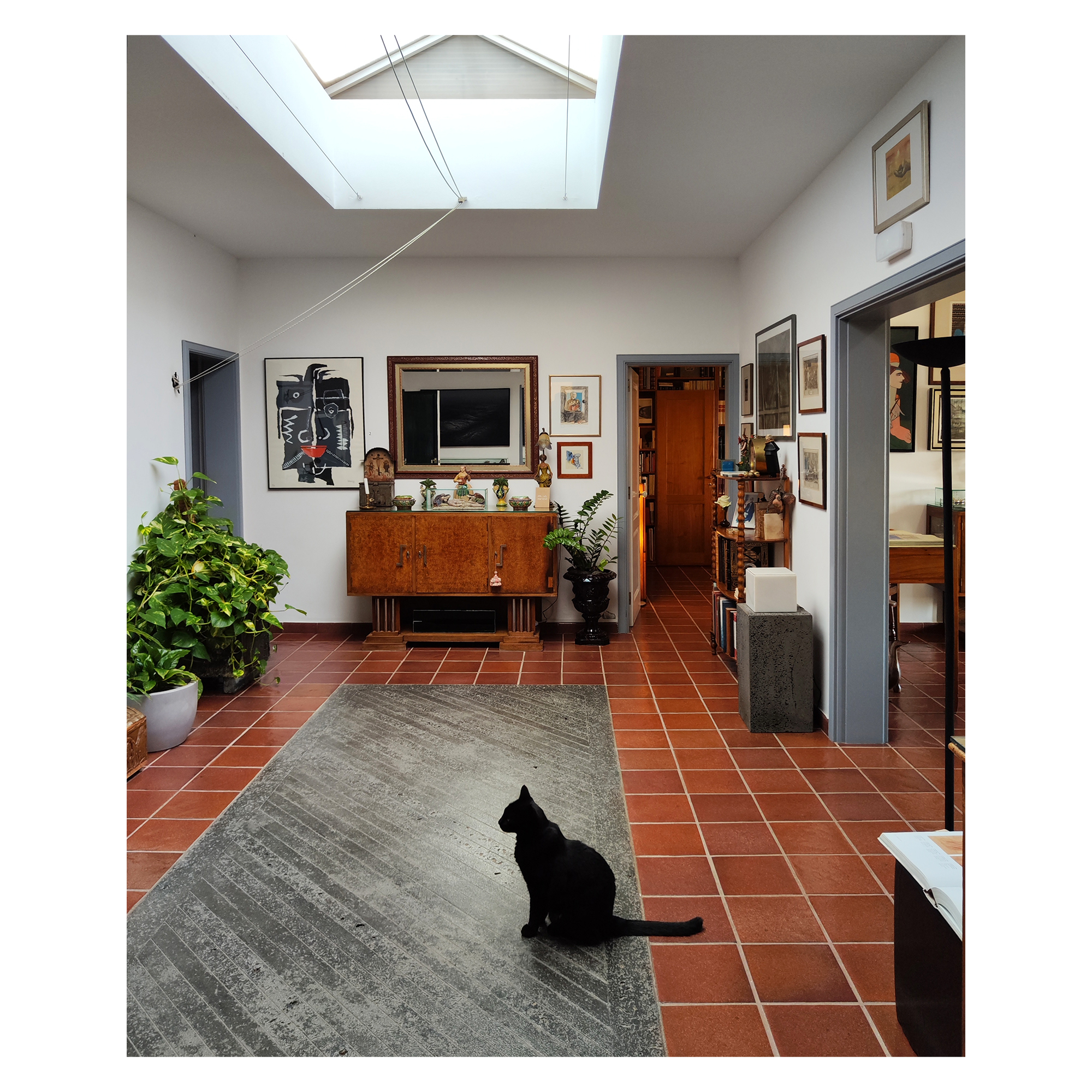
Cover Image: Jose Saramago’s House at Tías, Lanzarote. Photograph by Hidden Architecture, October 2025.
Writing is translating. It always will be. Even when we are using our own language. We translate what we see and what we feel (assuming that seeing and feeling, as we generally understand them, be something more than the words with which it is relatively possible for us to express what we have seen and felt…) to a conventional code of signs, writing, and we leave to the circumstances and the chances of communication the responsibility of conveying to the reader’s intelligence, not the entirety of the experience we set out to transmit (inevitably fragmented with respect to the reality from which it had been nourished), but at least a shadow of what in the depths of our spirit we know is untranslatable, for example the pure emotion of an encounter, the dazzling of a discovery, that fleeting instant of silence before the word that will remain in memory as the remnant of a dream that time will not completely erase.
Escribir es traducir. Siempre lo será. Incluso cuando estamos utilizando nuestra propia lengua. Transportamos lo que vemos y lo que sentimos (suponiendo que el ver y el sentir, tal y como los entendemos generalmente, sean algo más que las palabras con las que nos va siendo relativamente posible expresar lo visto y lo sentido…) a un código convencional de signos, la escritura, y dejamos a las circunstancias y a las casualidades de la comunicación la responsabilidad de hacer llegar a la inteligencia del lector, no la integridad de la experiencia que nos propusimos transmitir (inevitablemente parcelada con respecto a la realidad de la que se había alimentado), sino al menos una sombra de lo que en el fondo de nuestro espíritu sabemos que es intraducible, por ejemplo la emoción pura de un encuentro, el deslumbramiento de un hallazgo, ese instante fugaz de silencio anterior a la palabra que se quedará en la memoria como el resto de un sueño que el tiempo no borrará por completo.
The translator’s task, therefore, consists of rendering into another language (in principle, their own) what in the original work and language had already been “translated,” that is, a particular perception of a social, historical, ideological, and cultural reality that is not the translator’s own, that perception substantiated in a linguistic and semantic framework that is also not their own.
El trabajo de quien traduce consistirá, por tanto, en pasar a otro idioma (en principio, al propio) lo que en la obra y en el idioma original ya había sido «traducido», es decir, una determinada percepción de una realidad social, histórica, ideológica y cultural que no es la del traductor, substanciada, esa percepción, en un entramado lingüístico y semántico que tampoco es el suyo.
The original text represents only one of the possible “translations” of the author’s experience of reality, the translator being obliged to convert the “text-translation” into a “translation-text,” inevitably ambivalent, because, after having begun by capturing the experience of the reality that is the object of their attention, the translator has the major task of transporting the text intact into the linguistic and semantic framework of the (other) reality they are commissioned to translate, respecting, at the same time, both its origin and its destination.
El texto original representa únicamente una de las «traducciones» posibles de la experiencia de la realidad del autor, estando el traductor obligado a convertir el «texto-traducción» en «traducción-texto», inevitablemente ambivalente, porque, después de haber comenzado captando la experiencia de la realidad objeto de su atención, el traductor tiene que realizar el trabajo mayor de transportarla intacta al entramado lingüístico y semántico de la realidad (otra) a la que tiene el encargo de traducir, respetando, al mismo tiempo, el lugar de donde vino y el lugar hacia donde va.
For the translator, the moment of silence before the word is thus like the threshold of an “alchemical” movement in which what is needs to be transformed into something else in order to continue being what it once was. The dialogue between author and translator, in the relationship between the text that is and the text that will be, is not only between two individual personalities who must complement each other; it is above all an encounter between two collective cultures that must recognize one another.
Para el traductor, el instante del silencio anterior a la palabra es pues como el umbral de un movimiento «alquímico» en que lo que es necesita transformarse en otra cosa para continuar siendo lo que había sido. El diálogo entre el autor y el traductor, en la relación entre el texto que es y el texto que será, no es solo entre dos personalidades particulares que han de complementarse, es sobre todo un encuentro entre dos culturas colectivas que deben reconocerse.
Jose Saramago, July 2009. El Último Cuaderno, Alfaguara, 2010