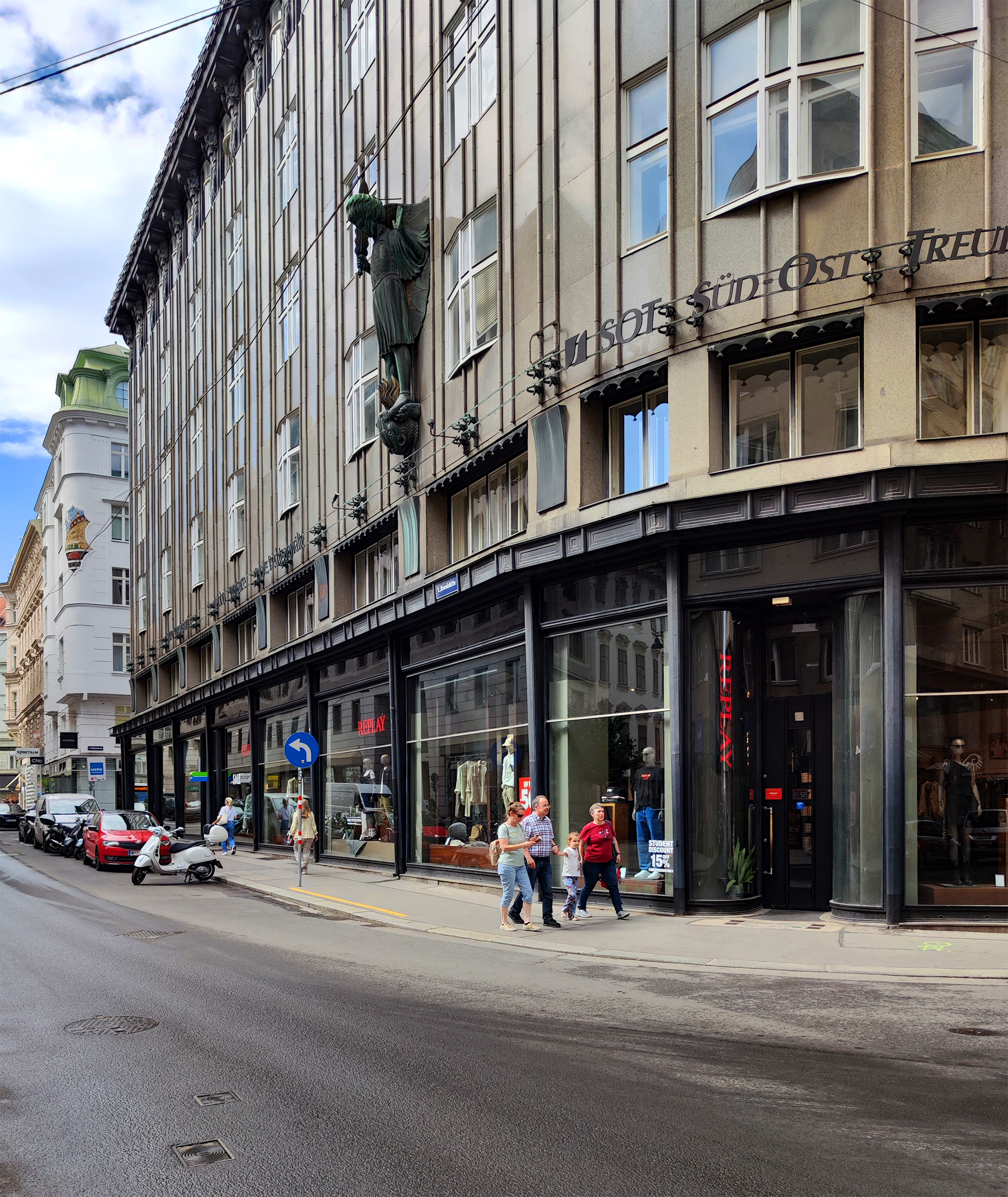
Johann Evangelist Zacherl was the son of industrialist Johann Zacherl, who had amassed wealth and prestige through the manufacture and distribution of insecticides. Zacherl junior planned a residential and commercial building on a plot of land at Wildpretmarkt and the later Brandstätte. To this end, he announced a competition for ideas in Otto Wagner’s architecture class in 1900, which was won by the Slovenian architect Josef Plecnik.
Johann Evangelist Zacherl era hijo del industrial Johann Zacherl, quien había amasado una gran fortuna y prestigio gracias a la fabricación y distribución de insecticidas. Zacherl hijo planeó construir un edificio residencial y comercial en un terreno situado en Wildpretmarkt y la posterior Brandstätte. Con este fin, en 1900 convocó un concurso de ideas en la clase de arquitectura de Otto Wagner, que ganó el arquitecto esloveno Josef Plecnik.
At first, the project threatened to fail after a disagreement arose between the young architect and the builders Franz von Krauss and Josef Tölk. In 1903, the construction project was restarted and finally carried out according to revised plans. The construction work was completed in 1905. Severe bomb damage during the Second World War was repaired by 1949.
Al principio, el proyecto corrió el riesgo de fracasar tras surgir un desacuerdo entre el joven arquitecto y los constructores Franz von Krauss y Josef Tölk. En 1903, el proyecto de construcción se reinició y finalmente se llevó a cabo según los planos revisados. Las obras de construcción se completaron en 1905. Los graves daños causados por las bombas durante la Segunda Guerra Mundial se repararon en 1949.
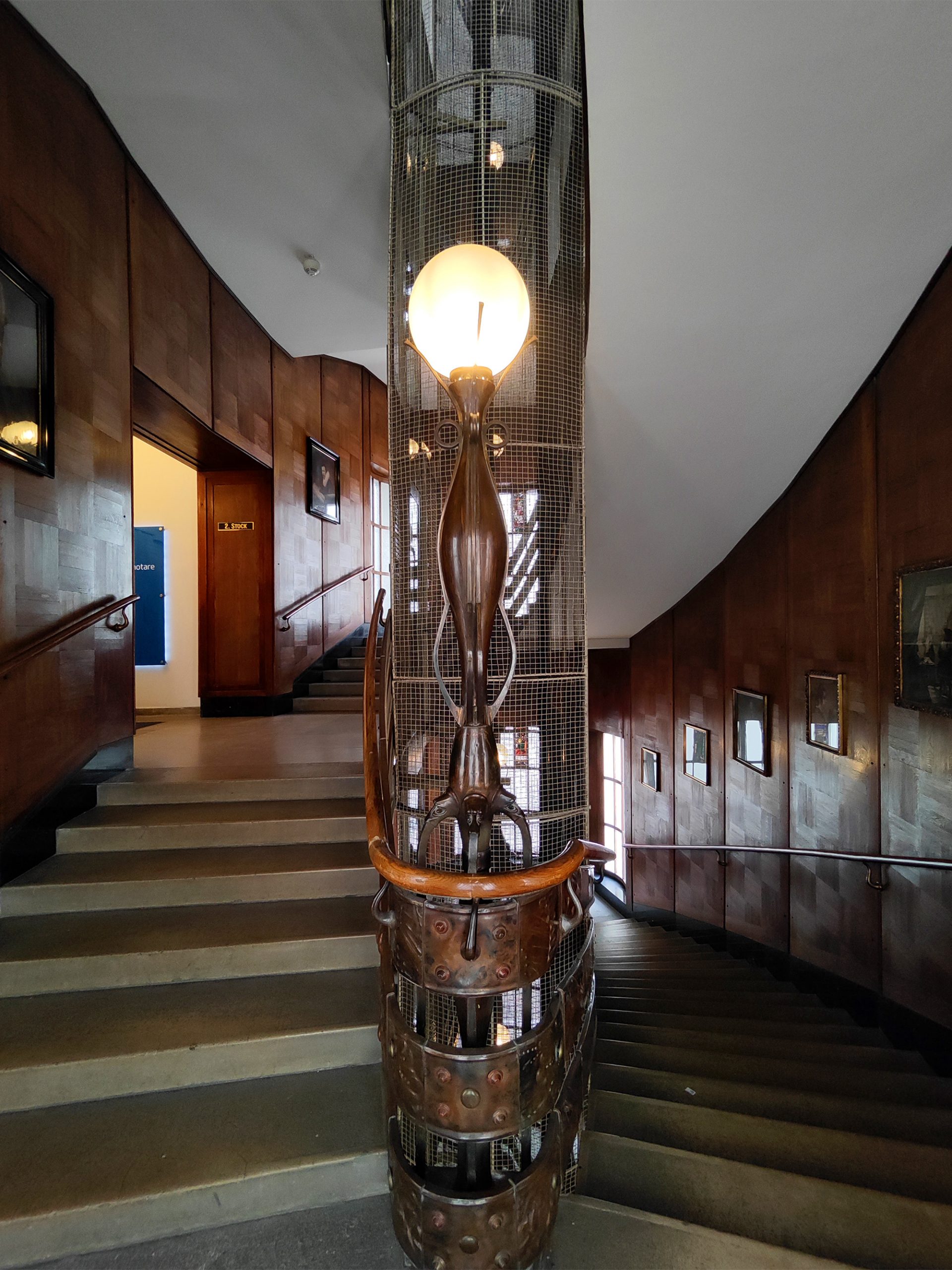
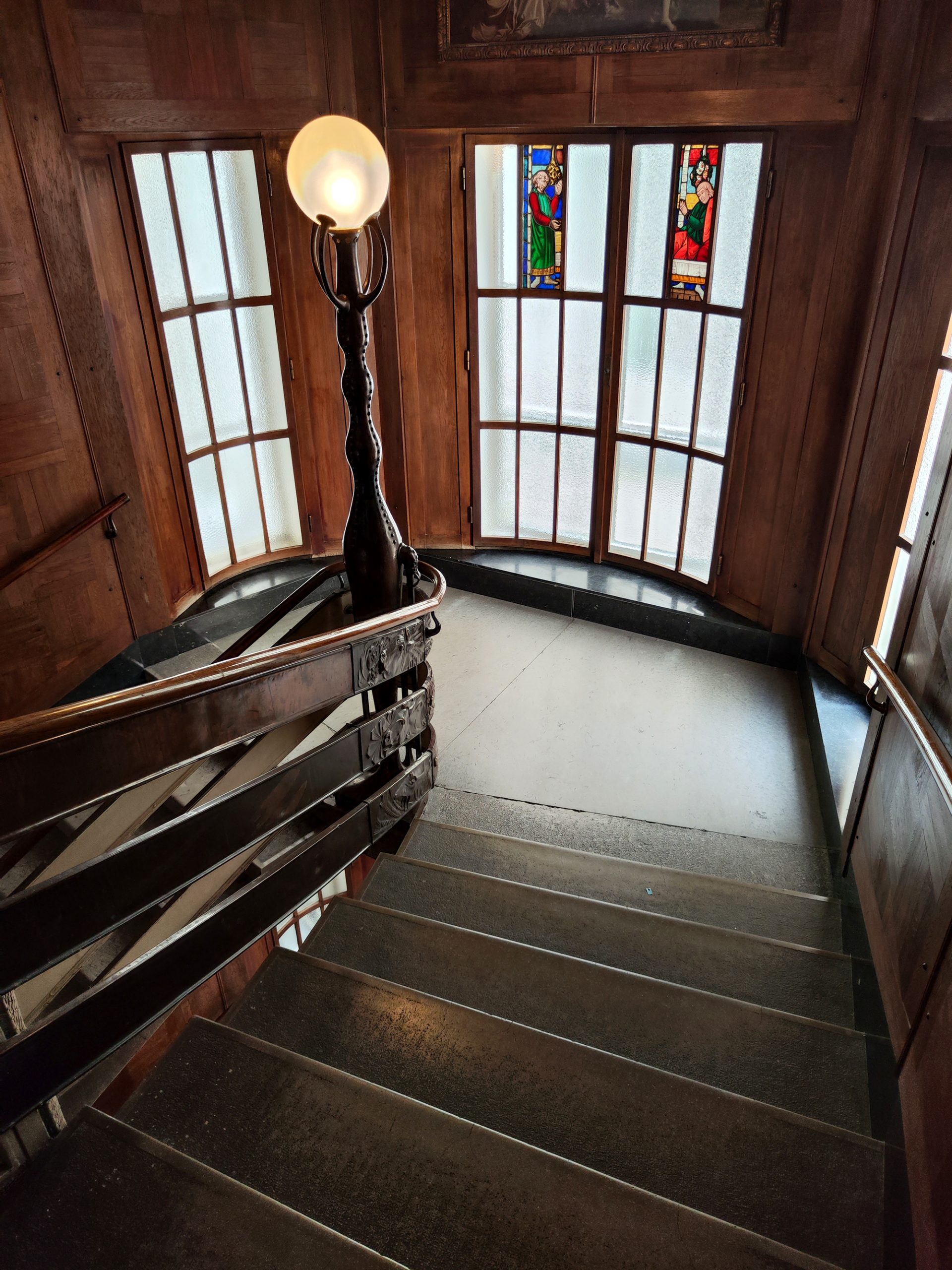
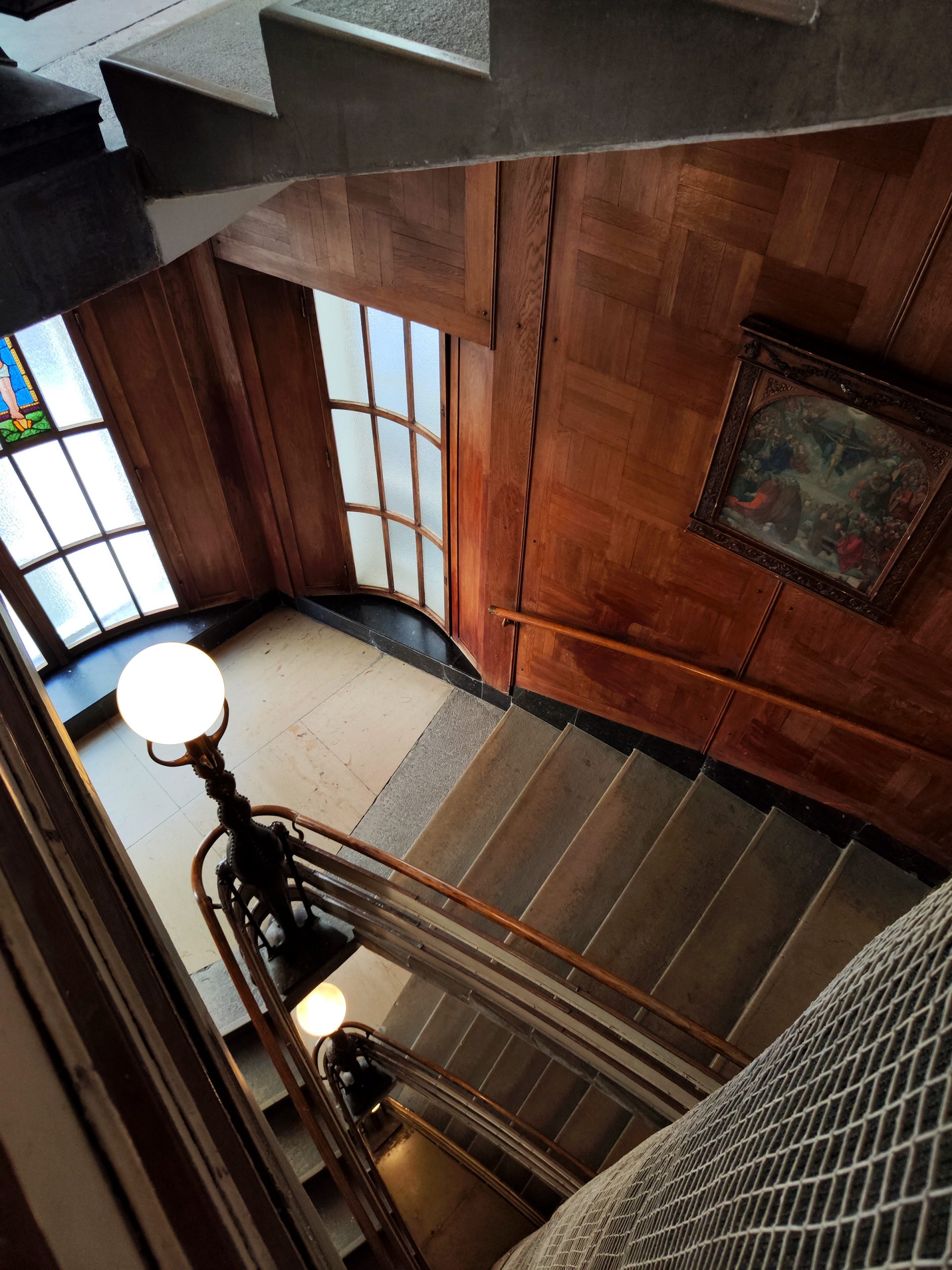
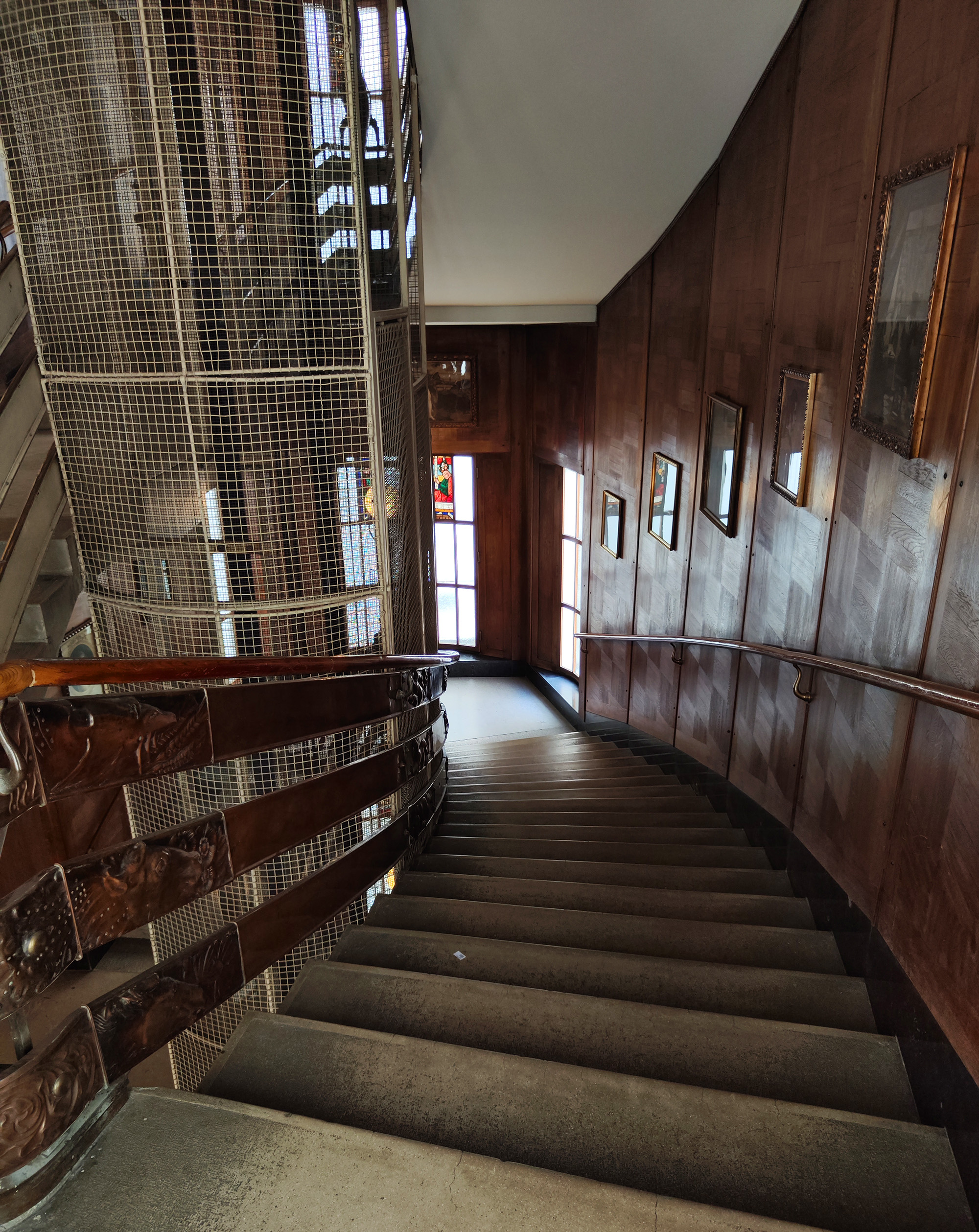
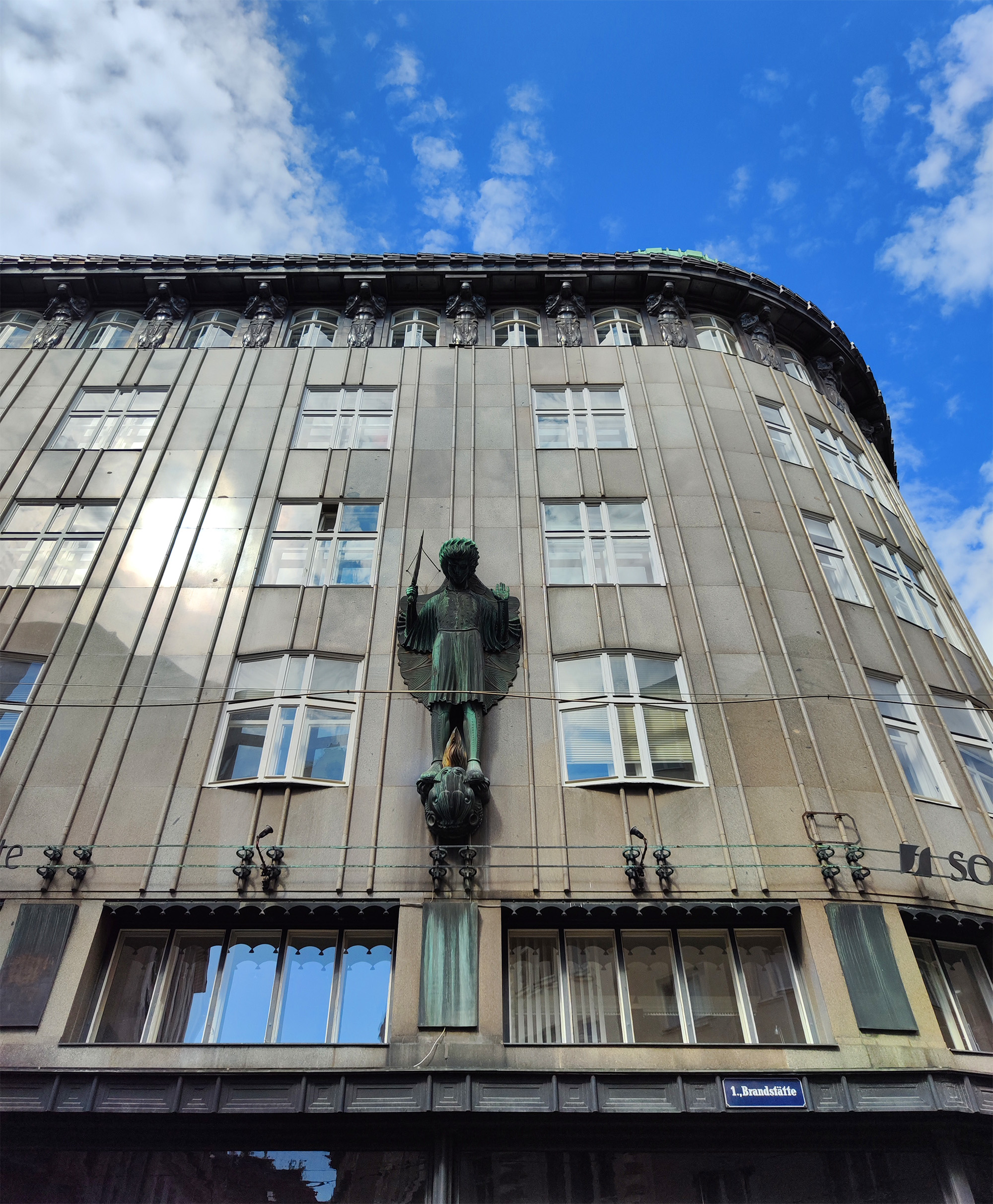
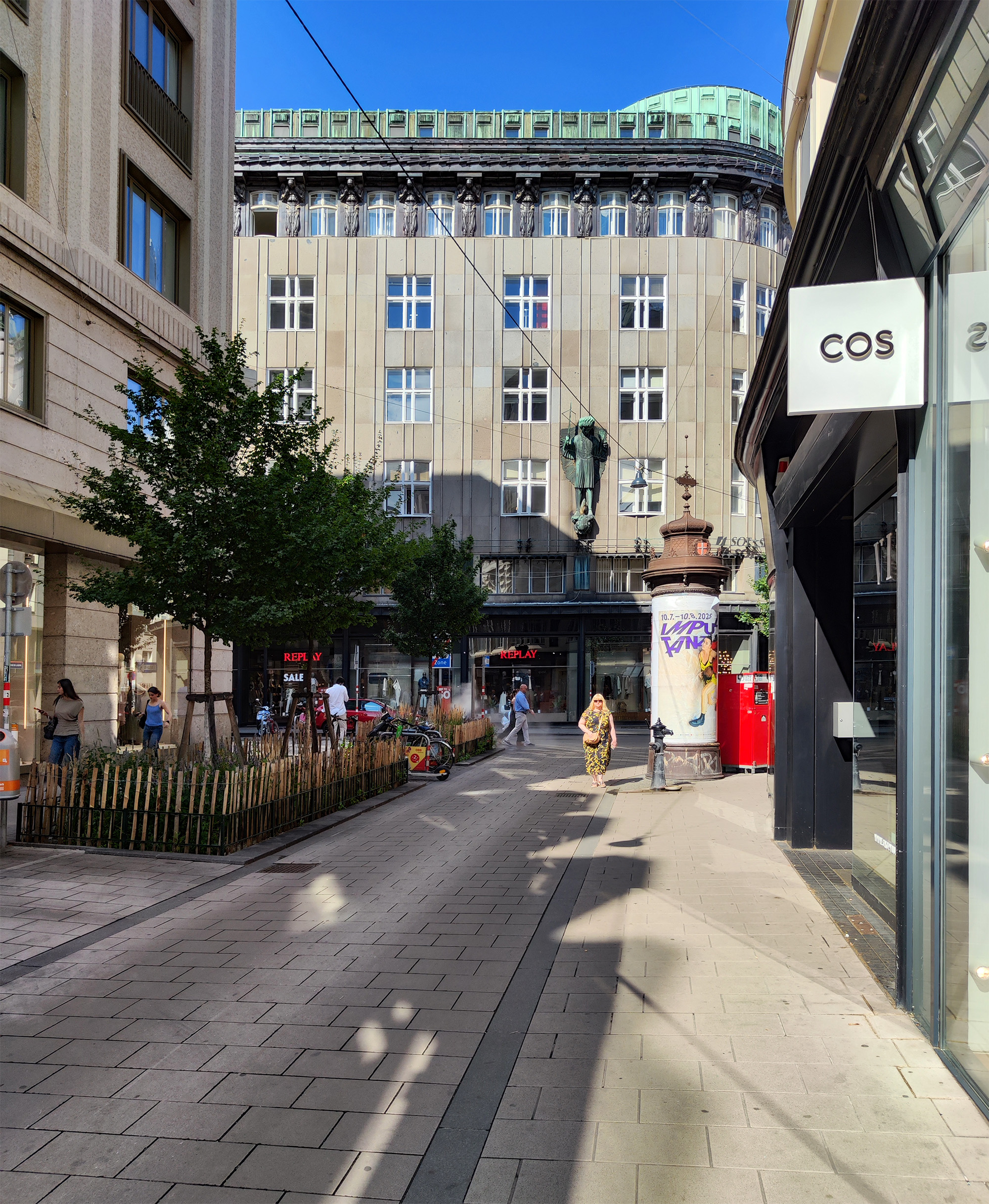
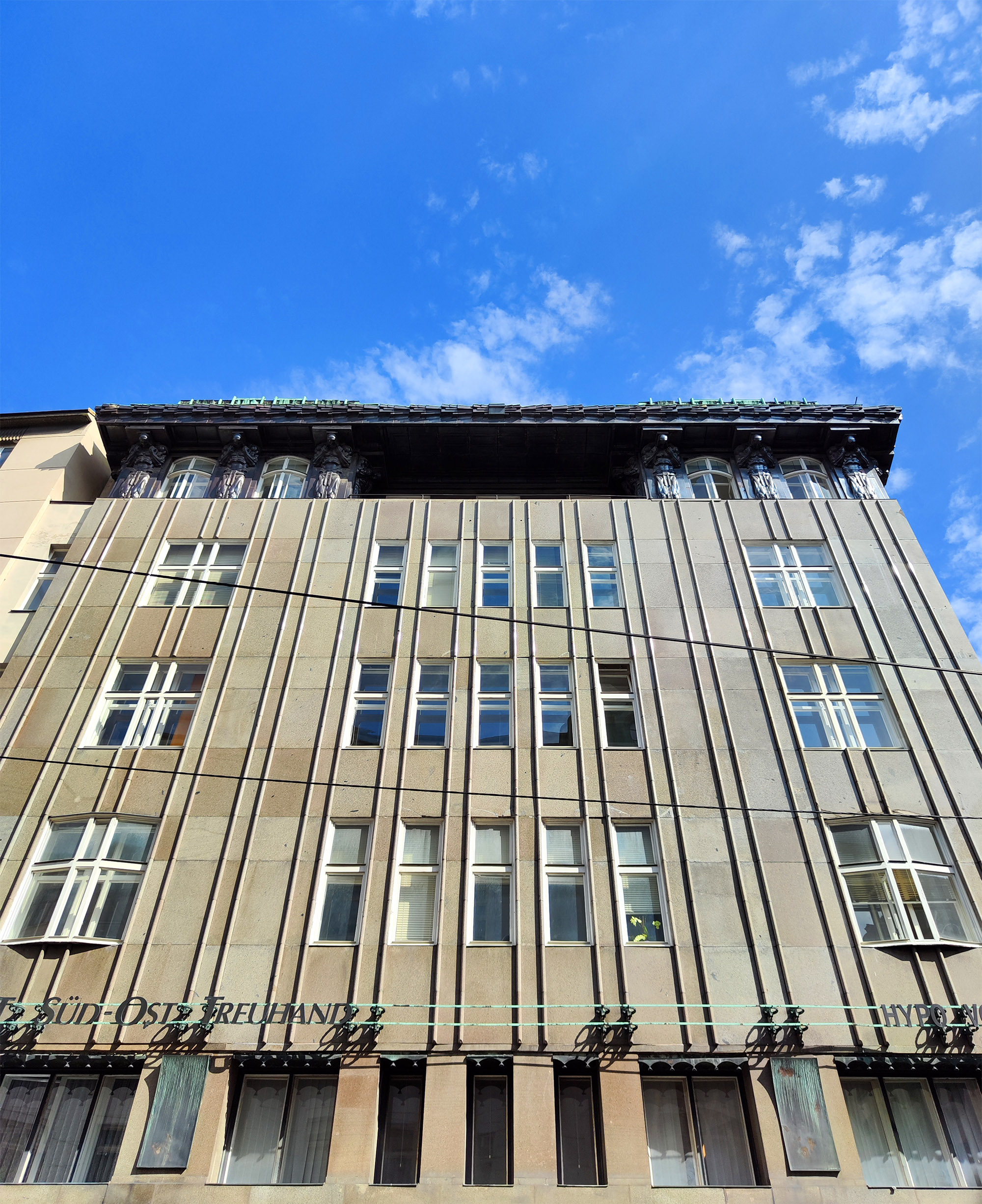
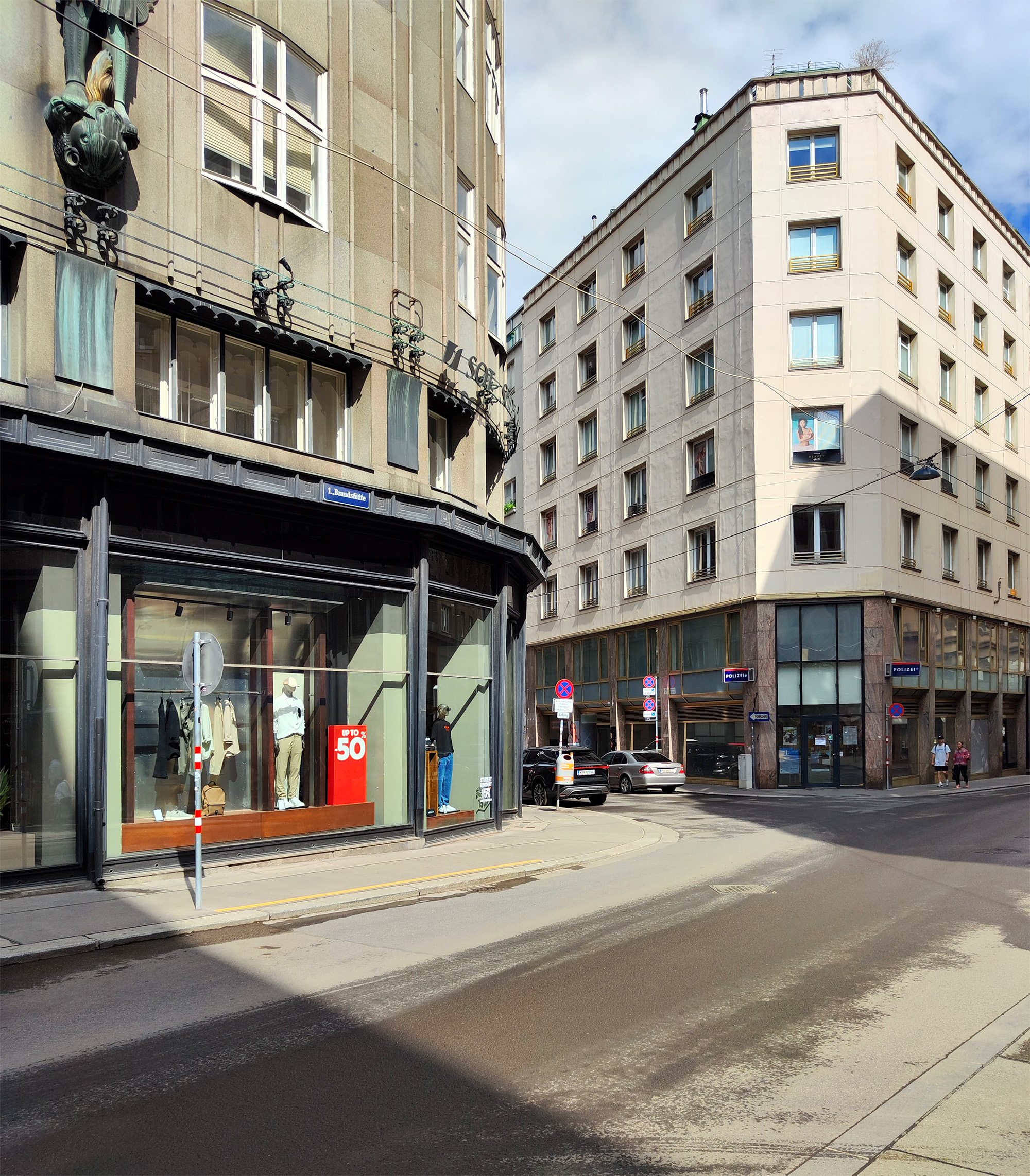
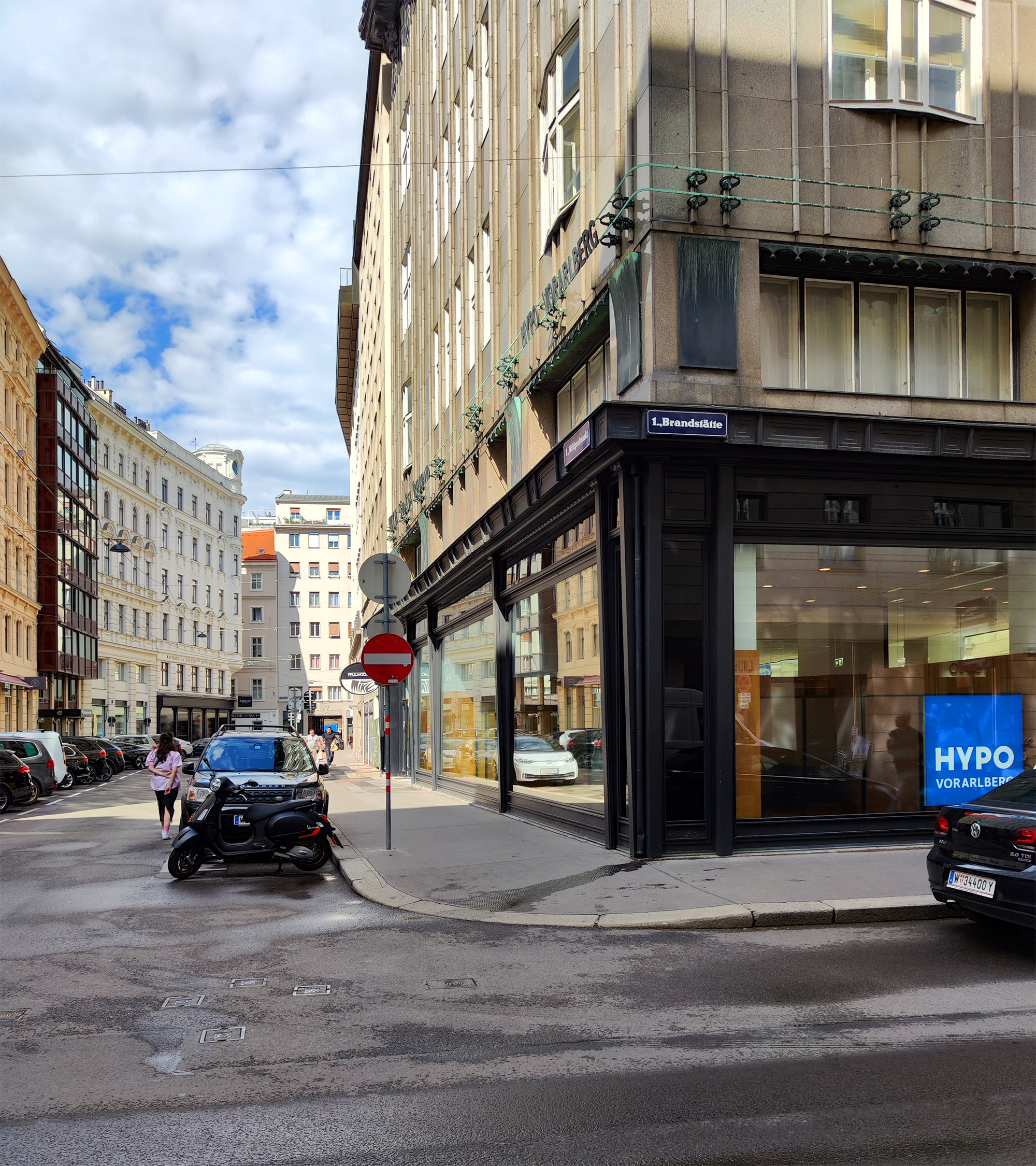
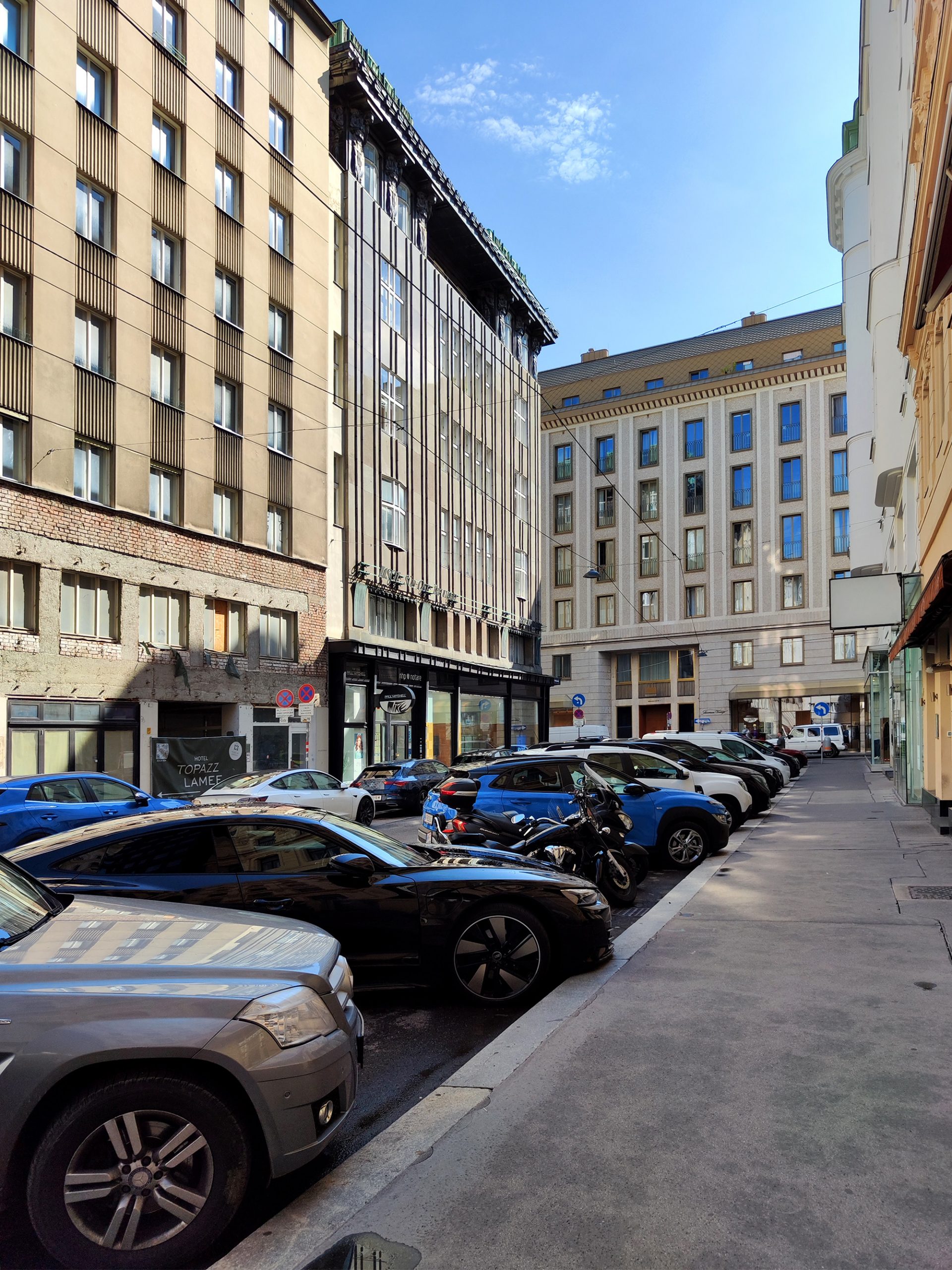
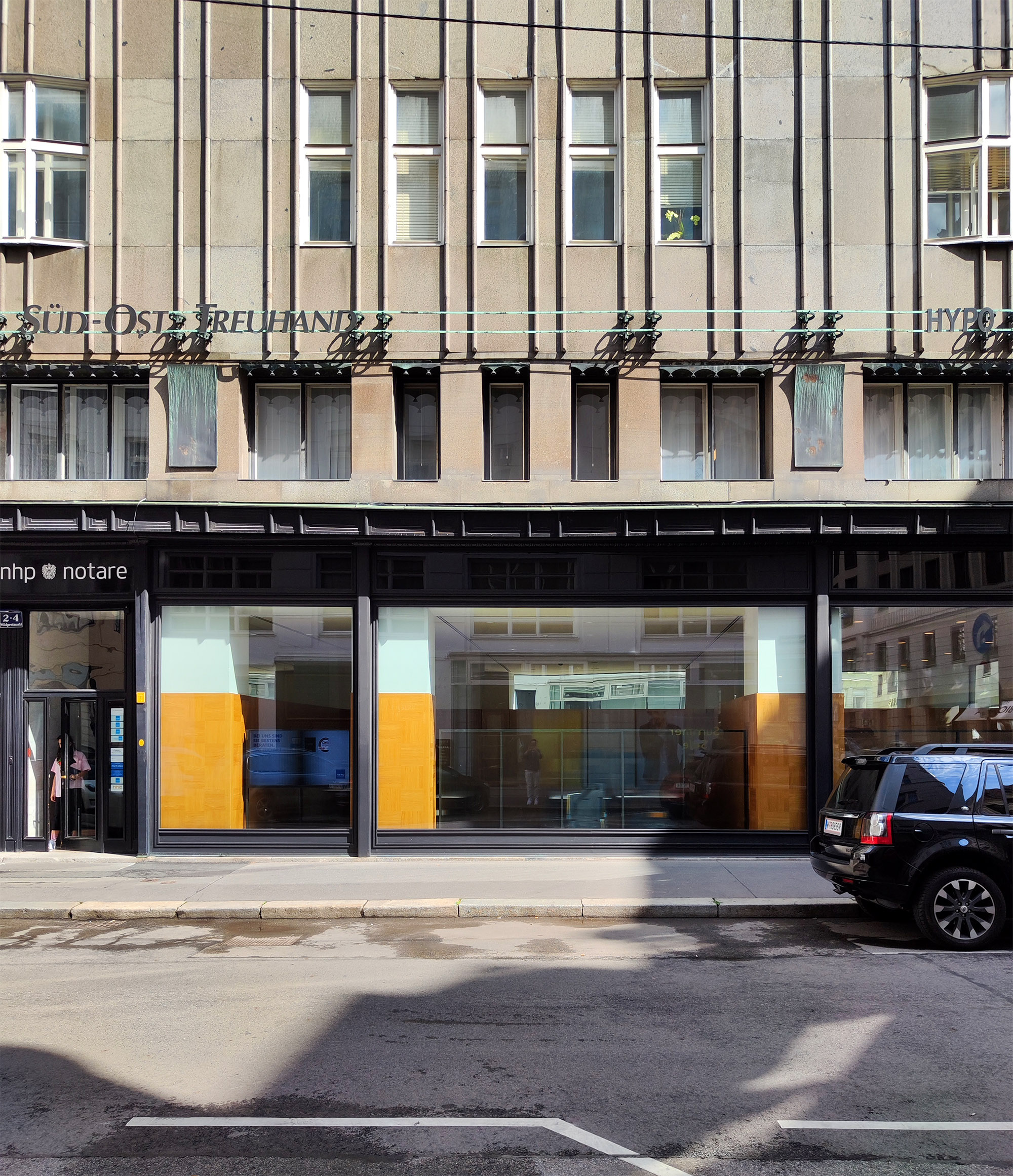
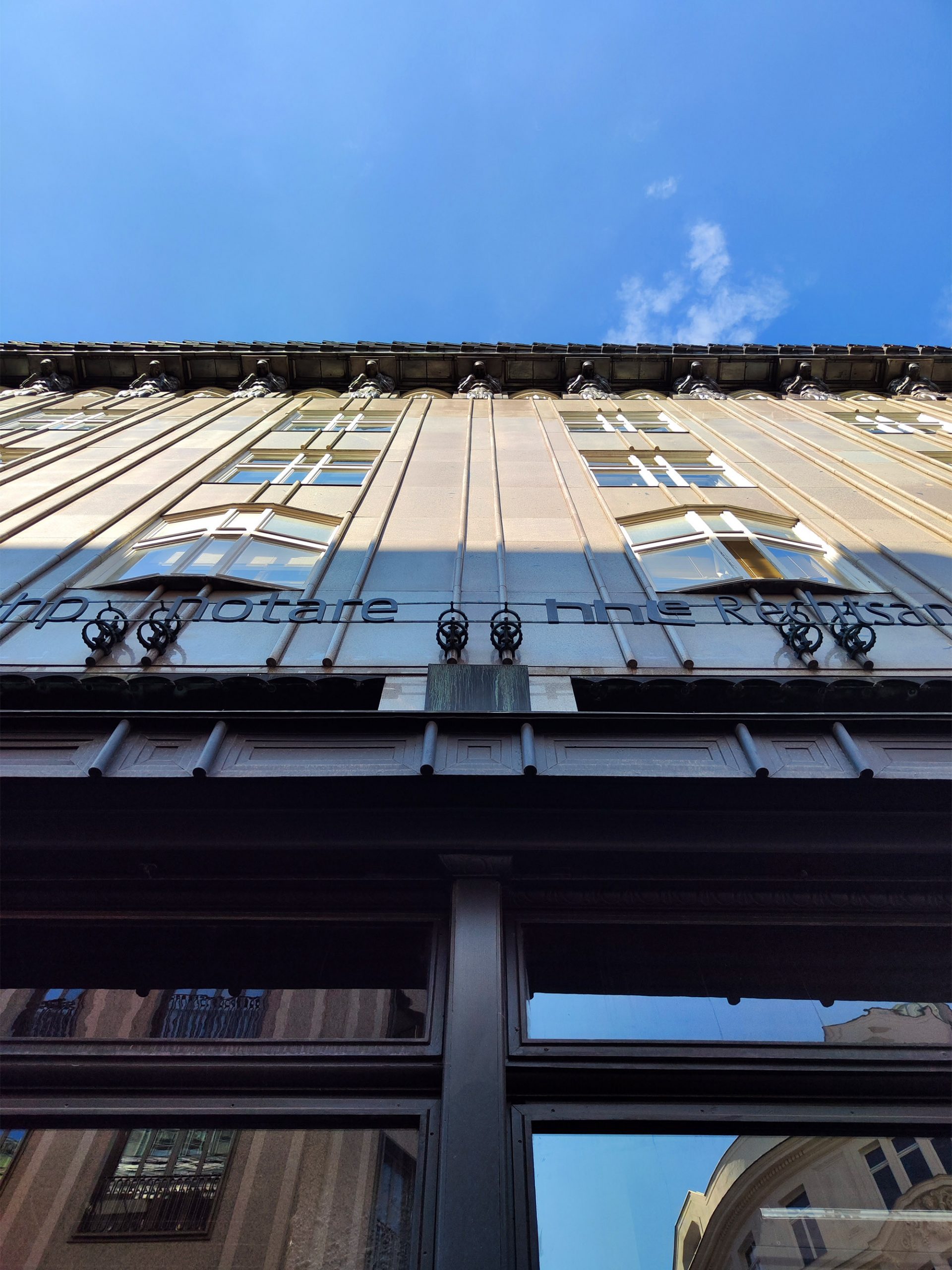
The Zacherlhaus is one of the first and most important modernist buildings in Vienna and the highlight of Plecnik’s early work. The monumental reinforced concrete structure, which is free-standing on three sides, is rounded off at the corner of the farmers’ market. The ground floor is characterised by steel structures. The floors above are strikingly arranged vertically. They are completely clad with polished granite slabs, which alternate with small, polished granite columns, giving the façade a rhythmic structure. The second and fifth floors feature convex bay windows. Those on the fifth floor are separated from each other by large, muscular Atlantean figures made of majolica. The figures were created based on a design by Franz Metzner.
La Zacherlhaus es uno de los primeros y más importantes edificios modernistas de Viena y la obra más destacada de los primeros años de Plecnik. La monumental estructura de hormigón armado, independiente en tres de sus lados, se redondea en la esquina del mercado de agricultores. La planta baja se caracteriza por sus estructuras de acero. Las plantas superiores están dispuestas de forma llamativa en vertical. Están completamente revestidos con losas de granito pulido, que se alternan con pequeñas columnas de granito pulido, lo que confiere a la fachada una estructura rítmica. La segunda y la quinta planta cuentan con ventanas saledizas convexas. Las de la quinta planta están separadas entre sí por grandes y musculosas figuras atlantes de mayólica. Las figuras fueron creadas a partir de un diseño de Franz Metzner.
The attic floor with its remarkably elaborate roof cornice is clad in sheet metal. The rounded corner is topped by a cylindrical structure. At the level of the second floor, facing the fire site, stands a monumental copper statue of St. Michael. It was designed by Ferdinand Andri.
El ático, con su cornisa de techo notablemente elaborada, está revestido de chapa metálica. La esquina redondeada está coronada por una estructura cilíndrica. A la altura de la segunda planta, frente al lugar del incendio, se encuentra una monumental estatua de cobre de San Miguel. Fue diseñada por Ferdinand Andri.
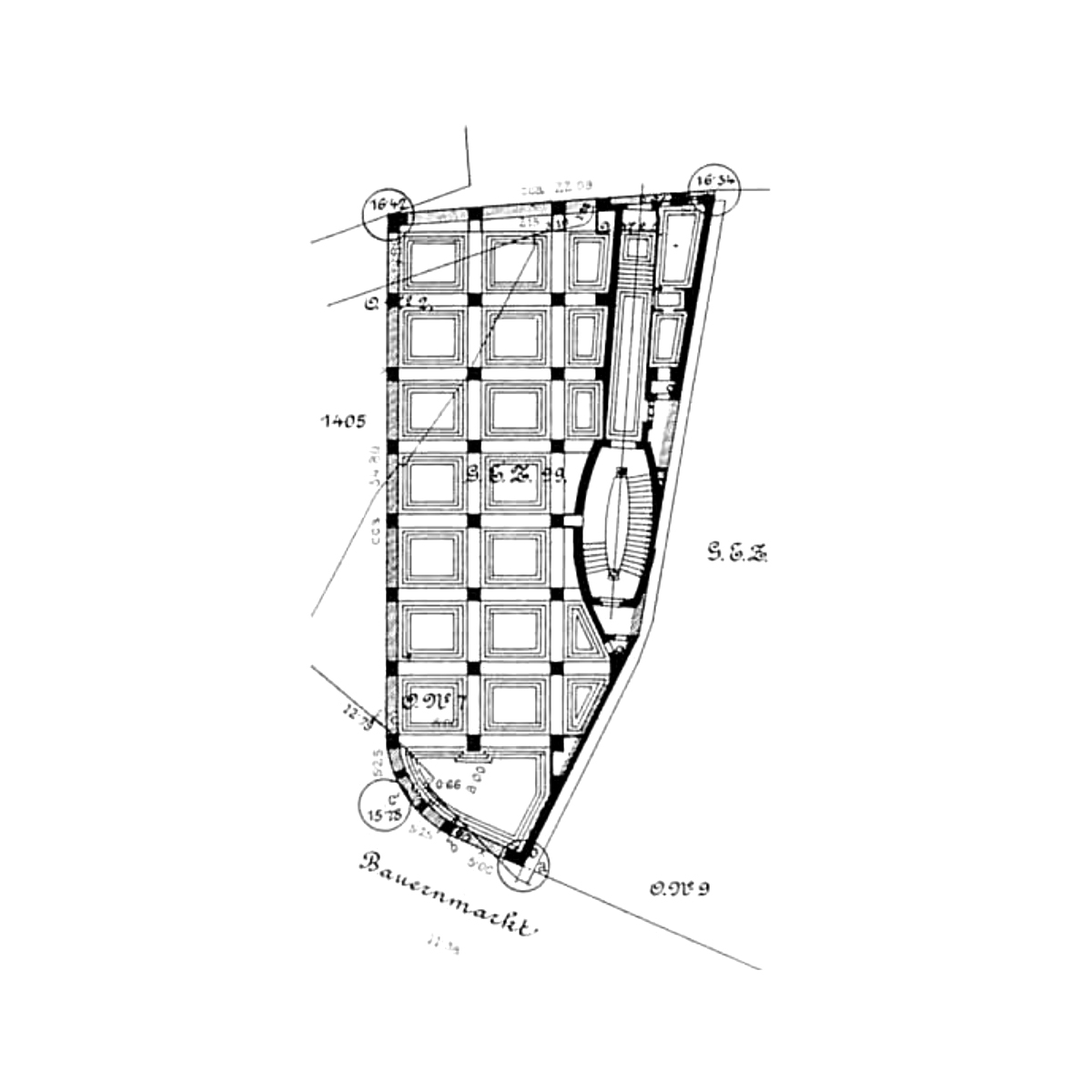
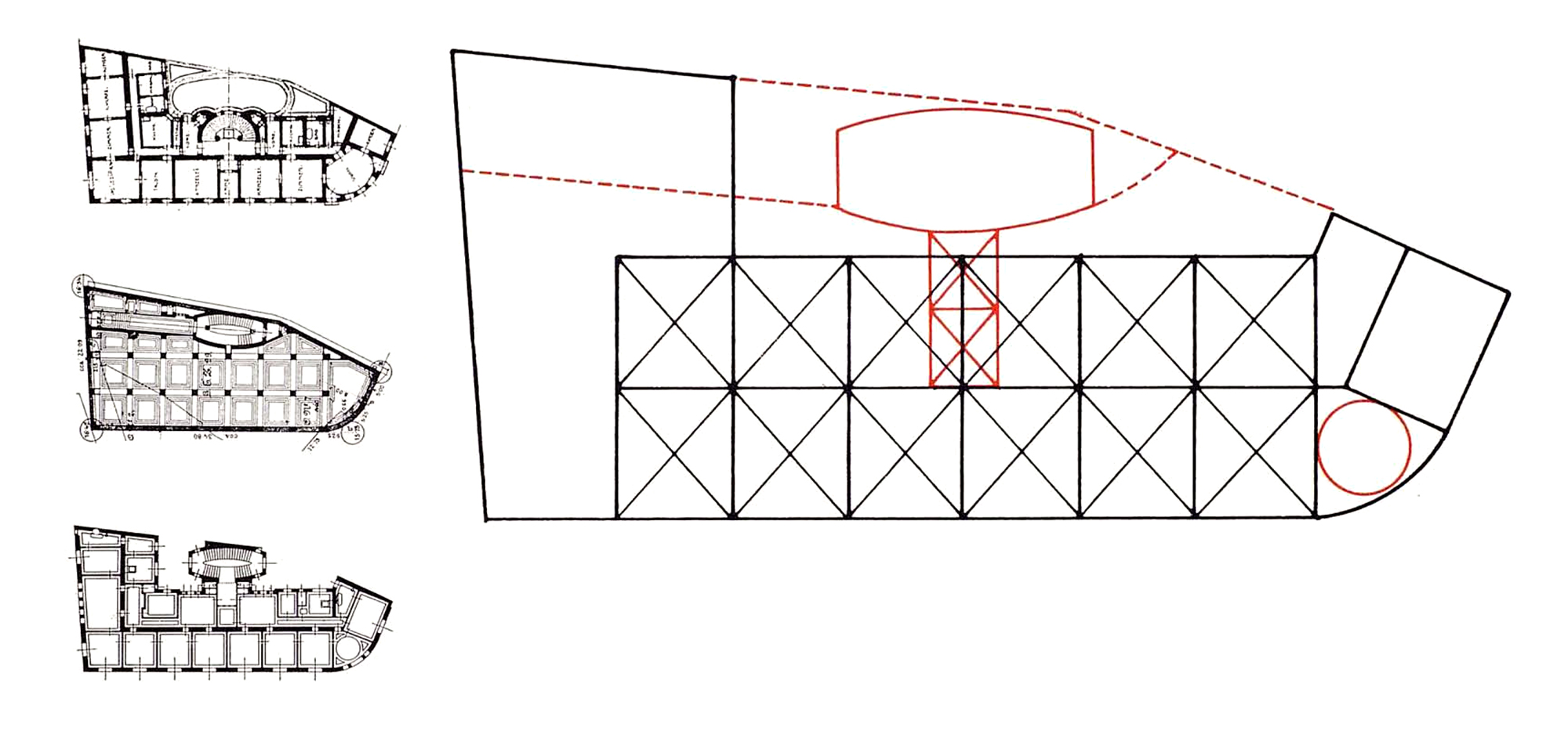
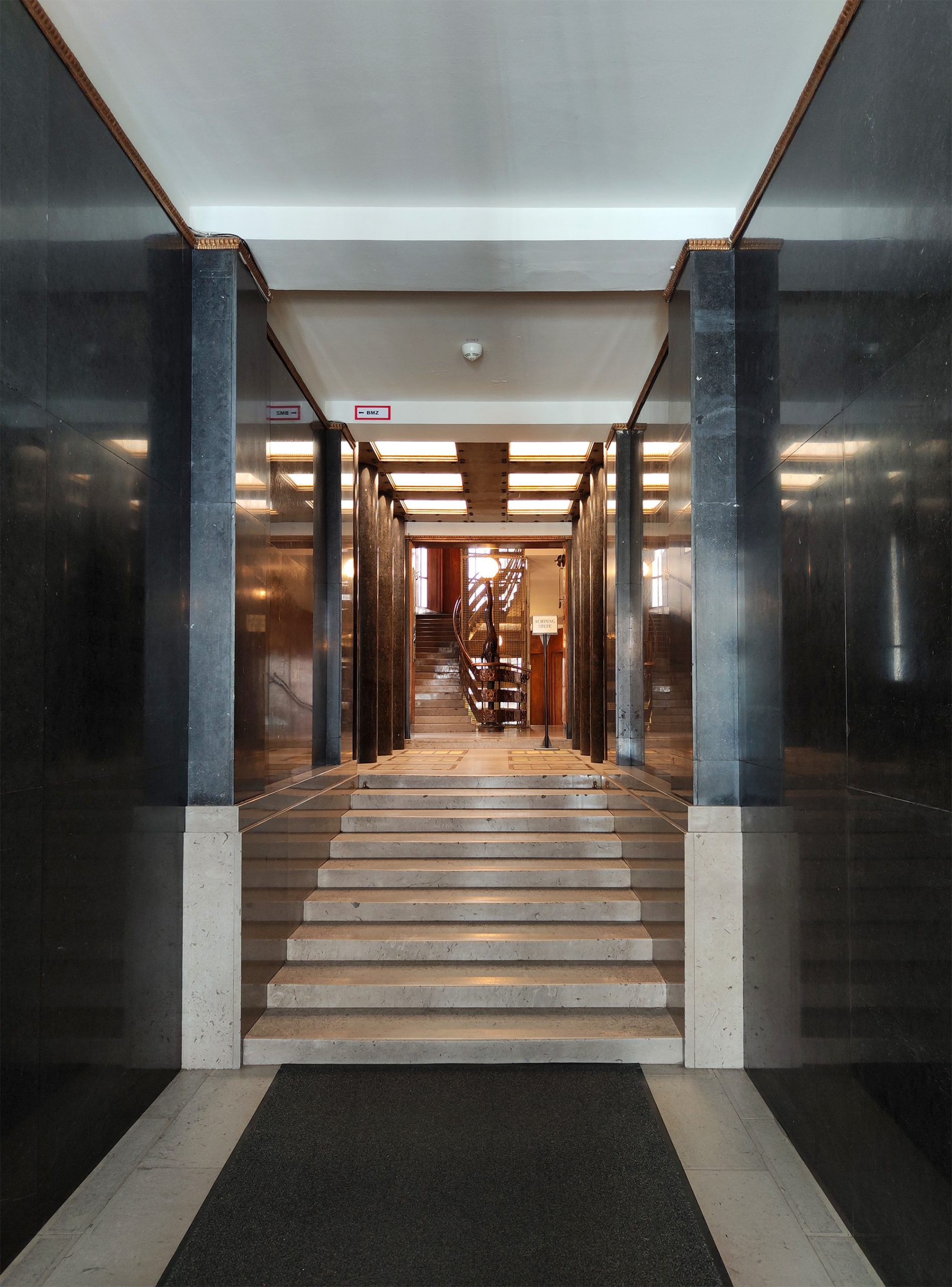
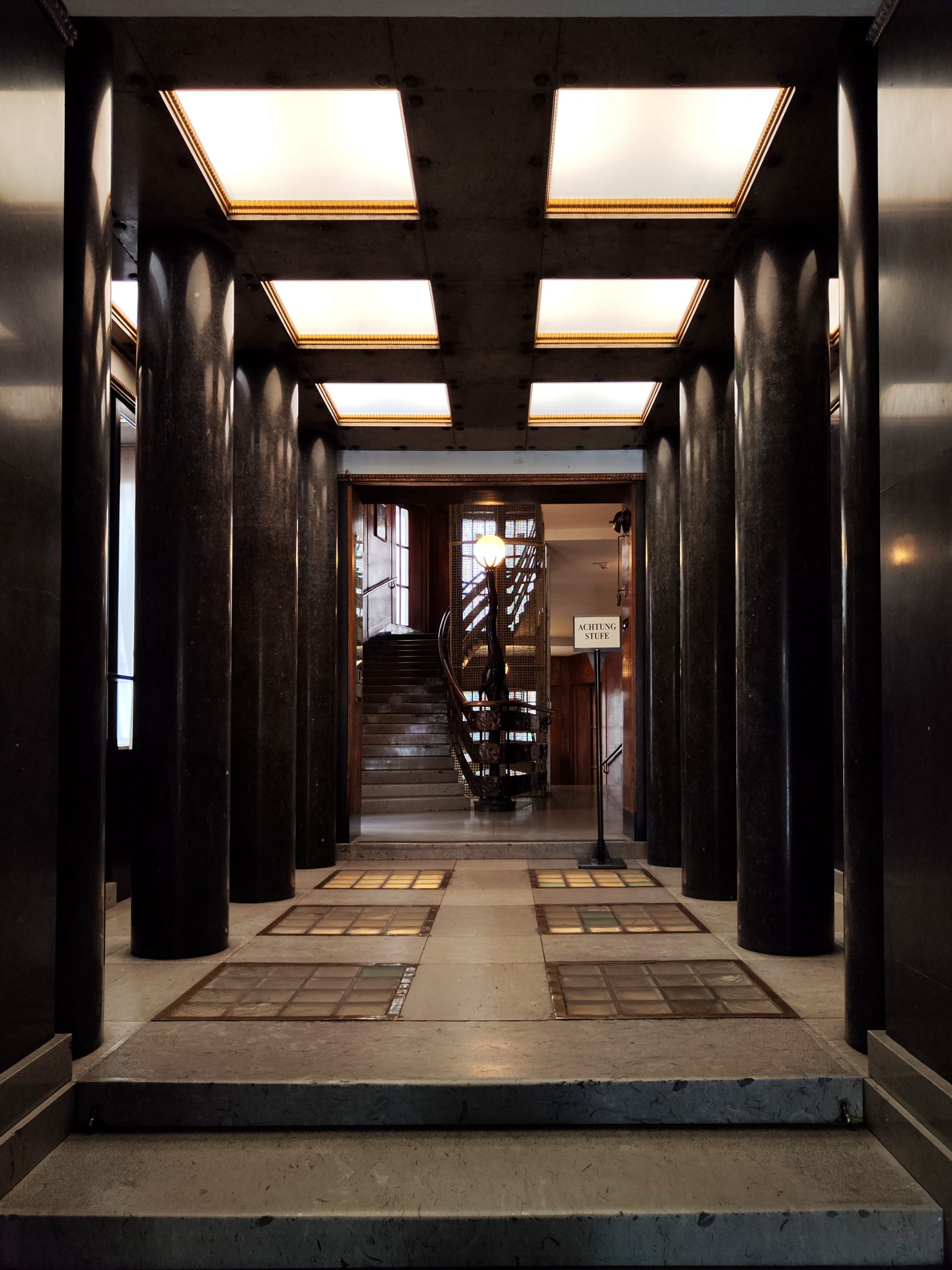
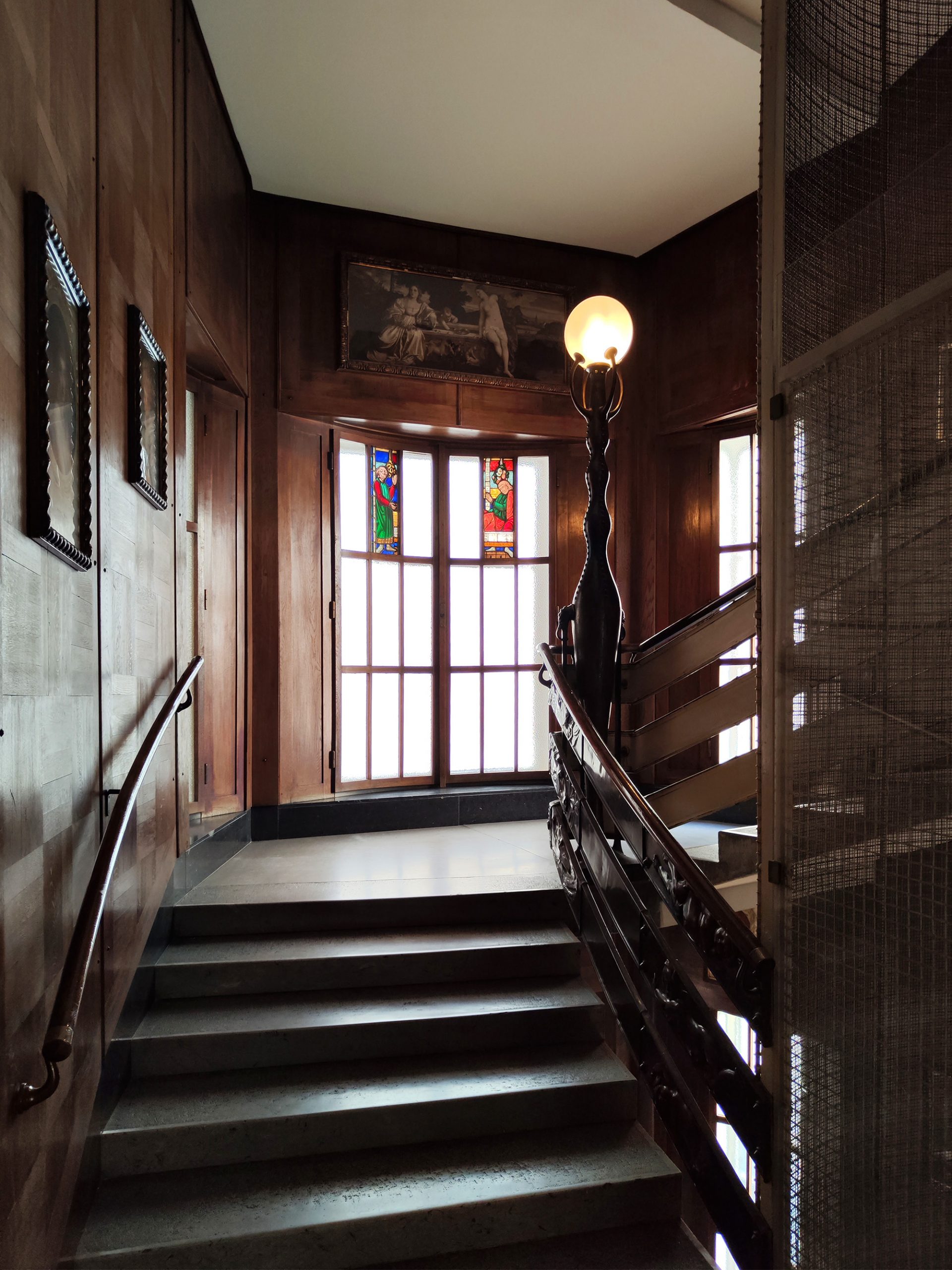
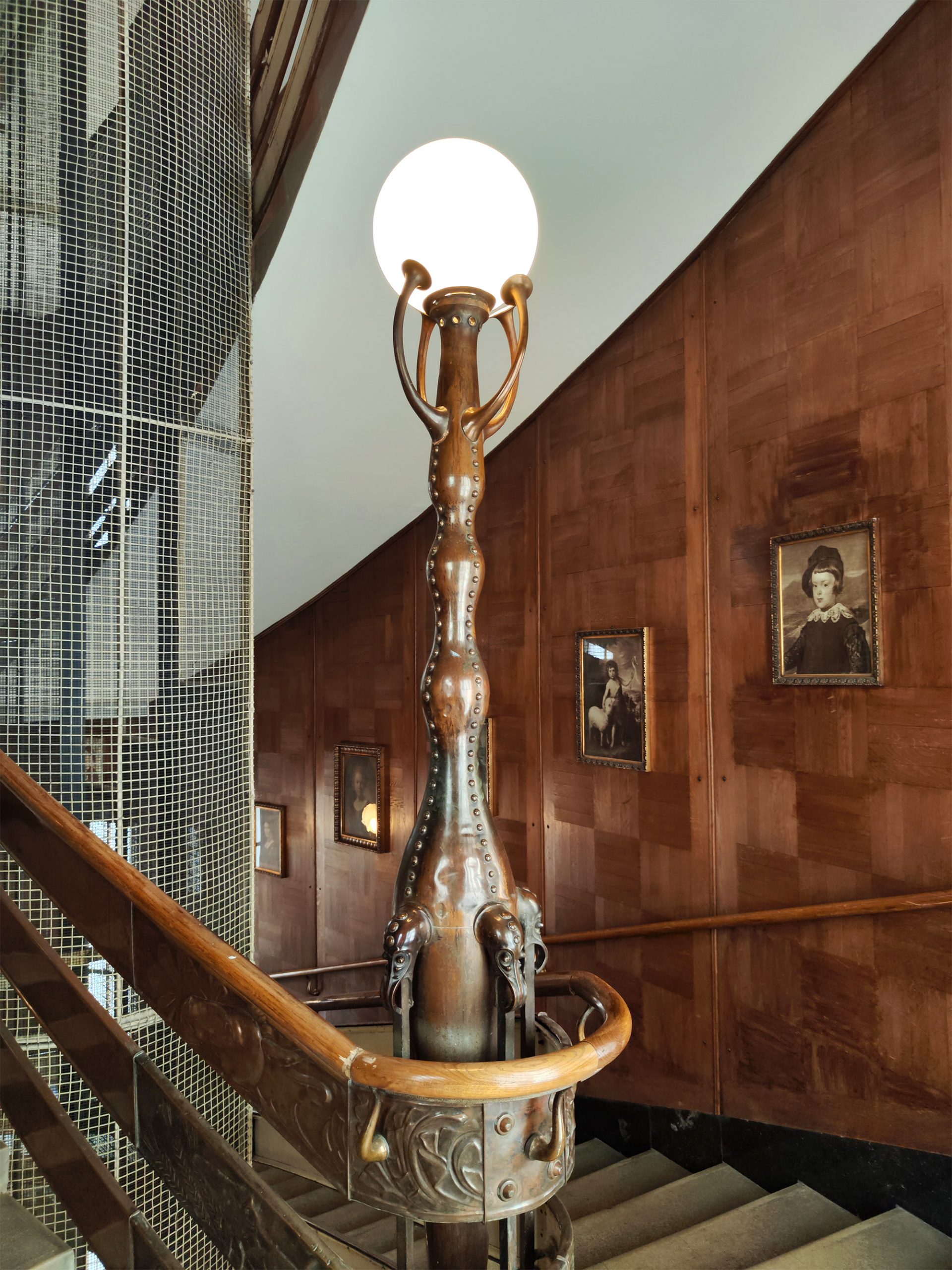
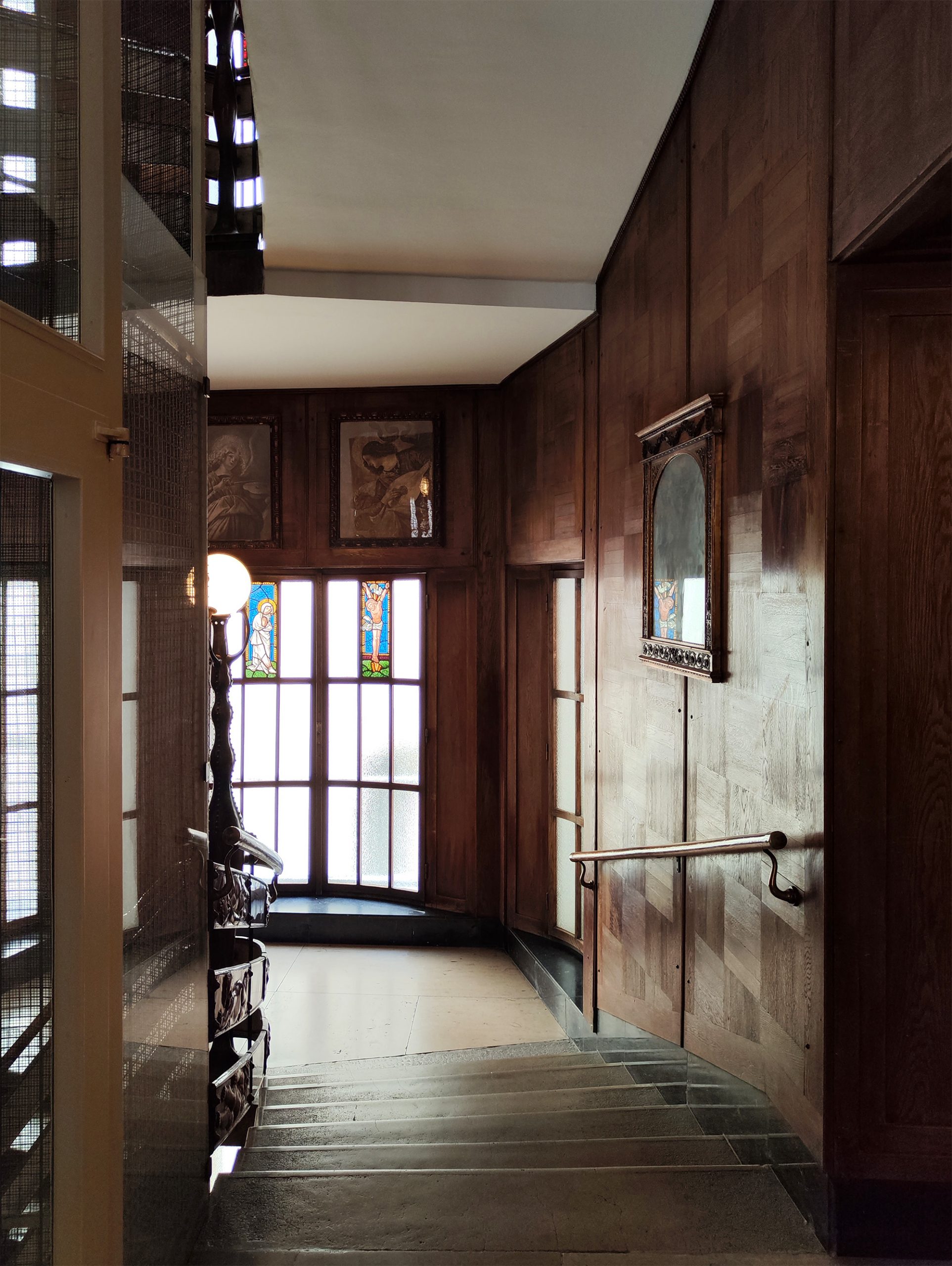
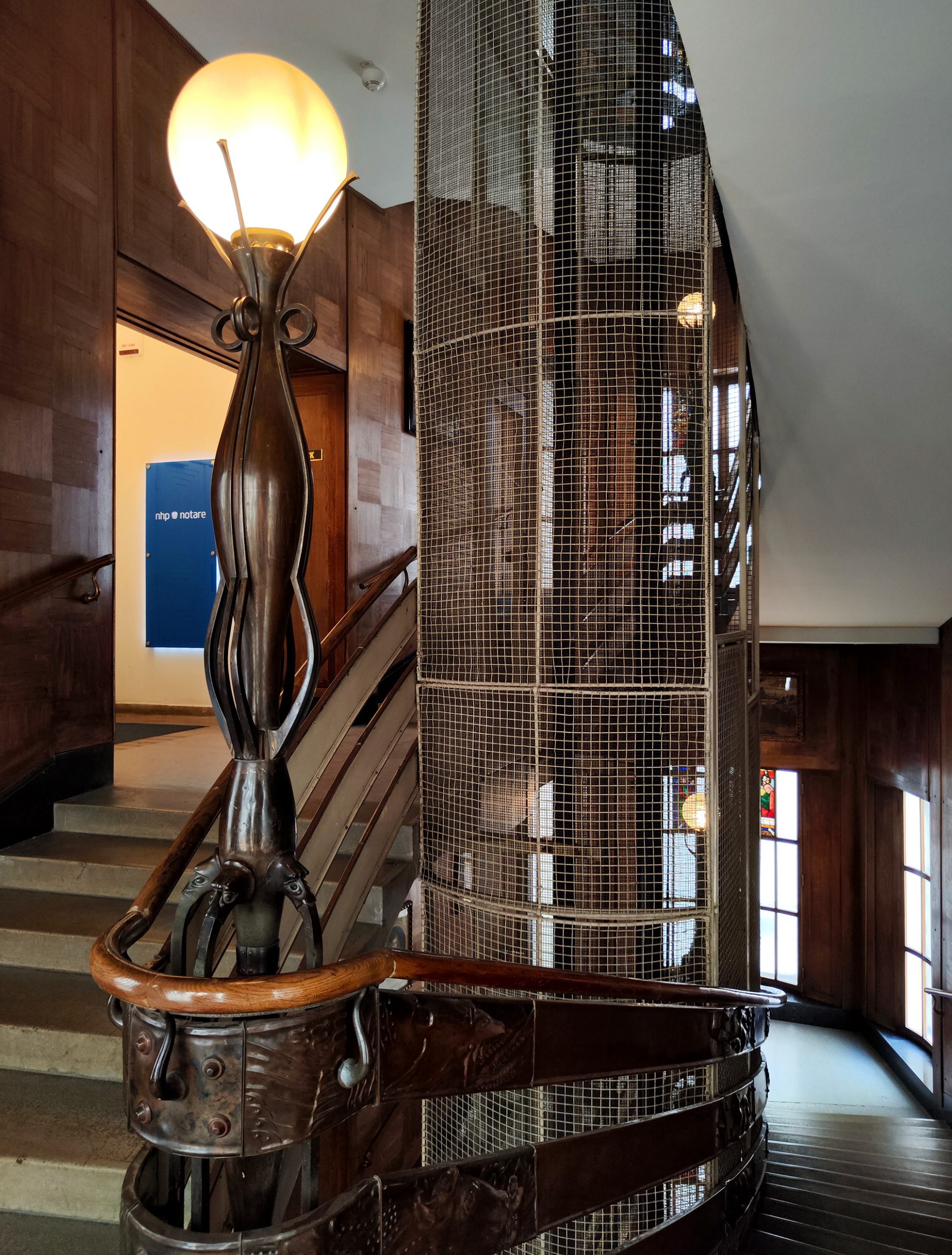
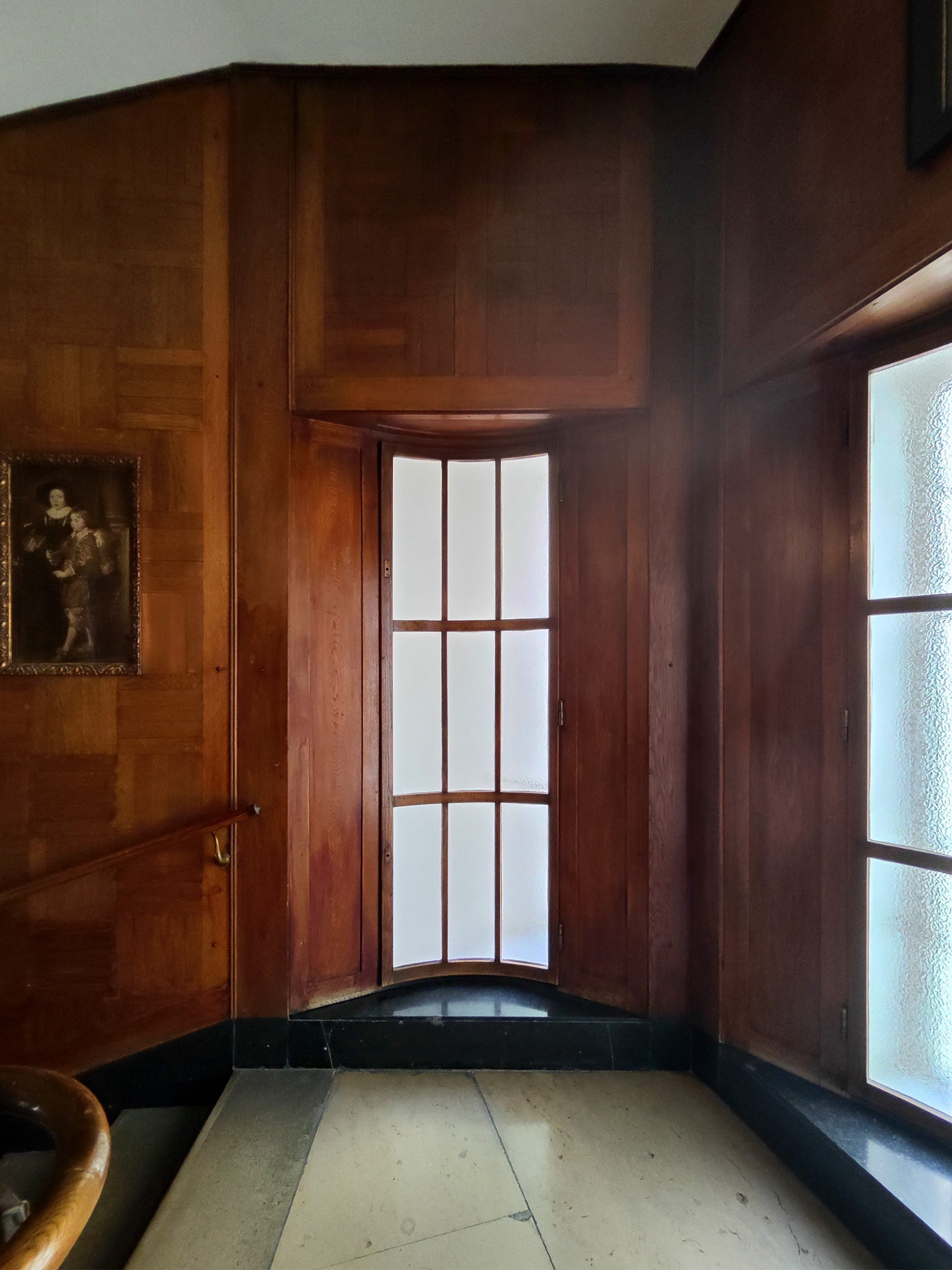
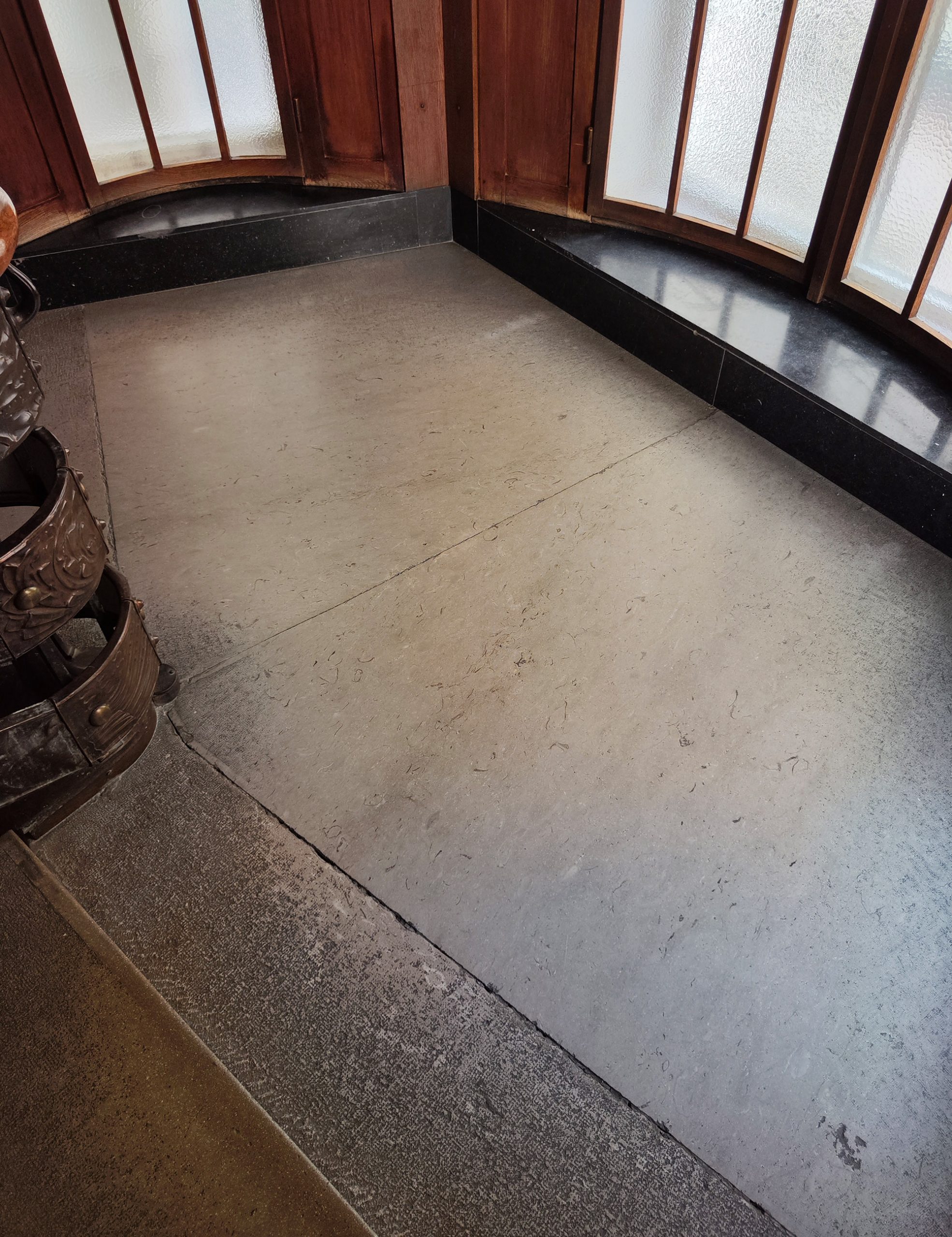
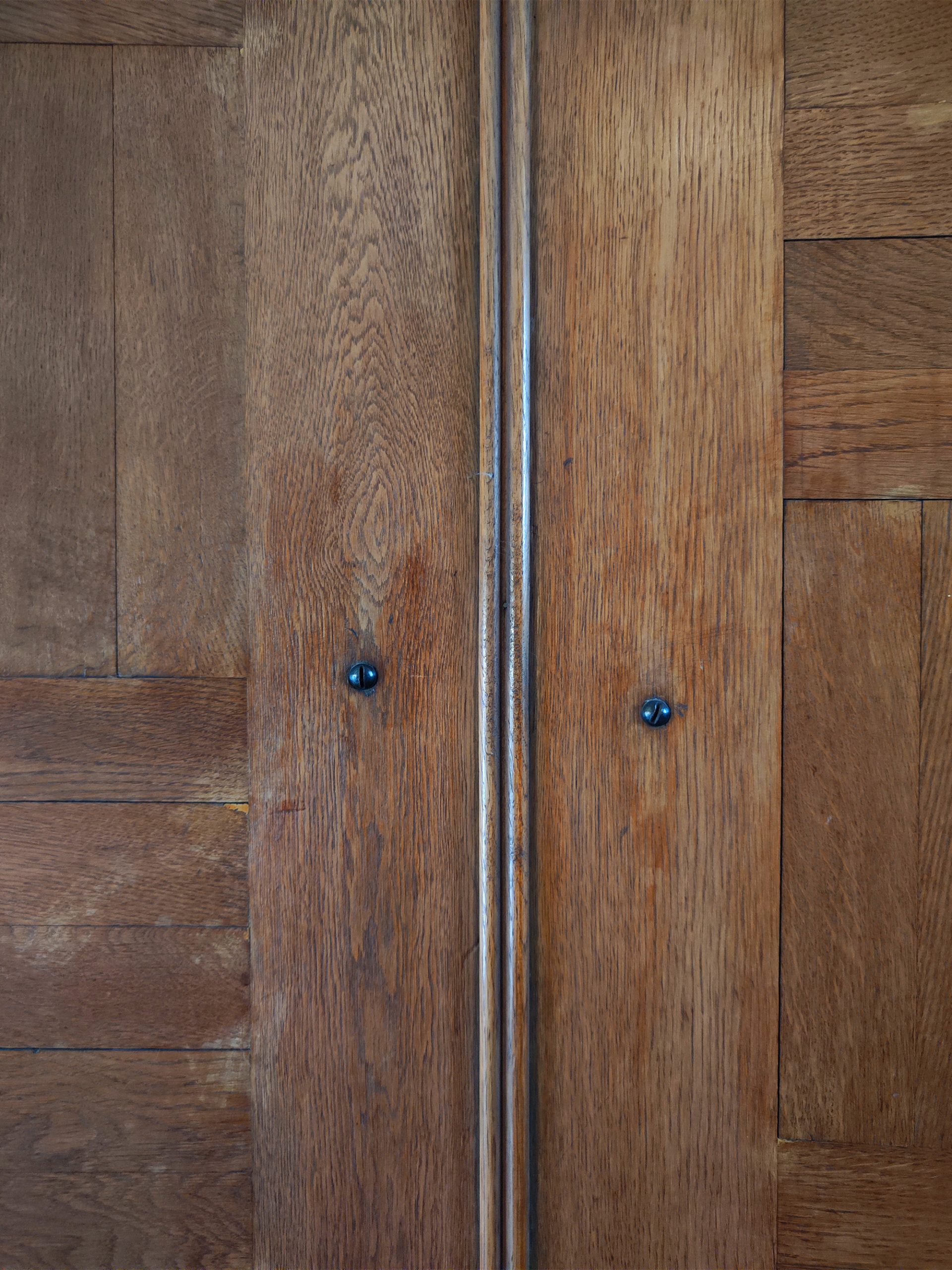
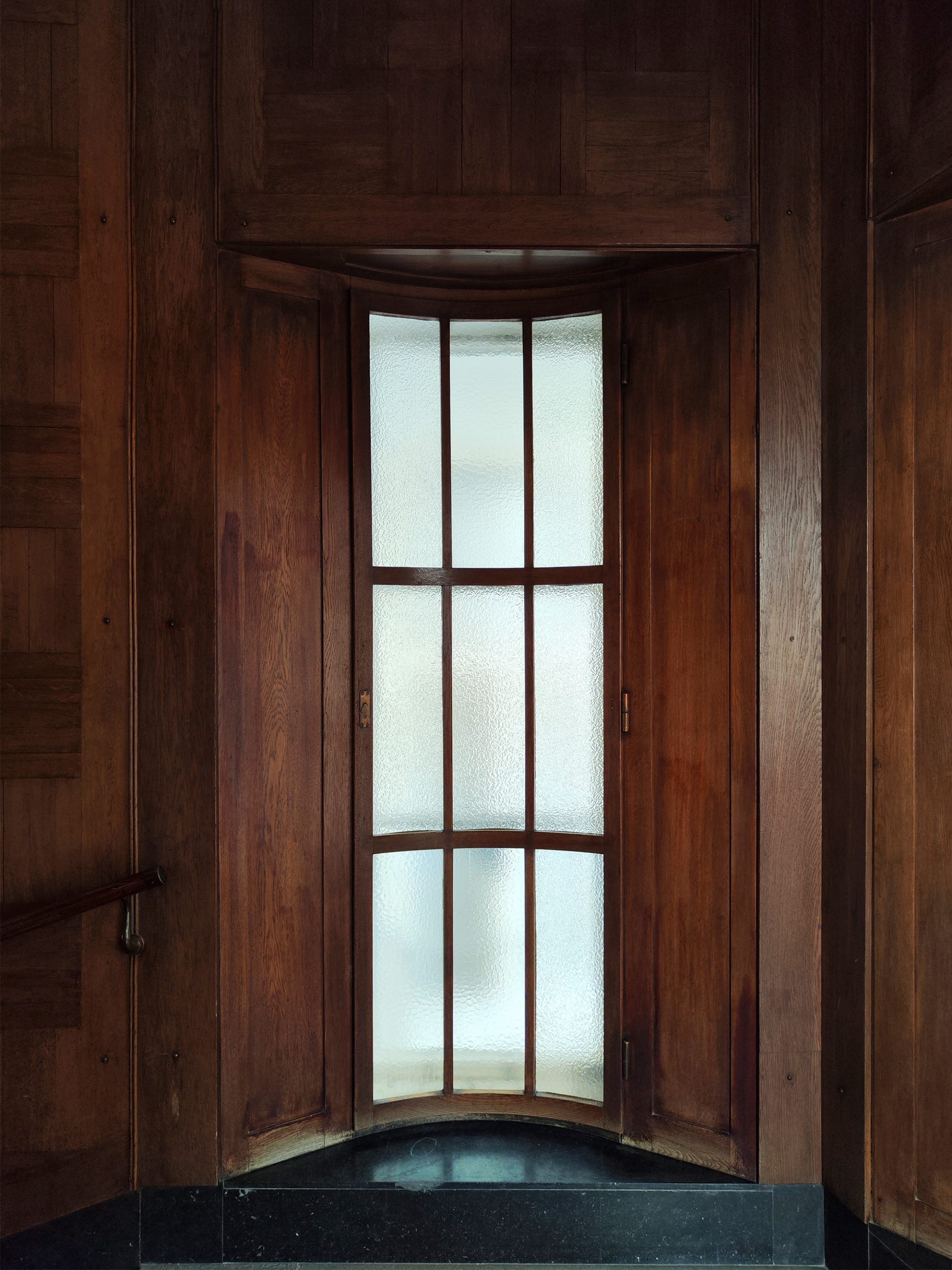
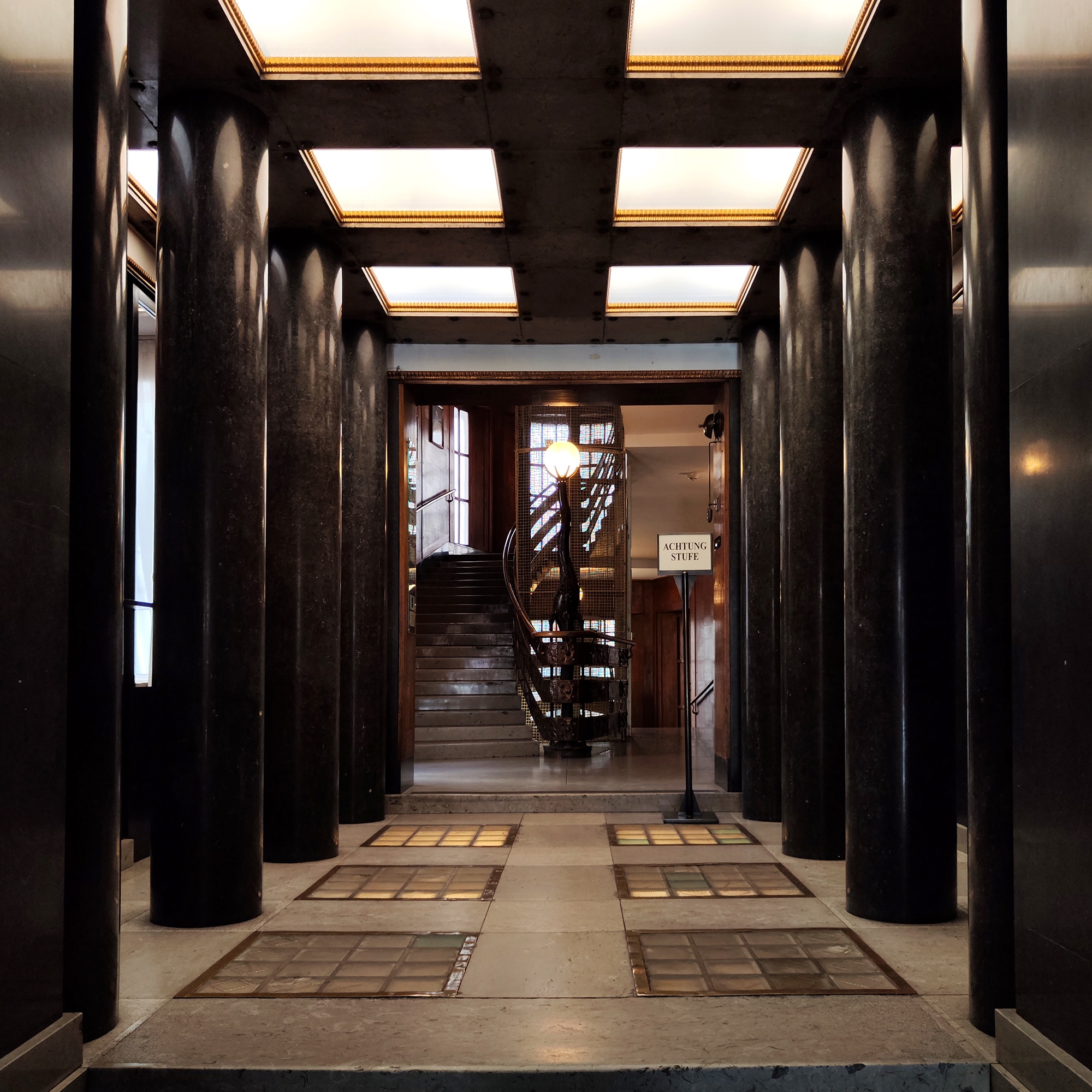
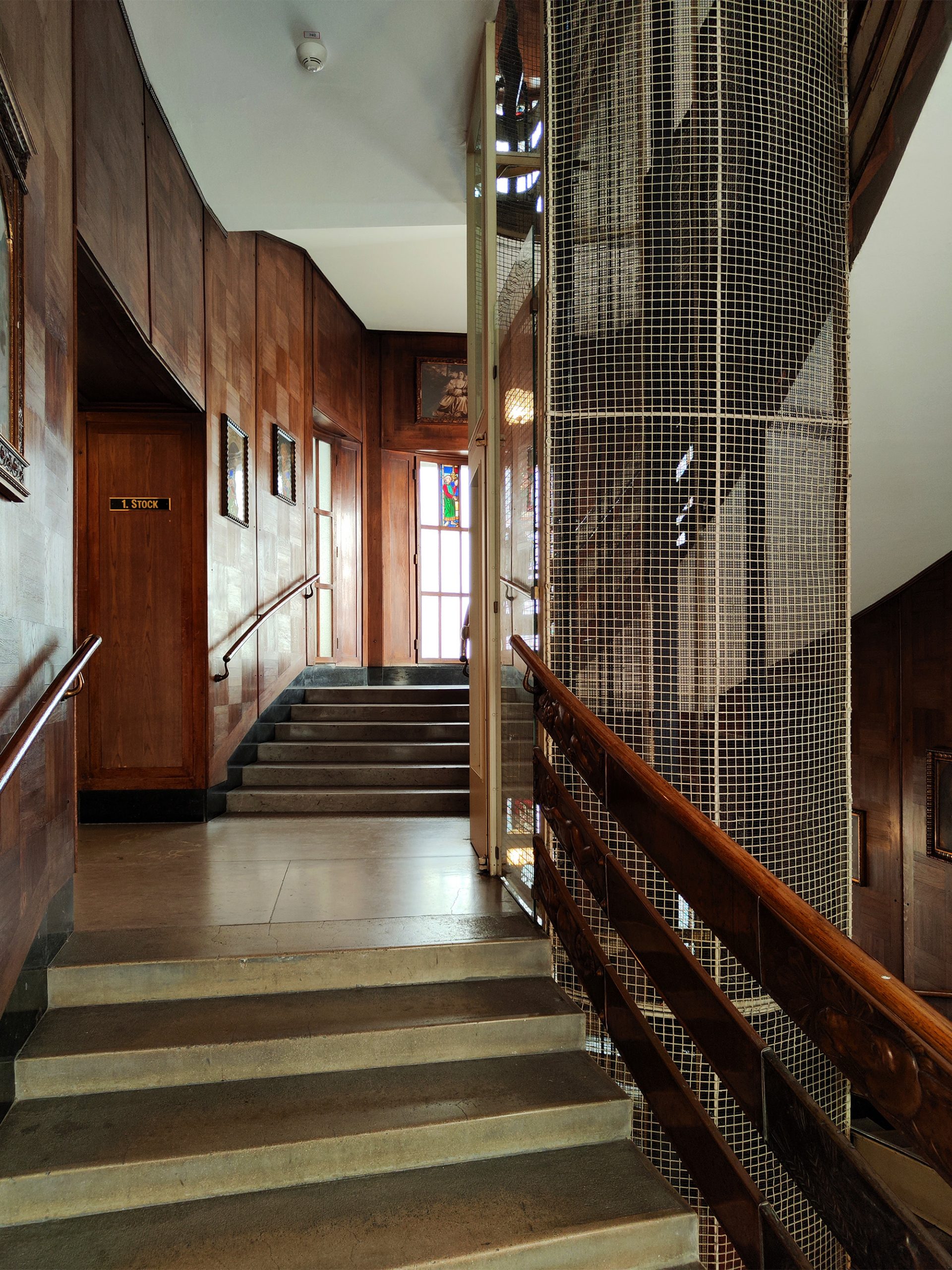
Inside, Plecnik’s typical reform style continues: the foyer is lined with marble, supported by monolithic round columns of polished granite and spanned by a coffered glass ceiling. The staircase with brown panelling, relief brass railings and brass lights from the time of construction has been preserved almost entirely in its original form. The lights have organic shapes and imitate insects. This is a reminiscence of the Zacherl company’s insecticide production. This sometimes earned the huge building on the site of the fire the nickname ‘Wanzenburg’ (bug castle).
En el interior, continúa el estilo reformista típico de Plecnik: el vestíbulo está revestido de mármol, sostenido por columnas redondas monolíticas de granito pulido y cubierto por un techo de cristal artesonado. La escalera, con paneles marrones, barandillas de latón en relieve y luces de latón de la época de su construcción, se ha conservado casi en su totalidad en su forma original. Las luces tienen formas orgánicas e imitan a los insectos. Esto es un recuerdo de la producción de insecticidas de la empresa Zacherl. Esto le valió en ocasiones al enorme edificio situado en el lugar del incendio el apodo de «Wanzenburg» (castillo de los insectos).
Text via Planet Vienna, translation by Hidden Architecture