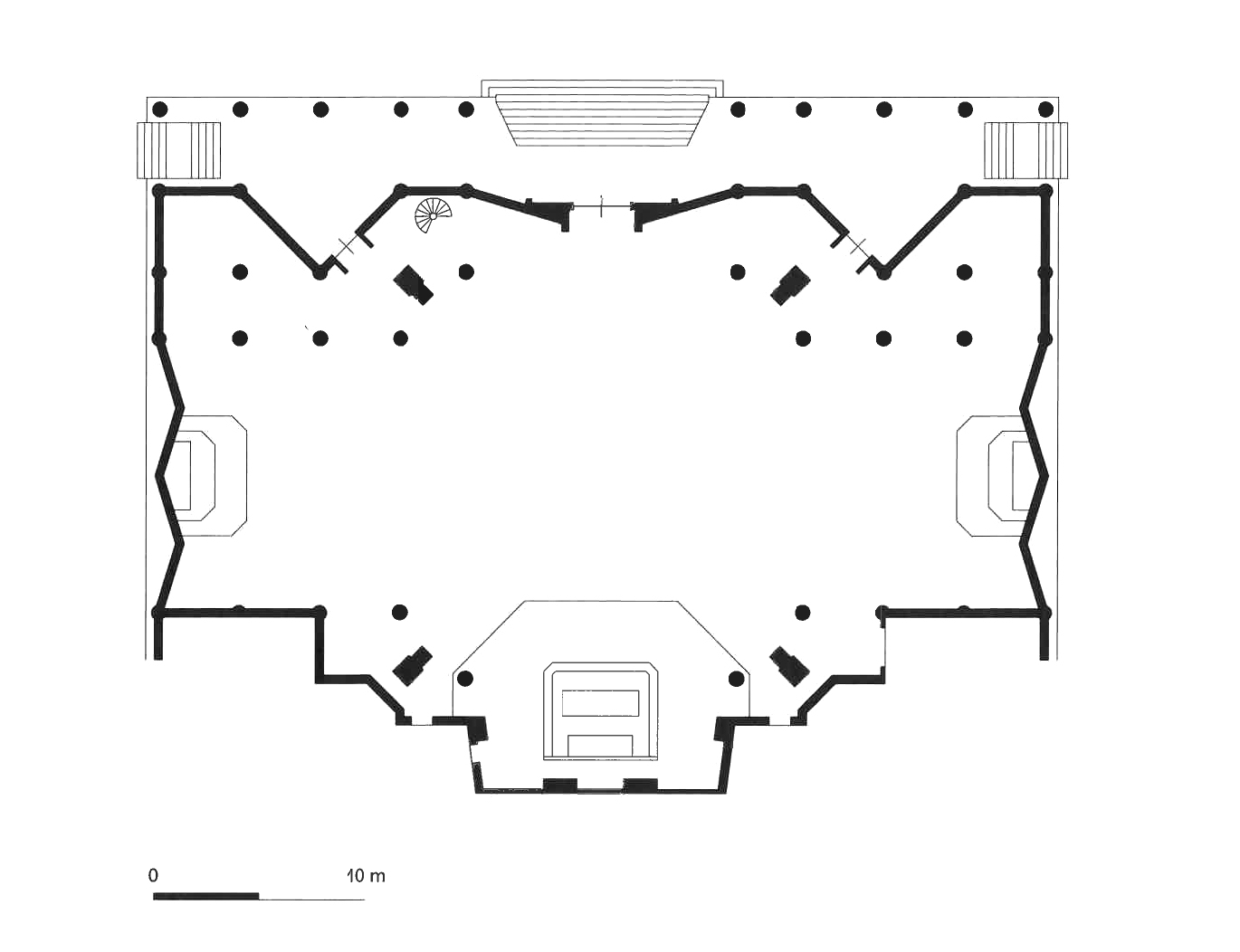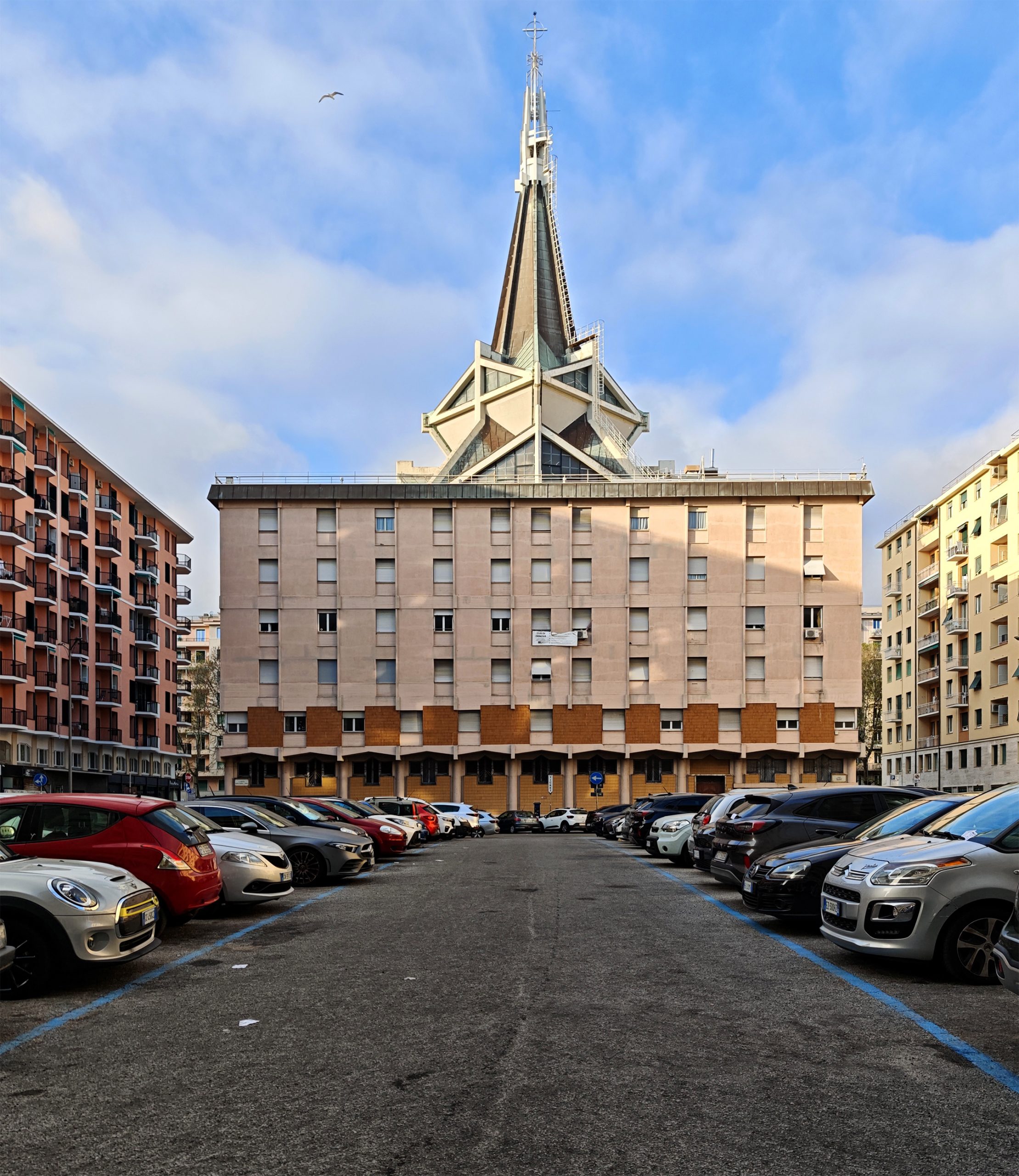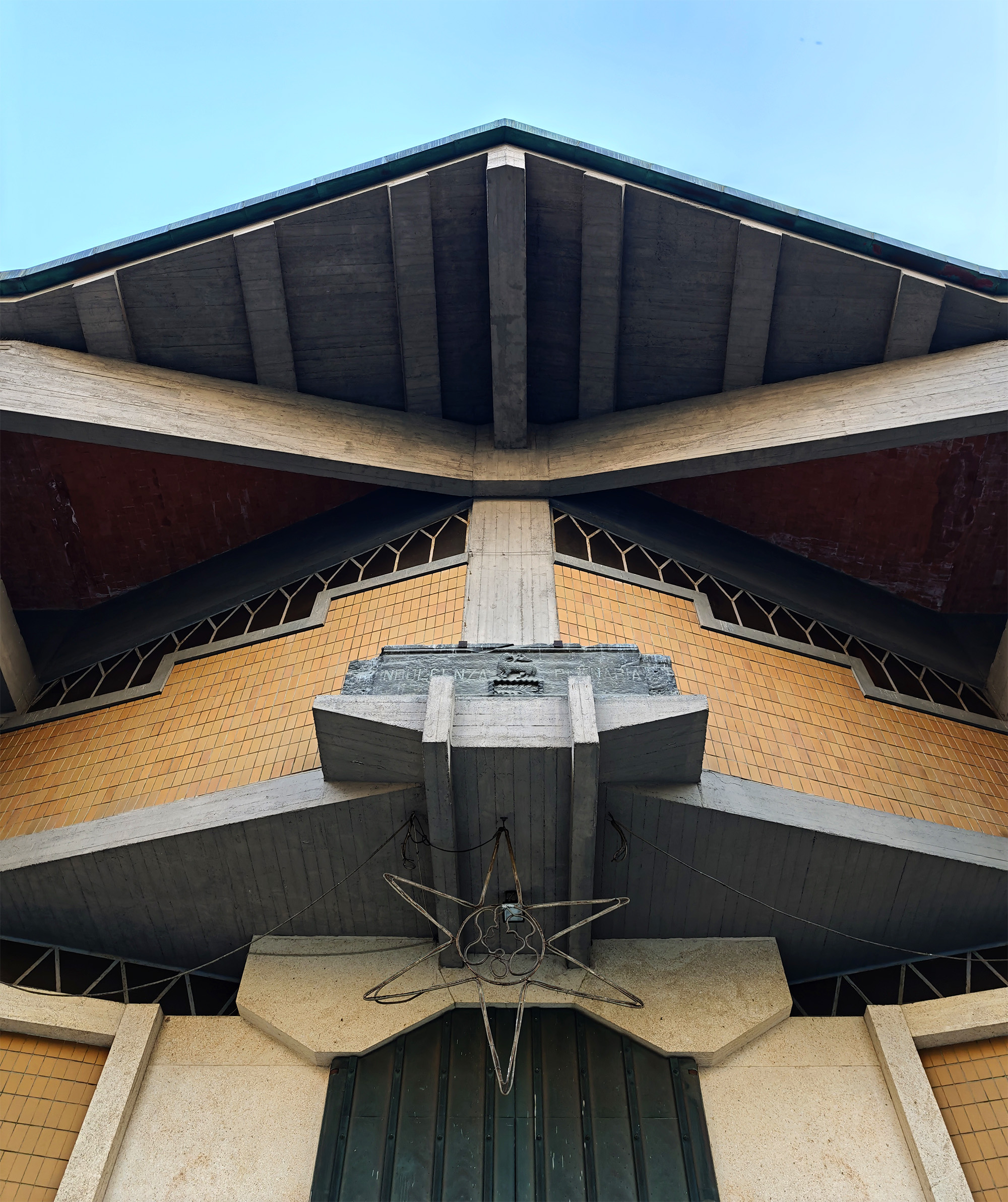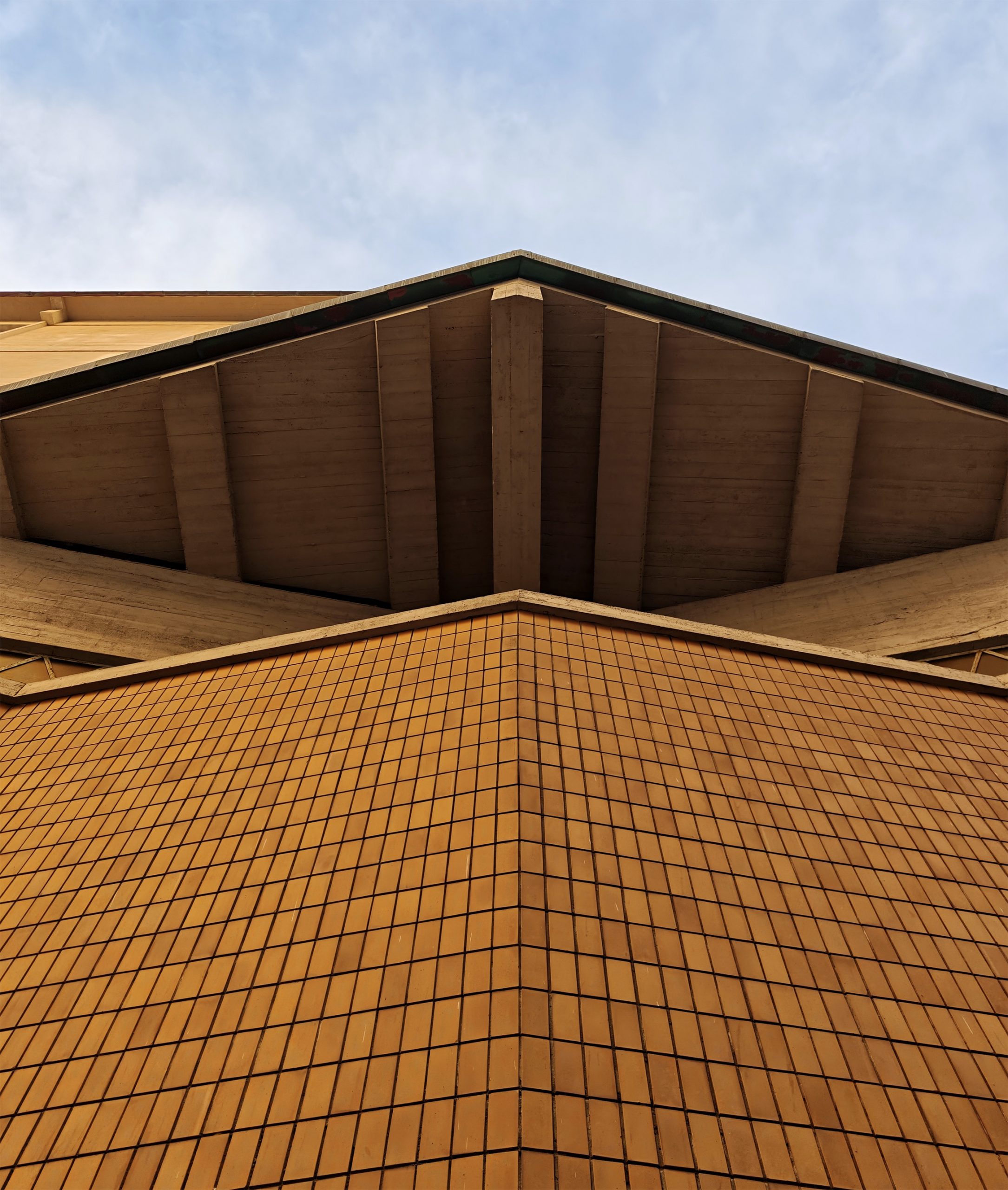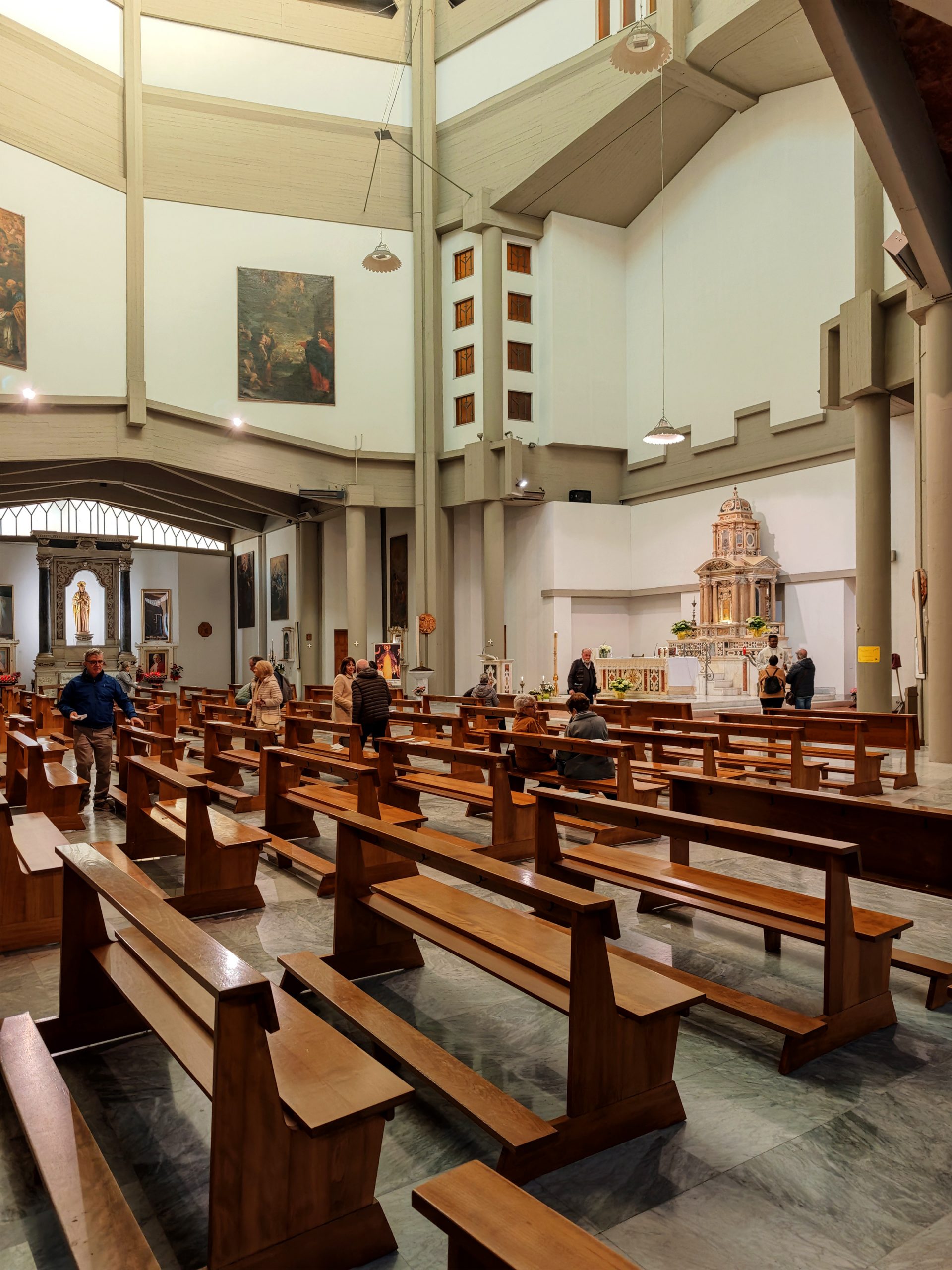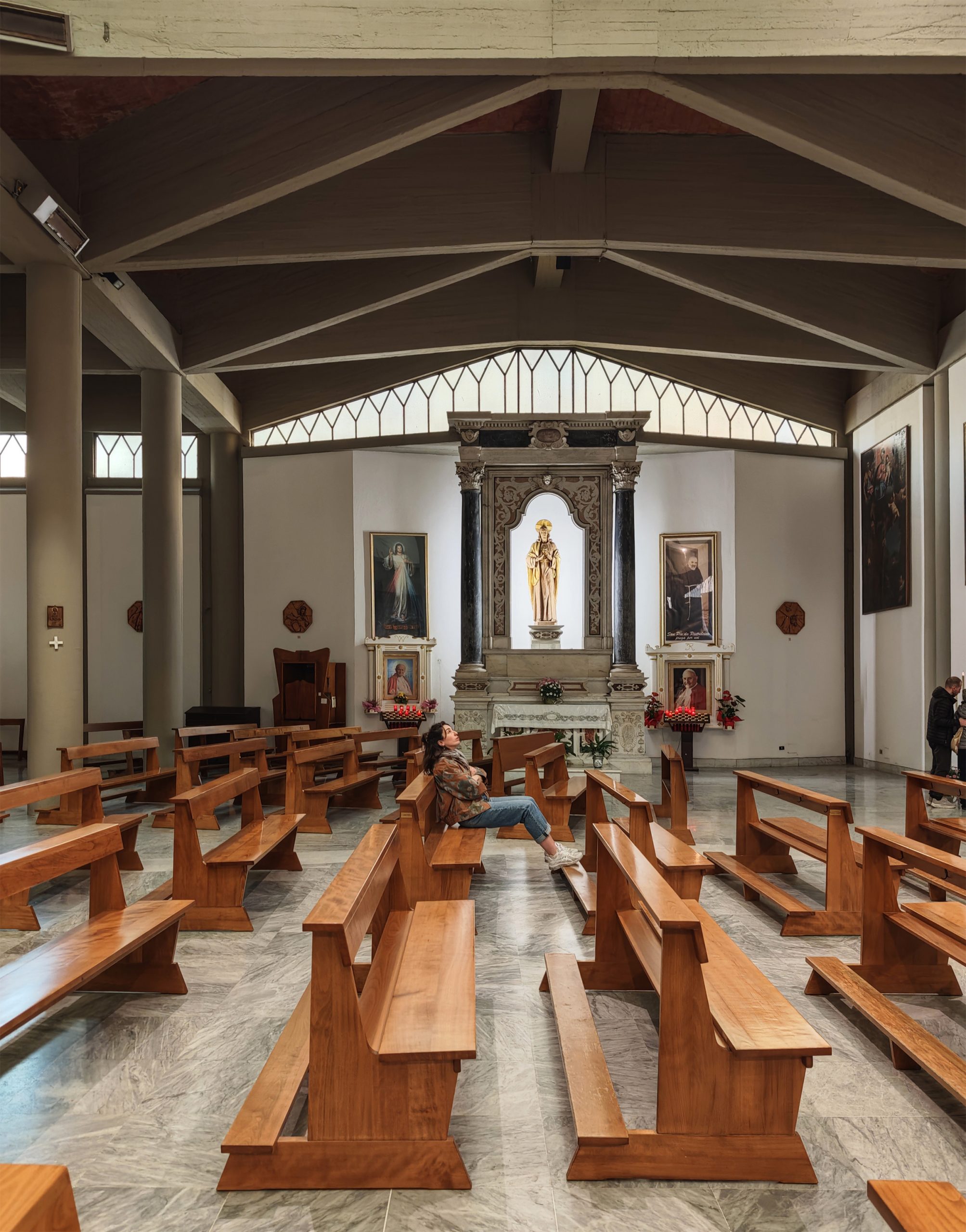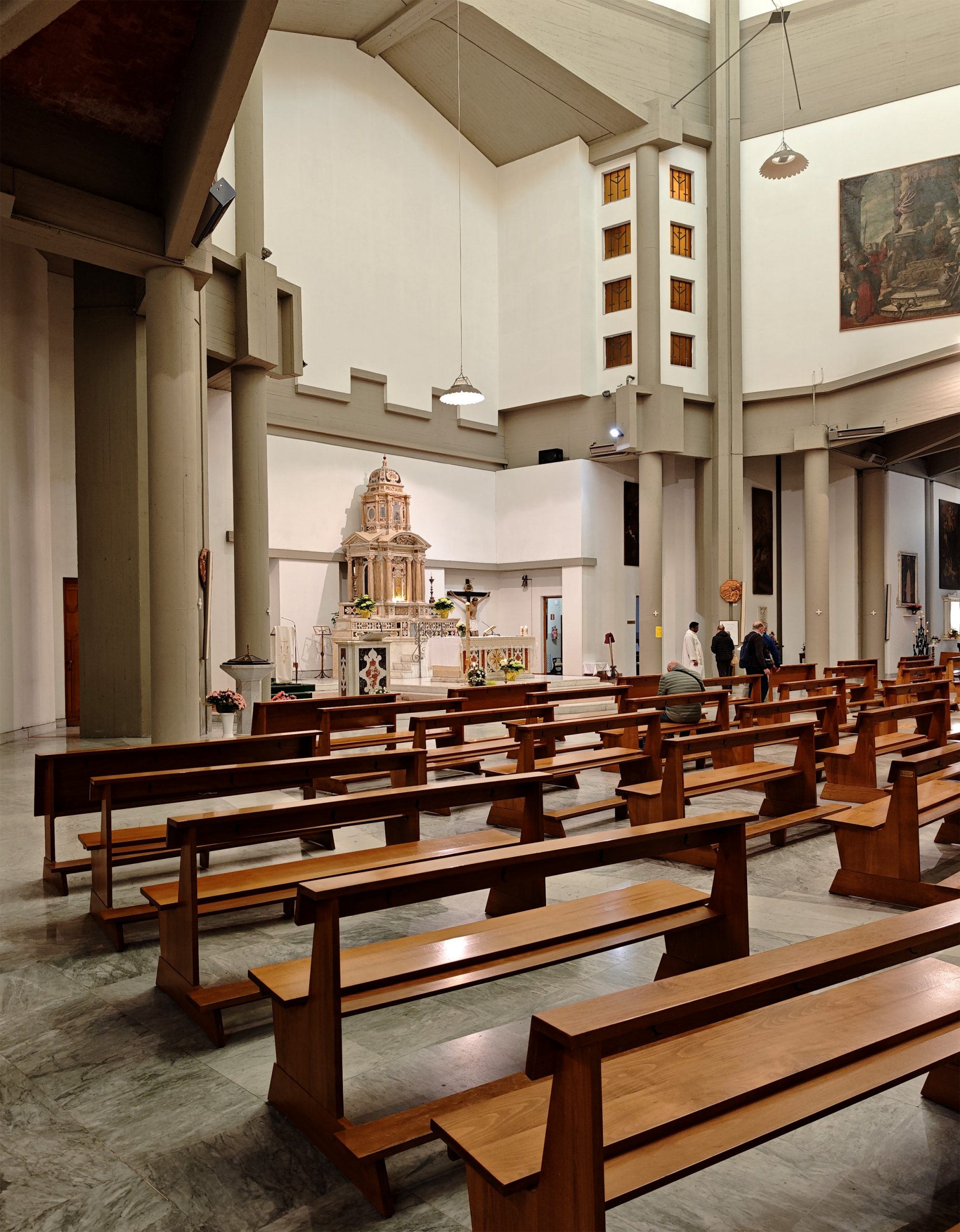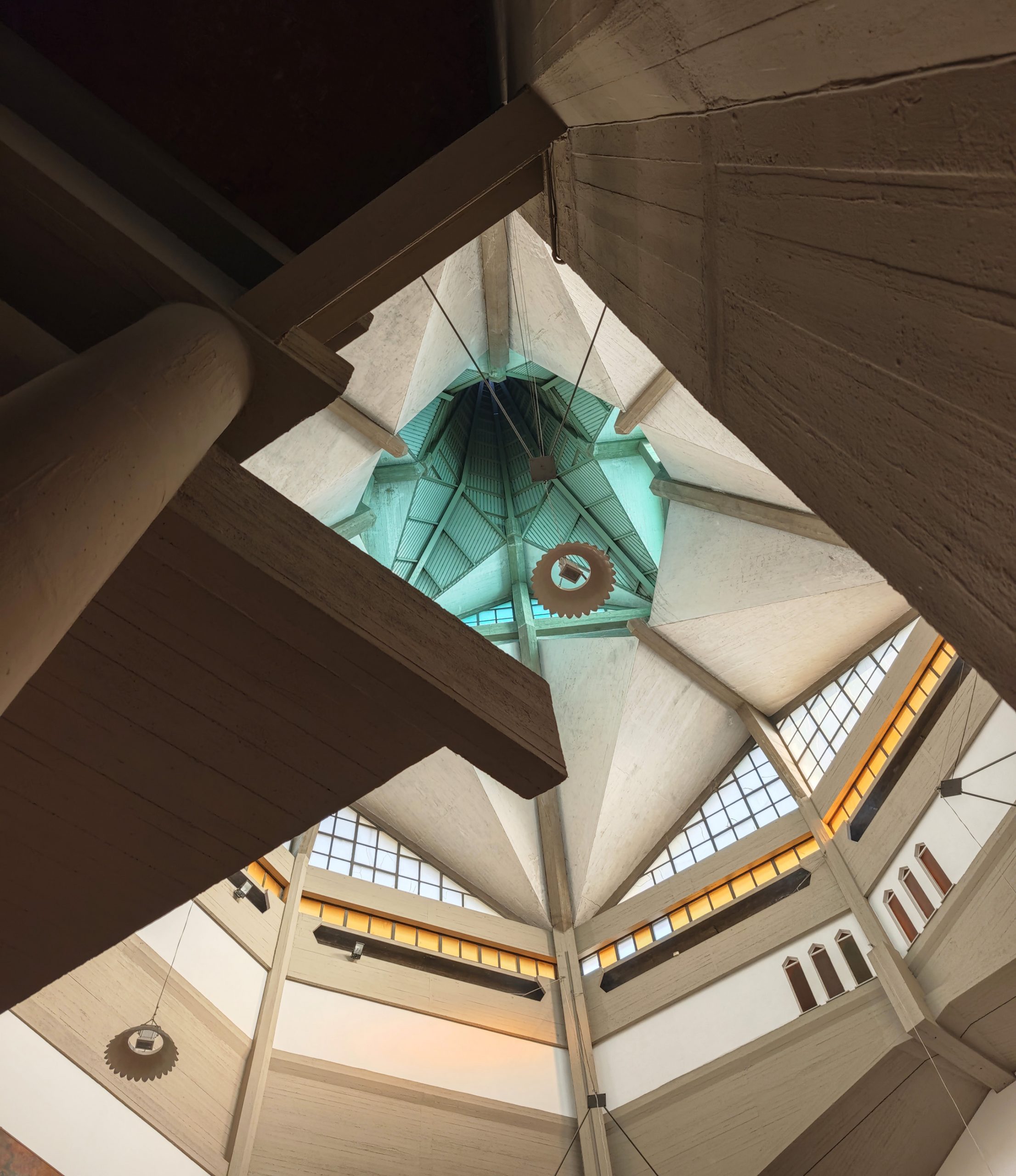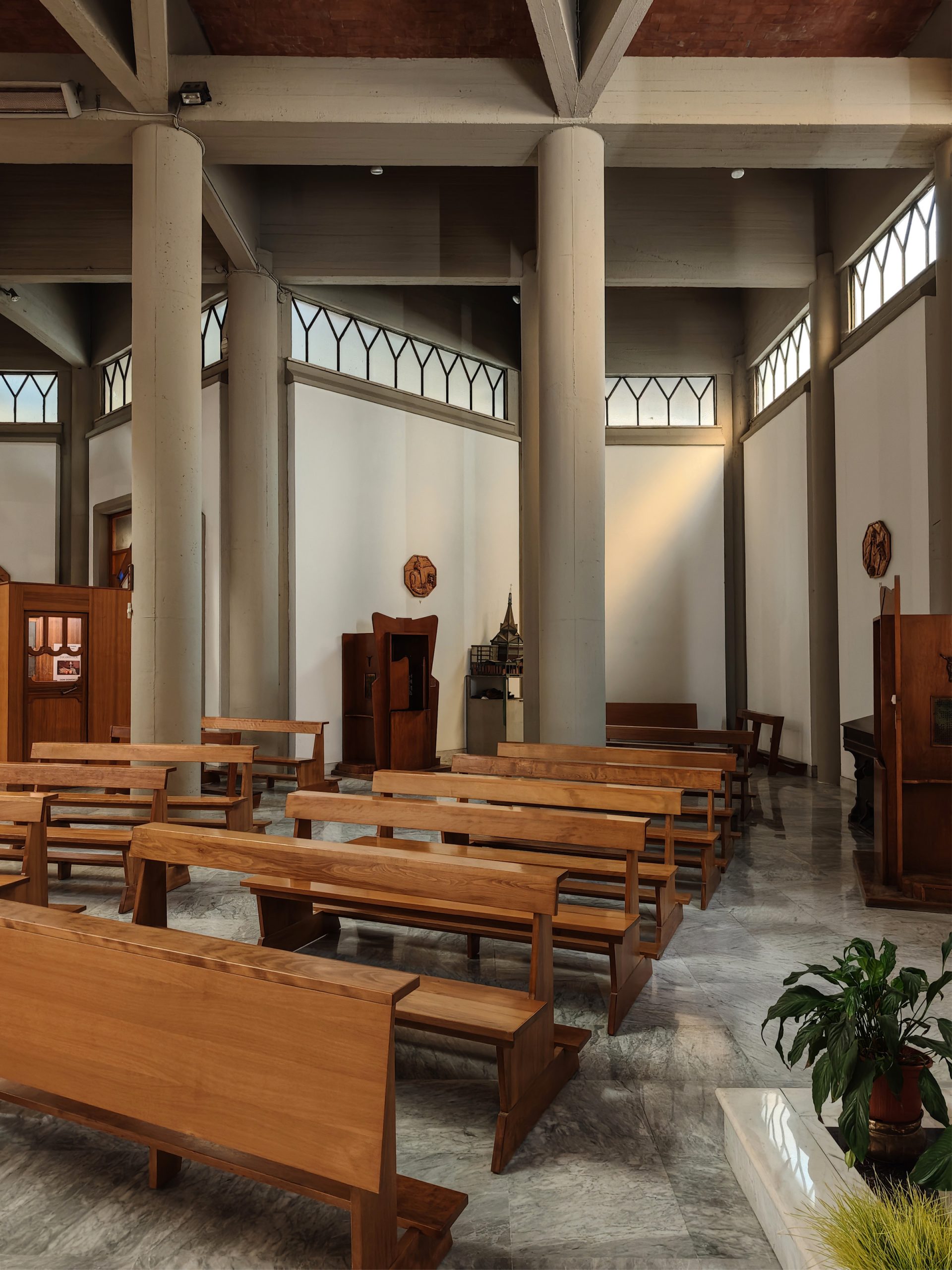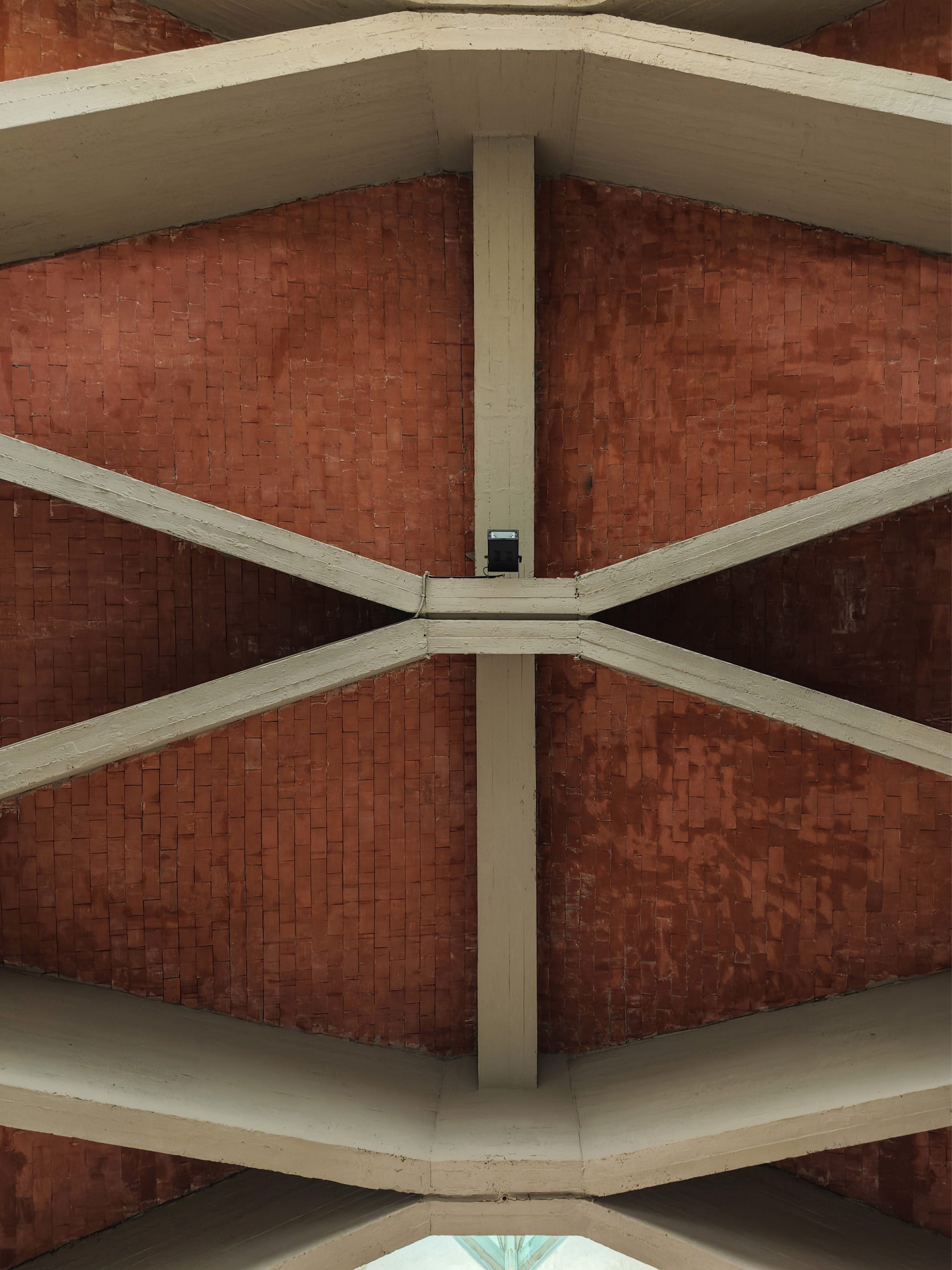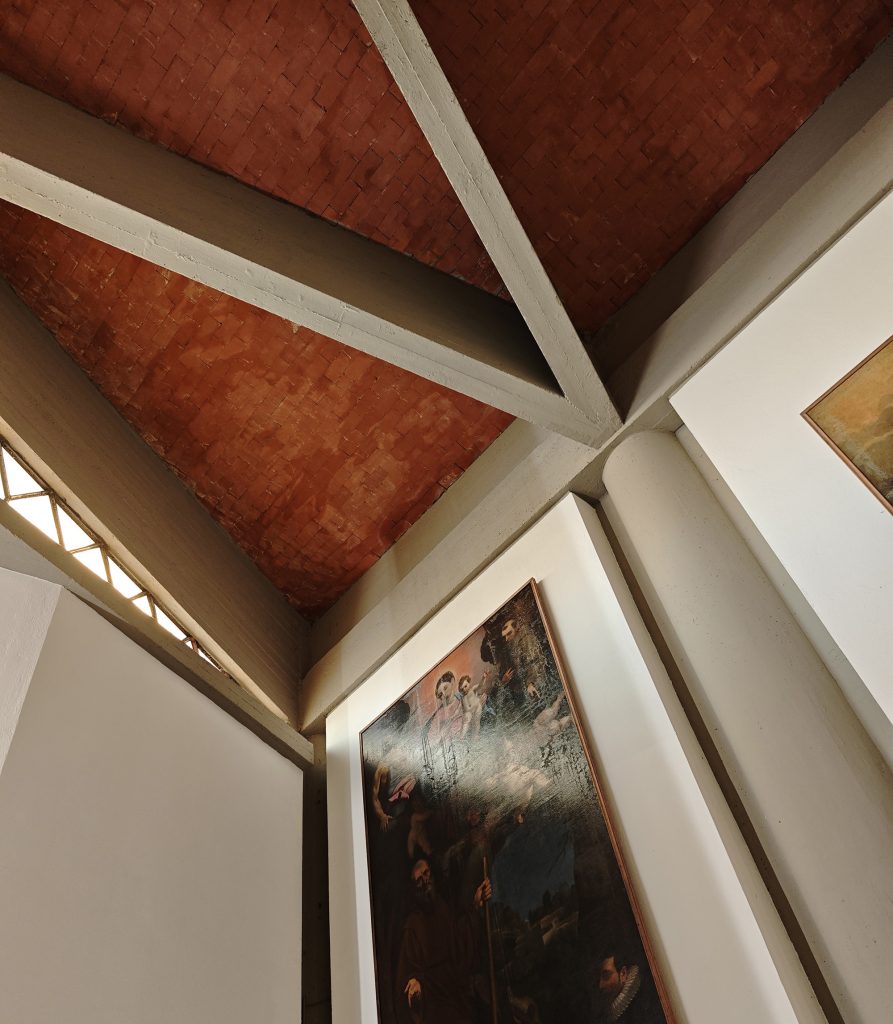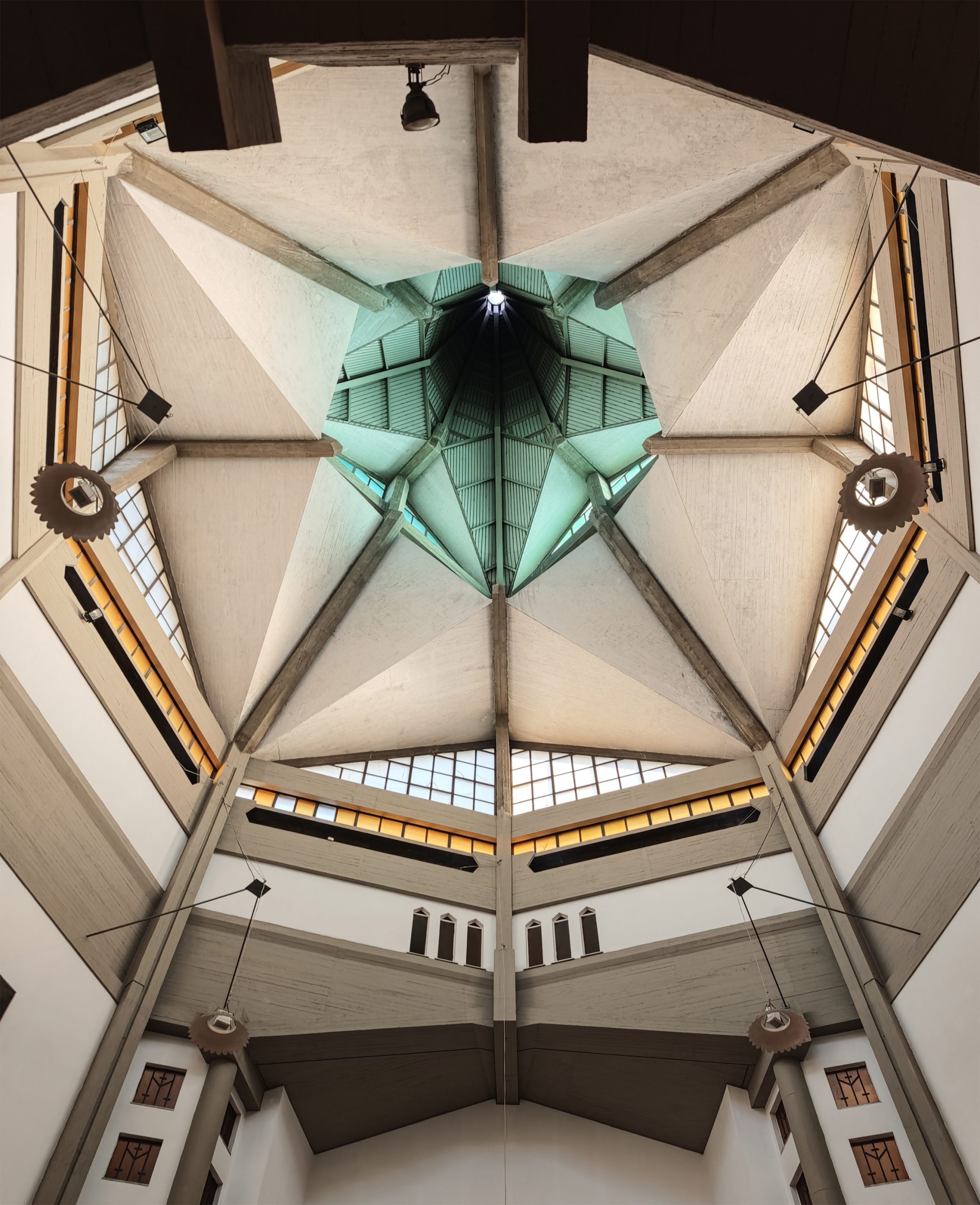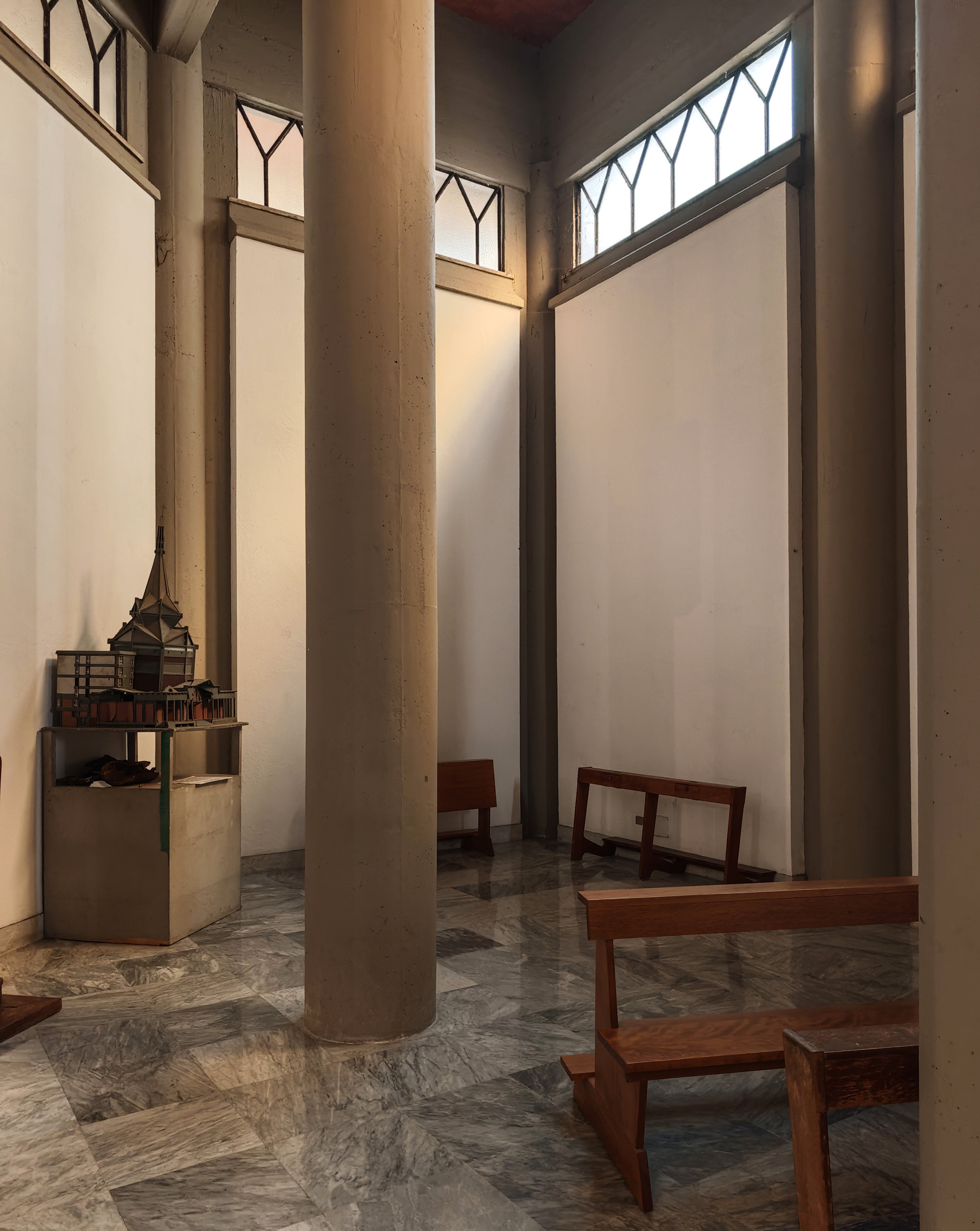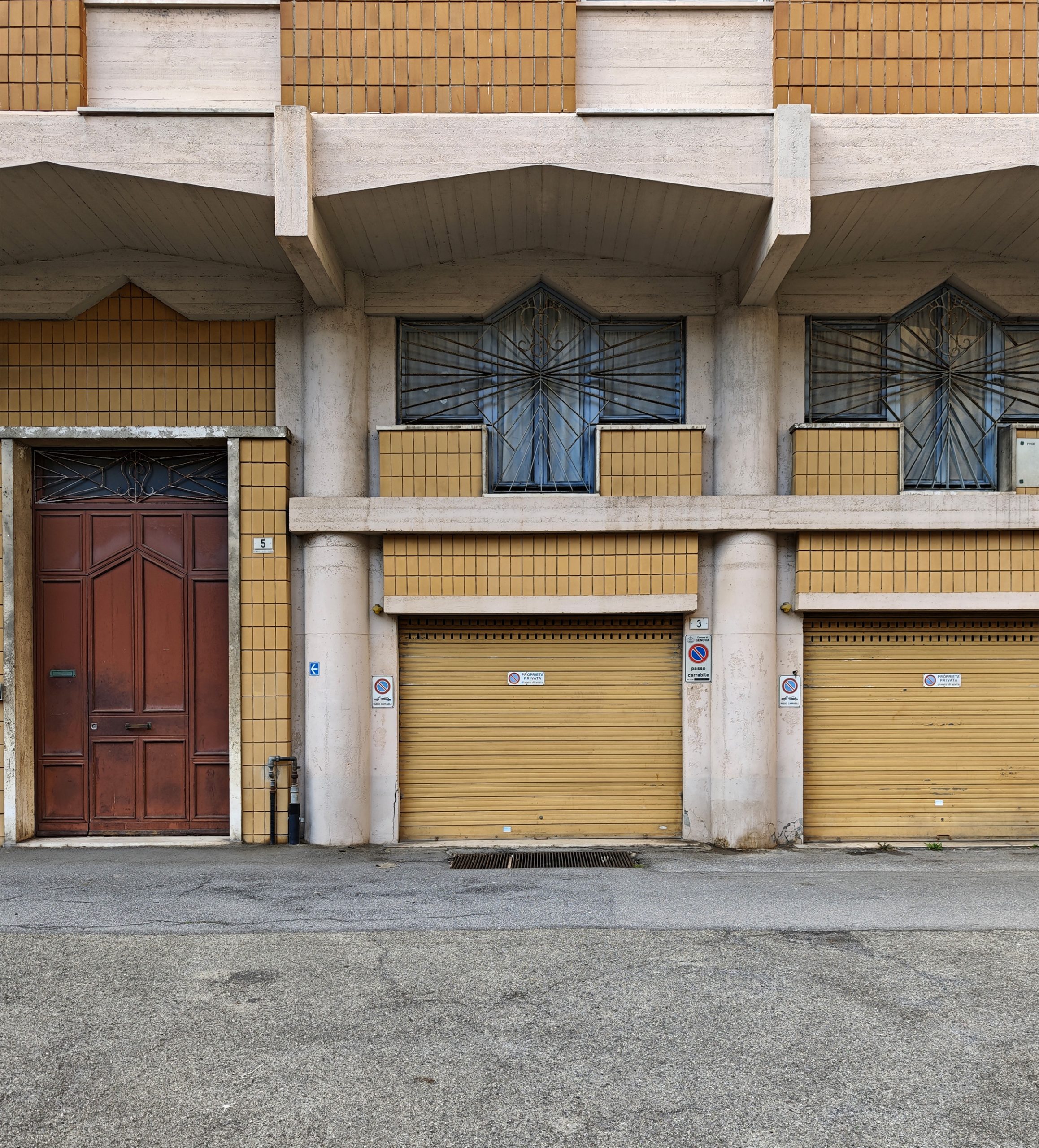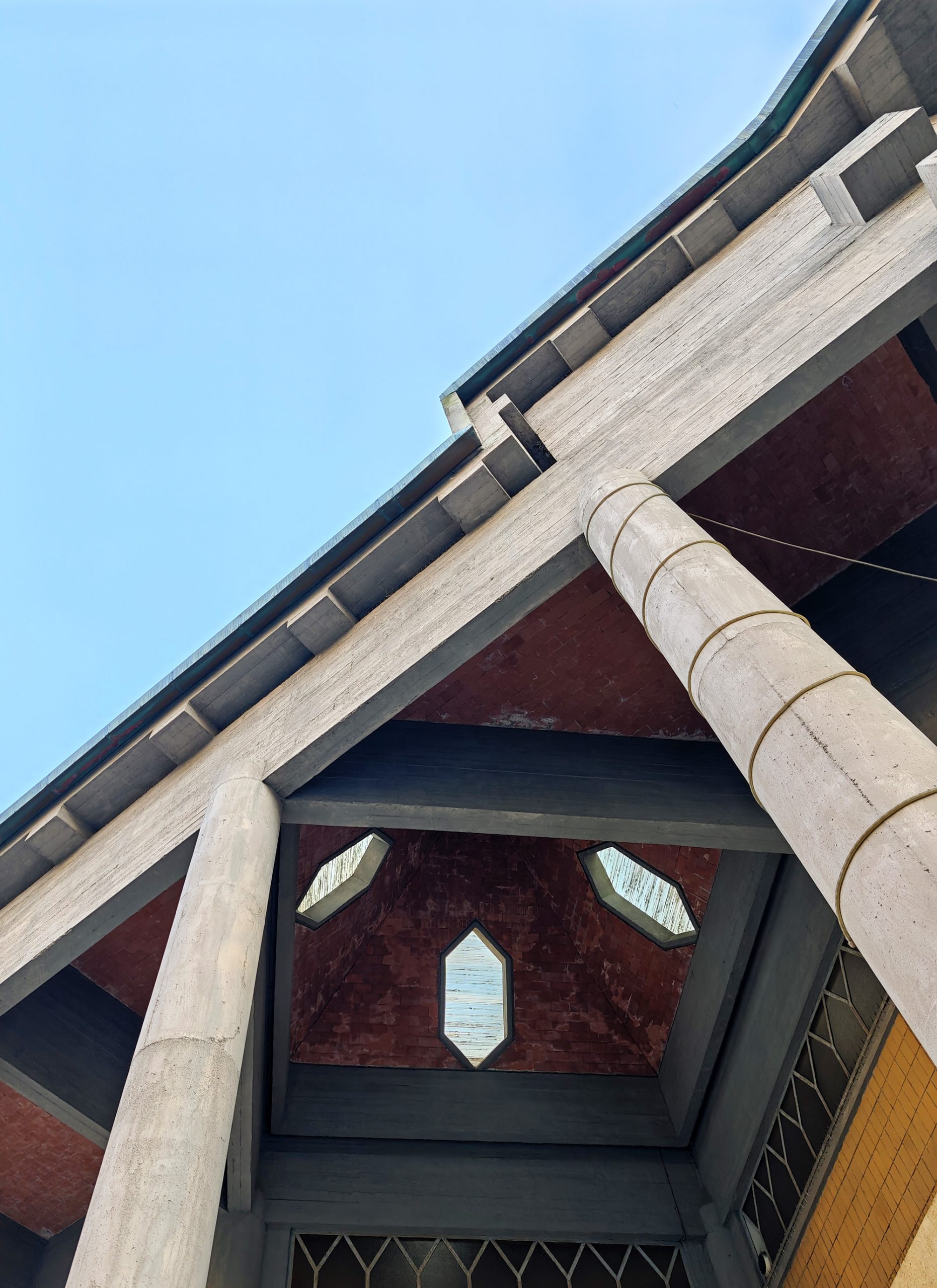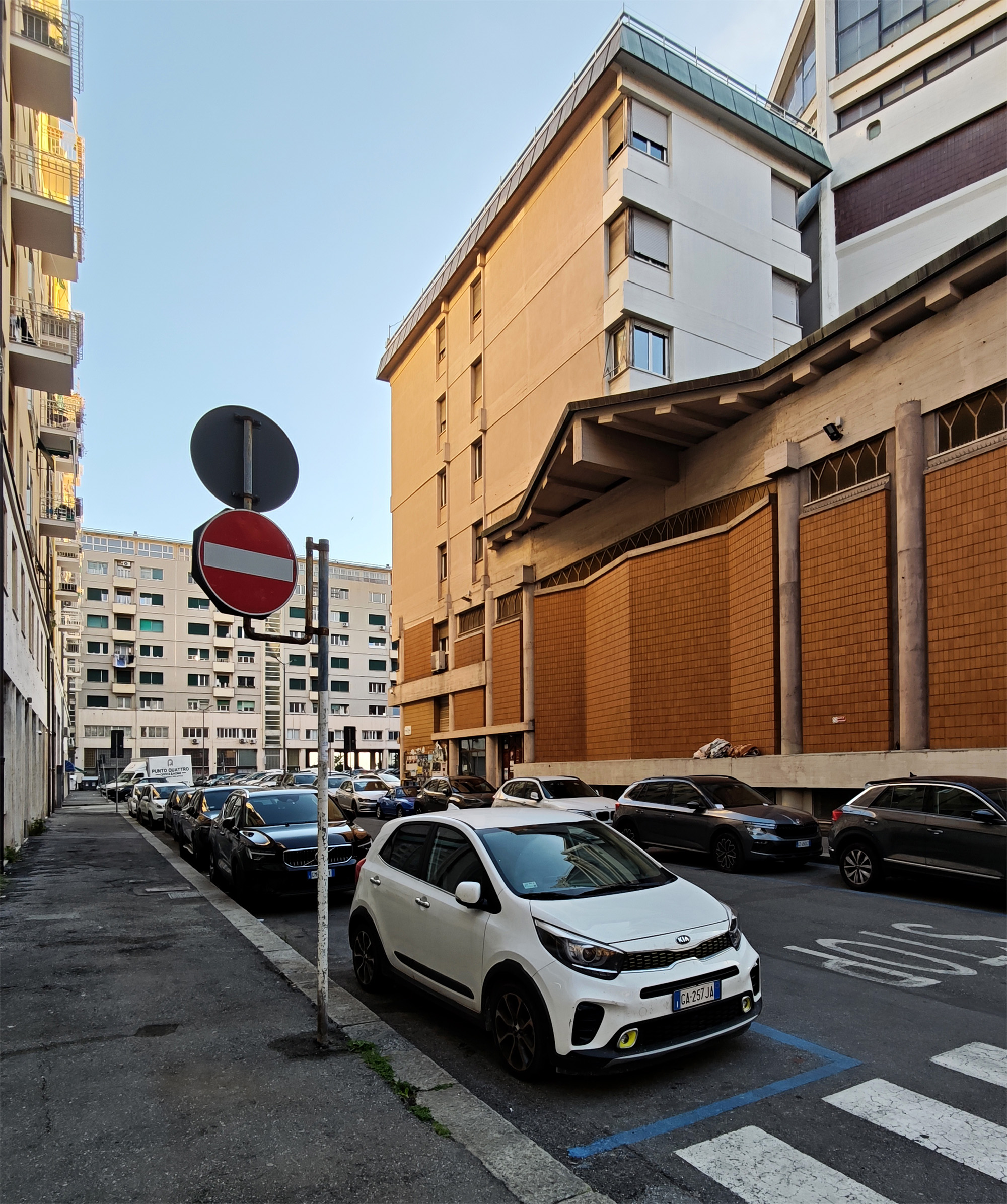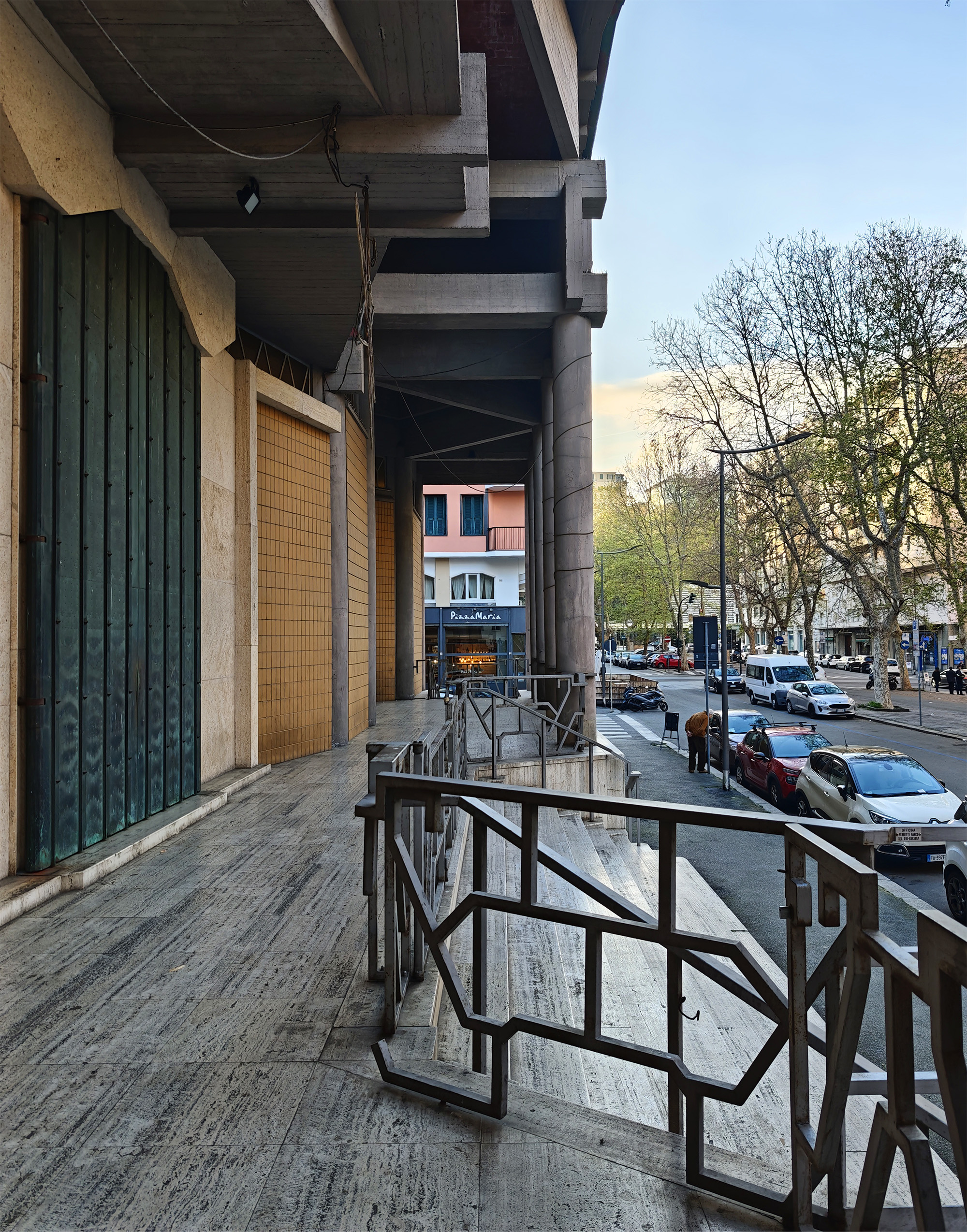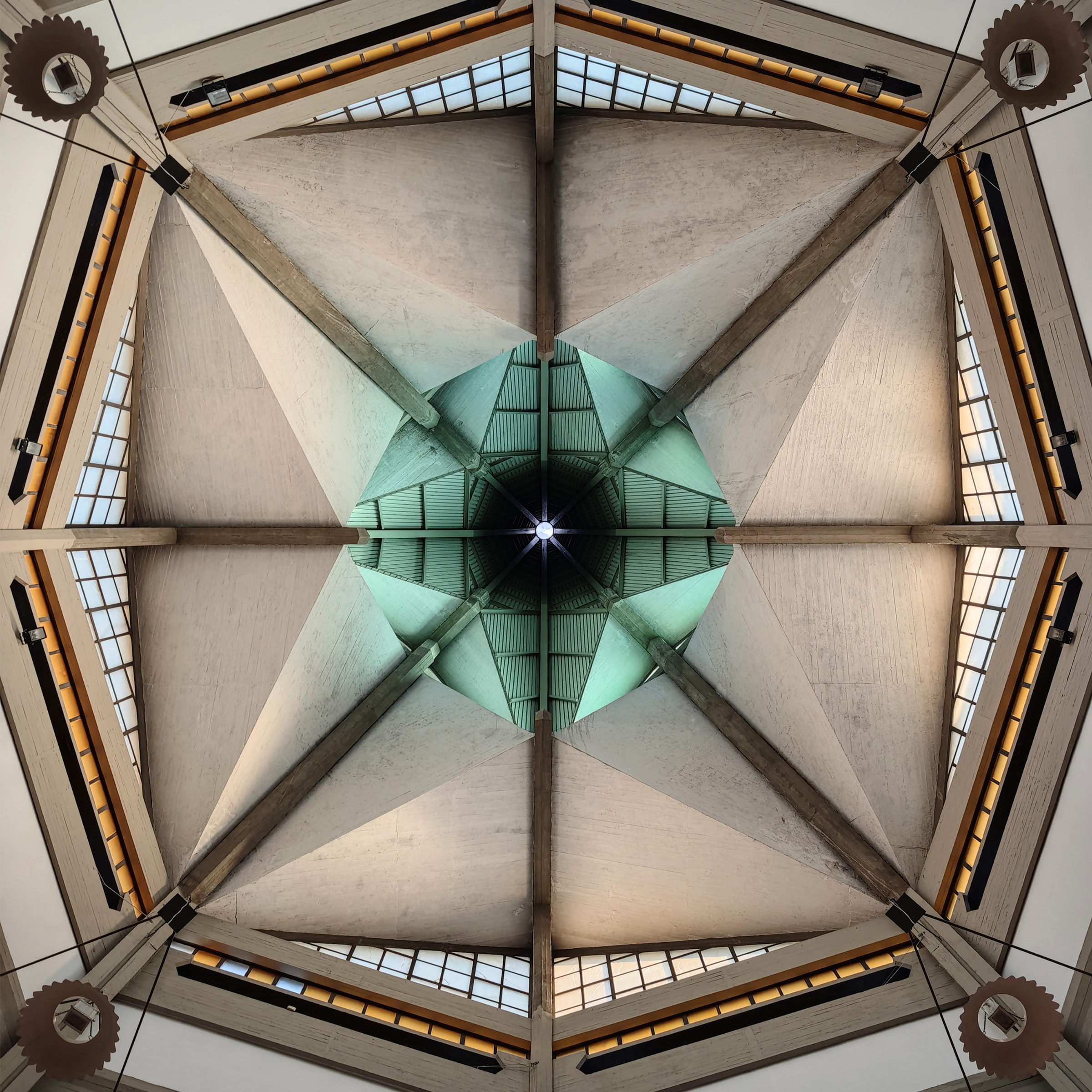
The Church of Santa Maria dei Servi in the Foce district is a journey through time and space. Designed by Leonardo Bucci and Raffaello Trinci, this building is a layering of memories, exchanges and intertwining influences from a variety of architectural styles that contributed to the post-war urban reconstruction and the transformation of places of worship. The 1963 design responds, with eclectic and eccentric elegance, to a period of exploration and transition. This was the period immediately following Soviet cosmonaut Yuri Gagarin’s spaceflight and coinciding with the Second Vatican Council, which enshrined the active involvement of the faithful in the liturgical rite.
La Iglesia de Santa Maria dei Servi, en el barrio de Foce, es un viaje a través del tiempo y el espacio. Diseñado por Leonardo Bucci y Raffaello Trinci, este edificio es una superposición de recuerdos, intercambios e influencias entrelazadas de diversos estilos arquitectónicos que contribuyeron a la reconstrucción urbana de la posguerra y a la transformación de los lugares de culto. El diseño de 1963 responde, con una elegancia ecléctica y excéntrica, a una época de exploración y transición. Fue el periodo inmediatamente posterior al vuelo espacial del cosmonauta soviético Yuri Gagarin y coincidió con el Concilio Vaticano II, que consagró la participación activa de los fieles en el rito litúrgico.
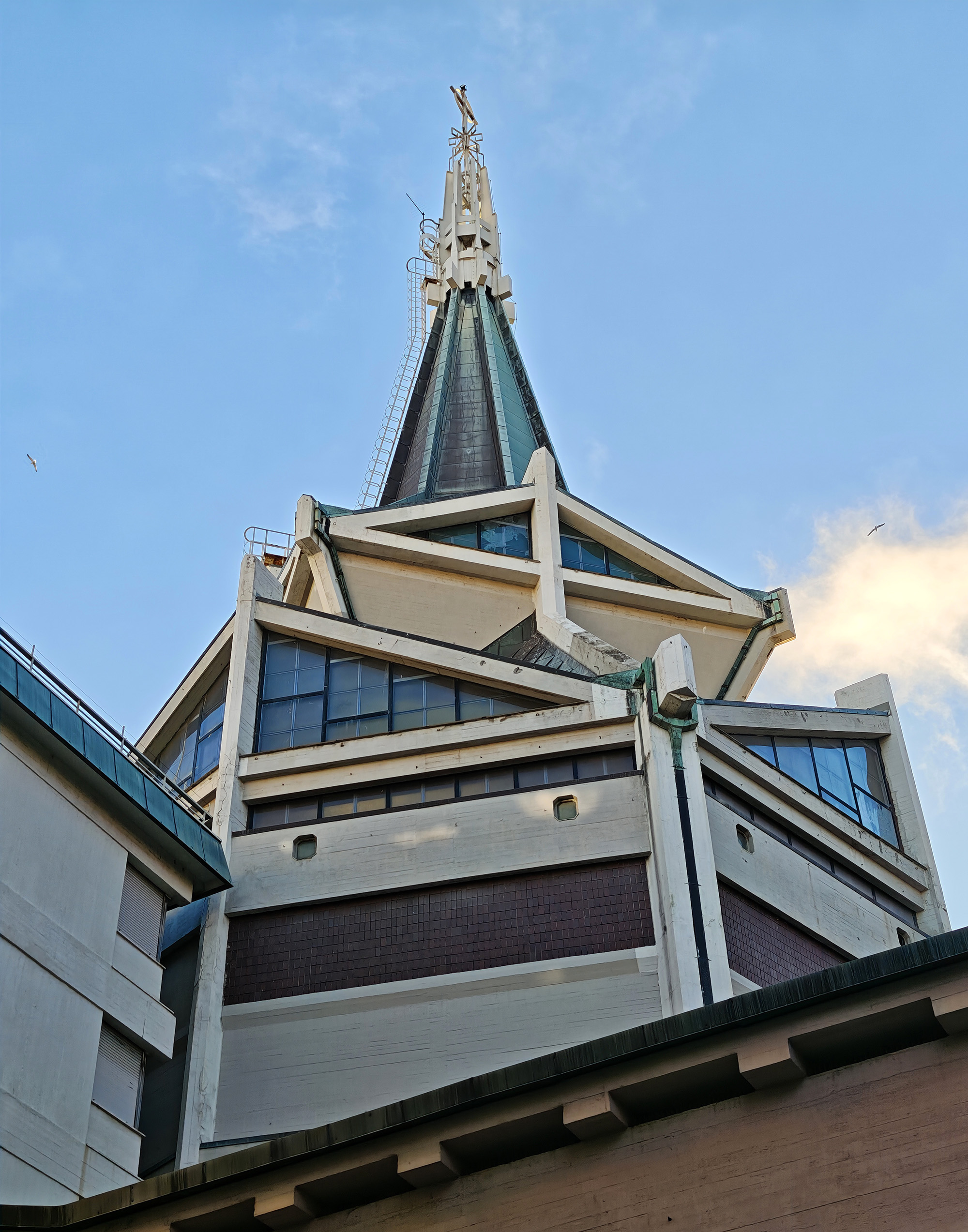
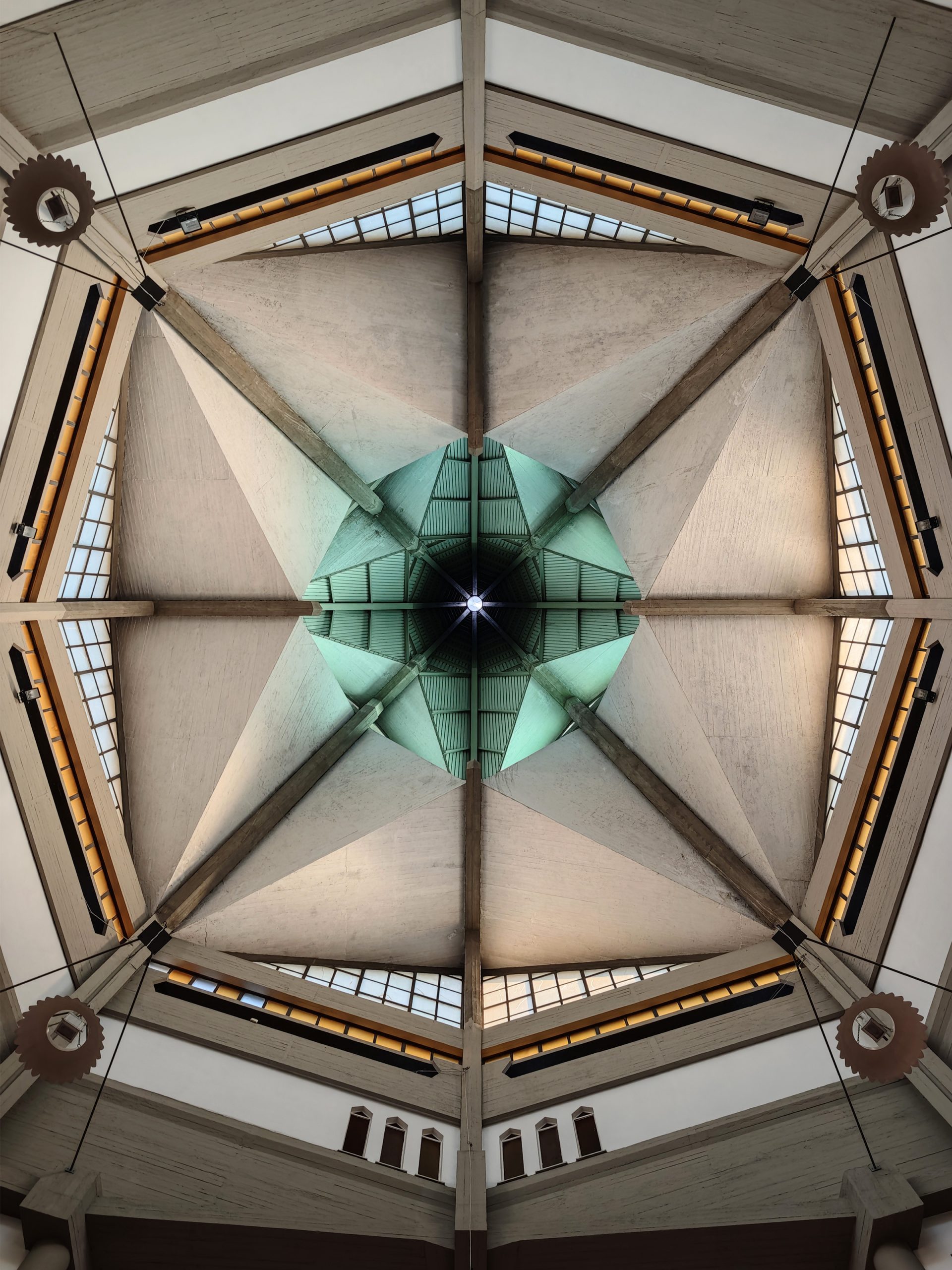
The result is a complex interplay of styles, languages and approaches, both cultural and architectural. The dominant feature of this building is the ogive, which rises like a luminous rocket above the surrounding rooftops and seems, in some way, to allude to a transcendental journey beyond the celestial vault.
El resultado es una compleja interacción de estilos, lenguajes y enfoques, tanto culturales como arquitectónicos. El rasgo dominante de este edificio es la bóveda de ogiva, que se eleva como un cohete luminoso por encima de los tejados circundantes y parece, de alguna manera, aludir a un viaje trascendental más allá de la bóveda celeste.
Text by Nicola Valentino Canessa, translation by Hidden Architecture