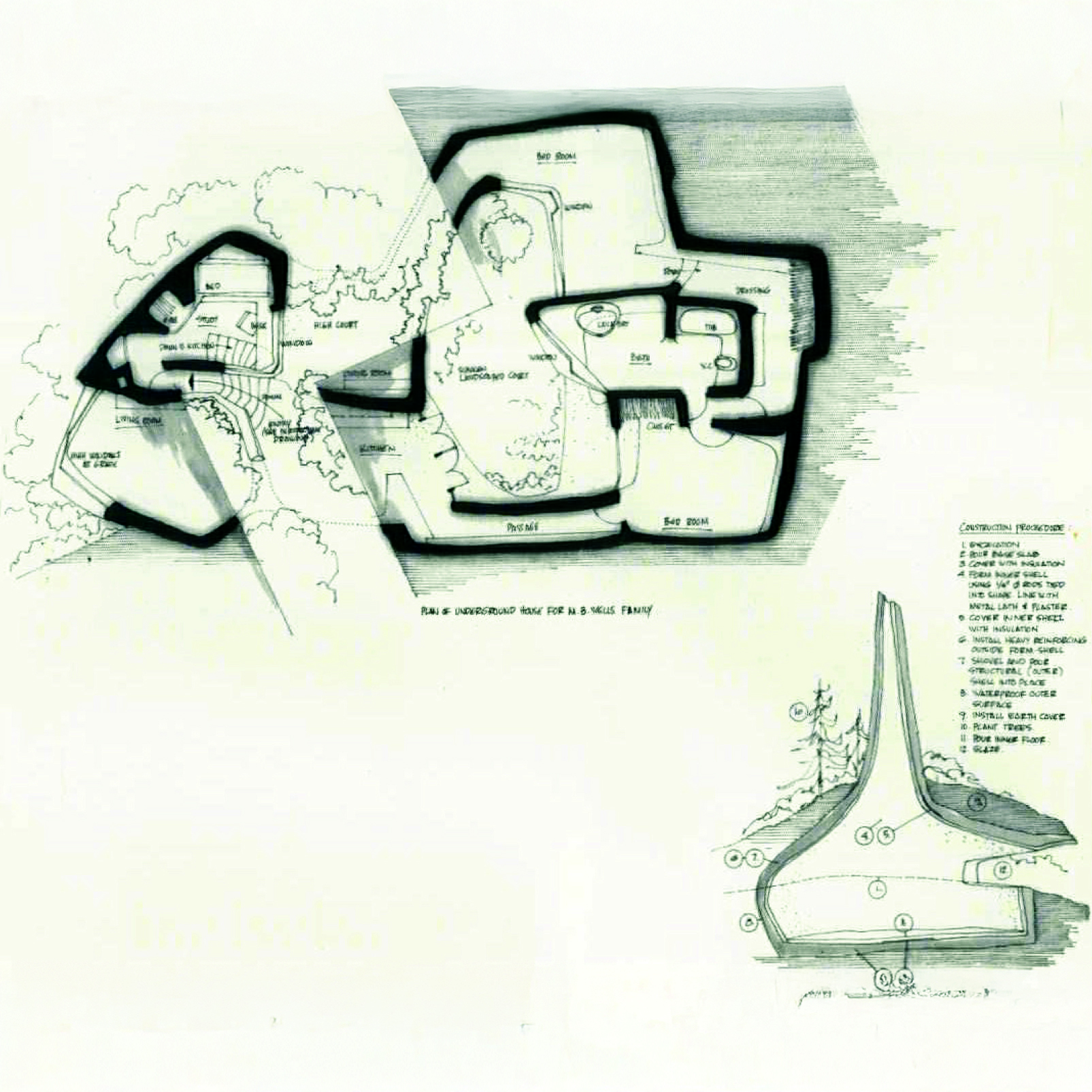
I spend a disproportionate amount of time wondering what an architecture – in the America of 1964 – can possibly do to set right the ills that plague us: overpopulation, automation, the growing destruction and mutilation of our countryside, and worst of all, the self-absorption and the self-interest that obscure our sense of values. It really hurts me to be responsible for so much needless slaughter—lo go on designing buildings, beautiful as I think they are, that crush acre after acre of precious life under their parking lots, their roadways, their floors. I fret over the relative value of trees and man, and see little difference, especially when I see how needlessly the one destroys the other.
Dedico una cantidad desproporcionada de tiempo a preguntarme qué puede hacer la arquitectura —en la América de 1964— para corregir los males que nos afligen: la superpoblación, la automatización, la creciente destrucción y mutilación de nuestro campo y, lo peor de todo, el egocentrismo y el interés propio que oscurecen nuestro sentido de los valores. Me duele mucho ser responsable de tanta matanza innecesaria, seguir diseñando edificios, por muy bonitos que me parezcan, que aplastan hectárea tras hectárea de vida preciosa bajo sus aparcamientos, sus carreteras, sus suelos. Me preocupa el valor relativo de los árboles y el hombre, y veo poca diferencia, sobre todo cuando veo cómo uno destruye al otro innecesariamente.
Every time I look at the world around me, and try to account for the causes of these problems, my answers always differ from the popularly accepted ones—the firmly held ideas that are making such a mess of things today. I’m referring to such myths as Man’s “dominion” over Nature, the superabundance of natural resources, the “Golden Age” of Science.
Cada vez que miro el mundo que me rodea e intento explicar las causas de estos problemas, mis respuestas siempre difieren de las aceptadas popularmente, las ideas firmemente arraigadas que están causando tal desastre hoy en día. Me refiero a mitos como el «dominio» del hombre sobre la naturaleza, la superabundancia de recursos naturales, la «edad de oro» de la ciencia.

I’d like to propose, instead, that oil of Nature is beautiful, that only Nature is beautiful, that Nature is beauty. Creation has a fresh, majestic loveliness that never fades. Every bird, every pebble, contributes to the grand pageant in a way that is somehow always perfect. Man has no such instinct to guide him when he creates and builds. That’s why his books and his beautiful paintings and architecture are so rare, and his ugly works so numerous.
Me gustaría proponer, en cambio, que el aceite de la naturaleza es hermoso, que solo la naturaleza es hermosa, que la naturaleza es belleza. La creación tiene una belleza fresca y majestuosa que nunca se desvanece. Cada pájaro, cada guijarro, contribuye al gran espectáculo de una manera que, de alguna manera, siempre es perfecta. El hombre no tiene ese instinto que lo guíe cuando crea y construye. Por eso sus libros, sus hermosas pinturas y su arquitectura son tan escasos, y sus obras feas tan numerosas.
For millions of years, giant forests covered vast portions of what we now call the United States, until man came—civilized man—to start on a binge of slaughter that has never stopped.
Durante millones de años, bosques gigantescos cubrieron vastas extensiones de lo que hoy llamamos Estados Unidos, hasta que llegó el hombre —el hombre civilizado— y comenzó una matanza desenfrenada que nunca ha cesado.

Where forests once stood, forests try to reappear. Even today, if land is left “idle,” it never turns into a new school or a supermarket. Instead, tiny saplings miraculously appear—the Life Principle at work. Where man is absent. Nature seems to thrive. I believe that Nature can be made to thrive in the presence of man. but I must go strictly according to my imagination, for Nature has always suffered at man’s hands.
Donde antes había bosques, los bosques intentan reaparecer. Incluso hoy en día, si la tierra se deja «inactiva», nunca se convierte en una nueva escuela o un supermercado. En cambio, aparecen milagrosamente pequeños árboles jóvenes: el principio de la vida en acción. Donde el hombre está ausente, la naturaleza parece prosperar. Creo que se puede hacer que la naturaleza prospere en presencia del hombre, pero debo guiarme estrictamente por mi imaginación, ya que la naturaleza siempre ha sufrido a manos del hombre.
The New York World’s Fair shows us at our grossest. It wraps our materialism in such sparkling packages that the future would seem to be a kind of Cadillac-colored dream: abundance, good health, and space-travel going hand in hand with a shorter work week and a growing population. Even Nature is in for improvement. “Lifeless” deserts will bloom. Impenetrable jungles will be “tamed.” Riches taken from the seas will support seven times today’s population!
La Feria Mundial de Nueva York nos muestra lo peor de nosotros mismos. Envuelve nuestro materialismo en paquetes tan brillantes que el futuro parece ser una especie de sueño color Cadillac: abundancia, buena salud y viajes espaciales que van de la mano con una semana laboral más corta y una población en crecimiento. Incluso la naturaleza va a mejorar. Los desiertos «sin vida» florecerán. Las selvas impenetrables serán «domesticadas». ¡Las riquezas extraídas de los mares sustentarán a siete veces la población actual!
It’s so tempting to swallow all this bunk. All we need is some stirring music and an oily commentary on the “Greatness of Man,” and we believe it all. And the alternatives to this likely future are so uncommercial that no one even tells us about them. (I have nothing against labor-saving devices, except when they depend on further destruction of Nature.)
Es muy tentador tragarse todas estas tonterías. Solo necesitamos una música emotiva y un comentario adulador sobre la «grandeza del hombre» y nos lo creemos todo. Y las alternativas a este probable futuro son tan poco comerciales que nadie nos habla de ellas. (No tengo nada en contra de los dispositivos que ahorran trabajo, excepto cuando dependen de una mayor destrucción de la naturaleza).
Today, our Tomorrow is in the hands of city planners, and they have big things in store for us. Huge things, in fact. Giant super-cities, vast walls of humanity, buildings so big and so long that the highways and railroads will run inside them. Everything we’ll need will be only a push-button away: down to the thirty-third level for groceries, over six sections to the dentist, up two to the movies, and back home to one of the trillion transistorized, stereophonic living suites carved out of this huge mess.
Hoy, nuestro mañana está en manos de los urbanistas, y ellos tienen grandes cosas preparadas para nosotros. Grandes cosas, de hecho. Superciudades gigantes, enormes muros de humanidad, edificios tan grandes y tan largos que las autopistas y las vías férreas discurrirán por su interior. Todo lo que necesitemos estará al alcance de un botón: bajar al piso 33 para comprar comida, subir seis pisos para ir al dentista, subir dos para ir al cine y volver a casa, a uno de los billones de salones estereofónicos transistorizados tallados en este enorme caos.
There are bits of greenery on the roof, and on some of the balconies. That’s Nature, of course: can’t forget her. And far, far below, across the soaring freeways, are the remains of the great green earth itself, there for all to use and enjoy (if only they can get to it).
Hay trozos de vegetación en el tejado y en algunos balcones. Eso es la naturaleza, por supuesto: no podemos olvidarla. Y muy, muy abajo, al otro lado de las autopistas elevadas, están los restos de la gran tierra verde, ahí para que todos la usen y disfruten (si es que pueden llegar a ella).
The double tragedy of man’s gross appetites and his astounding numbers is everywhere apparent. We’re racing—the wrong way—down the street of progress, bolstering each other with talk of success and prosperity while in reality we move about in a half-dead world of dying cities, ugly countrysides, grim highways. Don’t let yourself be fooled by what the banners (and the planners) say.
La doble tragedia de los apetitos desmesurados del hombre y su asombrosa cantidad es evidente en todas partes. Estamos corriendo —en la dirección equivocada— por la calle del progreso, animándonos unos a otros con conversaciones sobre el éxito y la prosperidad, mientras que en realidad nos movemos en un mundo medio muerto de ciudades moribundas, campos feos y autopistas lúgubres. No se dejen engañar por lo que dicen las pancartas (y los planificadores).
All above-ground facilities are plagued by weather, by sizzling heat, by blizzards, and by rain. Can there be, then, but one right place to build such facilities as parking lots, shopping centers, super highways, automatic telephone exchanges, and is that place not underground? Down there, everything is quiet. There is no rain, no wind, no freezing weather. There is, in fact, nothing adverse about underground construction except its initial cost, and we simply can’t let that be a factor. We are today literally crushing the life out of our planet. Unless we can blast ourselves off to some space island, there’s nowhere else to go but down—a most suitable direction, for instead of being a grim alternative to death, it is a chance to live again.
Todas las instalaciones en superficie se ven afectadas por el clima, el calor abrasador, las tormentas de nieve y la lluvia. Entonces, ¿puede haber un solo lugar adecuado para construir instalaciones como aparcamientos, centros comerciales, superautopistas y centrales telefónicas automáticas? ¿No es ese lugar el subsuelo? Allí abajo, todo está en calma. No llueve, no hay viento ni temperaturas bajo cero. De hecho, no hay nada adverso en la construcción subterránea, excepto su costo inicial, y simplemente no podemos permitir que eso sea un factor. Hoy en día estamos literalmente destruyendo la vida de nuestro planeta. A menos que podamos lanzarnos a alguna isla espacial, no hay otro lugar adonde ir más que hacia abajo, una dirección muy adecuada, ya que en lugar de ser una alternativa sombría a la muerte, es una oportunidad para volver a vivir.

All sorts of facilities, in fact, begin to make more sense “down under.” Parking lots, for instance, are doubly destructive. Not only do they crush every shred of life beneath them, but they repel rain water so quickly that erosion and flooding follows. When we consider shopping centers and new highways in this light, we find that they have even more than watershedding in common. Each is a tremendous land-waster; and each is man-ugly.
De hecho, todo tipo de instalaciones empiezan a tener más sentido «bajo tierra». Los aparcamientos, por ejemplo, son doblemente destructivos. No solo aplastan cualquier atisbo de vida que haya debajo de ellos, sino que repelen el agua de lluvia tan rápidamente que provocan erosión e inundaciones. Si consideramos los centros comerciales y las nuevas autopistas desde esta perspectiva, vemos que tienen aún más en común que la cuenca hidrográfica. Ambos son un tremendo desperdicio de terreno y ambos son feos.
I have checked and prodded this idea of underground construction from every angle, and still find only the mildest objections. One, of course, is the problem of water and dampness. But there are rooms 50 feet underground, today, dry as bones. And if a site seems juicy, we can build above ground, then cover it with earth and trees—a man-made hill! Ventilation is no problem; compared to the ventilation of a mountain tunnel, or a high-flying jet. It is child’s play. Cost is an unavoidable problem in structures built to carry 4 to 10 feet of earth. But what a shame if mankind’s epitaph should read: They found the right way too expensive.
He analizado y estudiado esta idea de la construcción subterránea desde todos los ángulos y sigo encontrando solo objeciones muy leves. Una de ellas, por supuesto, es el problema del agua y la humedad. Pero hoy en día hay habitaciones a 15 metros bajo tierra que están completamente secas. Y si un lugar parece húmedo, podemos construir sobre el suelo y luego cubrirlo con tierra y árboles, ¡una colina artificial! La ventilación no es un problema; en comparación con la ventilación de un túnel de montaña o un avión a reacción. Es un juego de niños. El coste es un problema inevitable en las estructuras construidas para soportar entre 1,2 y 3 metros de tierra. Pero qué pena si el epitafio de la humanidad dijera: Encontraron que el camino correcto era demasiado caro.
Now it’s time for rebuttal, and I can guess what’s coming: “What about airports, would you put them underground?” No, but for a dozen reasons like safety, weatherproofing, and convenience, not to mention restoring a bit of Nature. I’d put everything underground except runways and control towers.
Ahora es el momento de la réplica, y puedo adivinar lo que viene: «¿Y los aeropuertos, los pondrías bajo tierra?». No, pero por una docena de razones como la seguridad, la impermeabilidad y la comodidad, por no hablar de restaurar un poco la naturaleza. Pondría todo bajo tierra excepto las pistas de aterrizaje y las torres de control.
“And driving: wouldn’t it be like the maddening monotony of Manhattan’s Lincoln Tunnel?” No. Nothing could be that bad. Anyway. I’m not advocating that all roads be put underground—just the main highways (the ones so choked with trucks and honky-tonk today) and the great land-gulping superhighways. Even when underground, these roads can still have outdoor areas. Every now and then, miles of tunnelside can open up to expanses of gorgeous scenery. Such road systems are feasible right now. And the difference between those serene eartliways and the stinking tunnels of New York will be astounding. The roads will appear as floating ribbons of concrete amid beautiful rock and supporting structures.
«¿Y conducir? ¿No sería como la monotonía enloquecedora del túnel Lincoln de Manhattan?». No. Nada podría ser tan malo. De todos modos, no estoy abogando por que todas las carreteras se pongan bajo tierra, solo las autopistas principales (las que hoy en día están tan congestionadas de camiones y ruidos) y las grandes superautopistas que devoran el terreno. Incluso bajo tierra, estas carreteras pueden seguir teniendo zonas al aire libre. De vez en cuando, kilómetros de túneles podrían abrirse a extensiones de paisajes magníficos. Estos sistemas de carreteras son factibles en la actualidad. Y la diferencia entre esas tranquilas vías subterráneas y los túneles malolientes de Nueva York sería asombrosa. Las carreteras parecerían cintas flotantes de hormigón entre hermosas rocas y estructuras de soporte.
“Would you put schools underground, too? I’ll never send my kids to some dark dungeon.” Must an underground school be a dungeon? Look at today’s schools. Surely we can do better than that.
«¿También pondrías las escuelas bajo tierra? Nunca enviaré a mis hijos a una mazmorra oscura». ¿Una escuela subterránea tiene que ser una mazmorra? Fíjate en las escuelas actuales. Sin duda, podemos hacerlo mejor.

What about cities? Should they be abandoned?” Maybe so, someday. But let’s worry about the Empire State Building later.
¿Y las ciudades? ¿Deberían abandonarse? Quizás algún día. Pero preocupémonos por el Empire State Building más adelante.
“Are you planning to move the farms underground, too?” Of course not. That’s the point. Farms, and forests, and parks— not buildings and parking lots—are what the surface of the world was meant for.
«¿También planeas trasladar las granjas bajo tierra?». Por supuesto que no. Esa es la cuestión. Las granjas, los bosques y los parques, no los edificios y los aparcamientos, son para lo que está destinada la superficie del mundo.
“And houses: how would you build them?” Underground, or at least partially underground, with openings onto sun courts, and gardens brimming with trees and plants—Nature—covering most of their surface area.
«Y las casas: ¿cómo las construirías?». Bajo tierra, o al menos parcialmente bajo tierra, con aberturas a patios soleados y jardines repletos de árboles y plantas —la naturaleza— que cubran la mayor parte de su superficie.
There are endless questions, but to answer them successfully, we need a new outlook based on the conviction that what we’re doing now is wrong. One criterion is to compare our works with Nature’s. When we can say honestly and without arrogance that ours are as beautiful and appropriate as the humblest work of Nature, then we’ll be building—and living—as we should. The point of it all is a return to Nature—a rebirth of Nature— a new encounter between man and Nature, which, though really one, have long been estranged from each other. We won’t get anywhere by worrying about how to sink Grant’s Tomb underground, or other such nonsense. We must start with the obvious candidates (warehouses, shopping centers, parking lots, and telephone exchanges), then move from these to other appropriate structures.
Hay infinidad de preguntas, pero para responderlas con éxito necesitamos una nueva perspectiva basada en la convicción de que lo que estamos haciendo ahora es incorrecto. Un criterio es comparar nuestras obras con las de la naturaleza. Cuando podamos decir con honestidad y sin arrogancia que las nuestras son tan bellas y adecuadas como la obra más humilde de la naturaleza, entonces estaremos construyendo —y viviendo— como debemos. El objetivo de todo esto es volver a la naturaleza, un renacimiento de la naturaleza, un nuevo encuentro entre el hombre y la naturaleza, que, aunque en realidad son uno, llevan mucho tiempo distanciados. No llegaremos a ninguna parte preocupándonos por cómo hundir la tumba de Grant bajo tierra u otras tonterías por el estilo. Debemos empezar por los candidatos obvios (almacenes, centros comerciales, aparcamientos y centrales telefónicas) y luego pasar de estos a otras estructuras adecuadas.

The urge that sends us traveling all over the country when we take a vacation is the urge that seeks the uncontaminated and the good. We long ago forgot that such delights might exist at our doorsteps. Man is a restless creature who will always want to see what’s over the next hill or around the bend. I hope that what he sees is beautiful and good.
El impulso que nos lleva a viajar por todo el país cuando nos vamos de vacaciones es el impulso que busca lo incontaminado y lo bueno. Hace tiempo que olvidamos que esos placeres pueden existir a las puertas de nuestra casa. El hombre es una criatura inquieta que siempre querrá ver qué hay más allá de la siguiente colina o tras la siguiente curva. Espero que lo que vea sea bello y bueno.
But unless I’m wrong, the idea will appeal least of all to architects, for they tend to find their own works far too wonderful to hide. For myself, I doubt that I can ever be unsold. I like having a clear conscience about architecture again.
Pero, a menos que me equivoque, la idea será menos atractiva para los arquitectos, ya que tienden a encontrar sus propias obras demasiado maravillosas como para ocultarlas. Por mi parte, dudo que alguna vez pueda convencerme. Me gusta volver a tener la conciencia tranquila con respecto a la arquitectura.
Text and images by Malcolm B. Wells, originally published at Progressive Architecture, in February 2025
