
**
Title: El Croquis 227. Alberto Ponis
Authors: Fernando Márquez Cecilia and Richard Levene
Edited by: El Croquis
2024. ISBN: 978-84-128234-2-4
Language: Spanish and English
301 pages
***
The publication of issue 227 of El Croquis, dedicated to the Italian architect Alberto Ponis, was undoubtedly one of the most significant publishing events of 2024. This is due, first and foremost, to the enormous impact of suddenly bringing maximum visibility to a body of architectural work that, until then, had remained virtually unknown. It is true that, a few years earlier, the book The Inhabited Pathway, published by Park Books, had for the first time shone a spotlight on Alberto Ponis’s practice beyond a more local context. However, the international reach achieved by a monograph such as El Croquis transcends any possible comparison. On another note, it is particularly significant that, for the first time, El Croquis is publishing the body of work—which we might consider ‘complete’—of a virtually unknown architect, in a retrospective exercise that is entirely novel and one that deserves to be celebrated.
La publicación del número 227 de El Croquis, dedicado al arquitecto italiano Alberto Ponis, supuso sin duda uno de los acontecimientos editoriales más relevantes del año 2024. Esto se debe, en primer lugar, al enorme impacto que implica dar, de manera casi súbita, una visibilidad máxima a una obra arquitectónica que, hasta ese momento, se había mantenido casi en el anonimato. Bien es cierto que, algunos años antes, el libro “The Inhabited Pathway”, editado por Park Books, había puesto por primera vez el foco sobre la práctica de Alberto Ponis fuera de un contexto más local. Sin embargo, la difusión internacional que alcanza una monografía como El Croquis trasciende toda comparativa posible. En otro orden, es de especial significación el hecho de que, por primera vez, El Croquis publique la obra, que podríamos considerar “cerrada”, de un arquitecto casi inédito, en un ejercicio retrospectivo absolutamente novedoso y que debe ser bien celebrado.
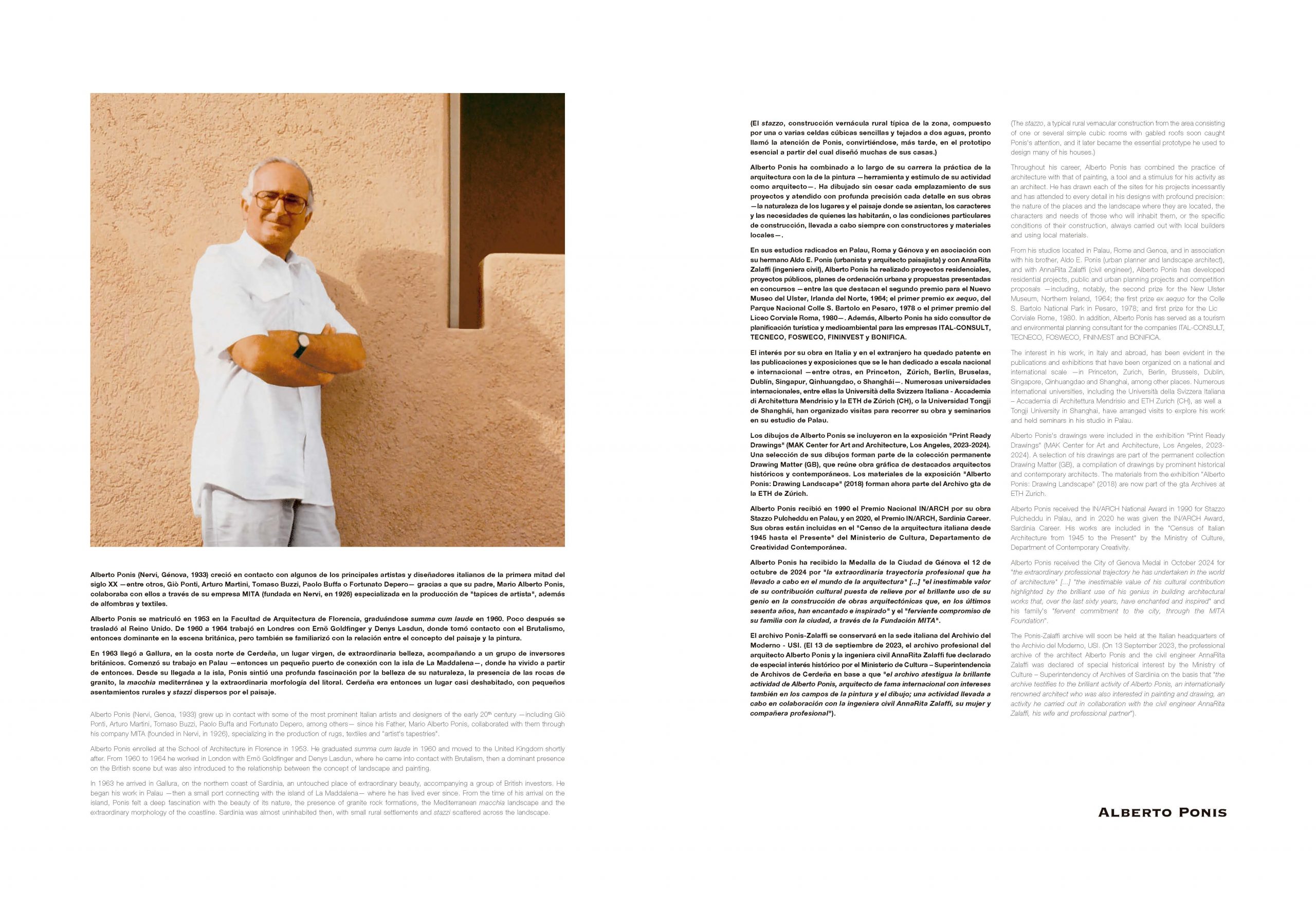
Before delving further into this issue, it seems advisable to pause briefly to sketch a brief portrait of the architect Alberto Ponis. Born in Genoa in the 1930s, he came into contact from childhood with a wide range of Italian artists, including, notably, Gio Ponti and Tomaso Buzzi, owing to his father’s profession: producer of artists’ tapestries for the MITA company. After graduating from the Faculty of Architecture in Florence, Alberto Ponis moved to London to work first at Erno Goldfinger’s practice and later at Denys Lasdun’s. However, his stay in the British capital was not to be particularly long. After just four years, he arrived on the north coast of Sardinia accompanying a group of British investors, determined to transform the idyllic and almost uninhabited Mediterranean island into a tourist paradise for potential seasonal residents with high purchasing power.
Antes de continuar profundizando en esta edición, parece recomendable detenerse brevemente a trazar un sucinto retrato del arquitecto Alberto Ponis. Nacido en Génova en la década de los 30, tuvo contacto desde su infancia con un amplio espectro de artistas italianos, entre los que pudieran destacarse Gio Ponti o Tomaso Buzzi, debido a la profesión de su padre: productor de tapices de artistas para la empresa MITA. Tras graduarse en la Facultad de Arquitectura de Florencia, Alberto Ponis se trasladó a Londres para colaborar en las oficinas de Erno Goldfinger, primero, y Denys Lasdun después. Sin embargo, su estancia en la capital británica no será especialmente prolongada. Después de sólo cuatro años, llegará a la costa norte de Cerdeña acompañando a un grupo de inversores británicos, decididos a transformar la idílica y casi deshabitada isla mediterránea en un paraíso turístico para potenciales residentes estacionales con alto poder adquisitivo.
This marks the beginning of one of the most interesting, distinctive and, at the same time, little-known trajectories in modern European architecture during the second half of the 20th century. With great artistic sensitivity and the unique ability to approach a specific environment with the unjaded yet curious eye of an ‘outsider’, Alberto Ponis developed, over the course of decades, a body of work that is consistent in its approach, with a particular focus on holiday homes, yet tremendously complex and rich in its exploration of the relationship with the climate, landscape and the cultural and architectural traditions of the island of Sardinia.
De esta forma se inicia una de las trayectorias más interesantes, específicas y, al mismo tiempo, desconocidas de la arquitectura moderna europea en la segunda mitad del siglo XX. Con una alta sensibilidad artística y la particularidad de acercarse a un entorno determinado con la mirada poco contaminada y, al mismo tiempo, curiosa de un “forastero”, Alberto Ponis desarrolla a lo largo de décadas una obra homogénea en lo programático, destacando la vivienda unifamiliar turística, pero tremendamente compleja y rica en sus planteamientos de relación con el clima, paisaje y la tradición cultural y constructiva de la isla de Cerdeña.
On this point, we wish to highlight what we consider to be the most compelling section of this monograph by El Croquis. We are referring to the article ‘Notes on Architecture’ by Alberto Ponis himself. Through a series of brief notes, organised into 20 distinct points, the Italian architect sets out, with astonishing honesty (highly unusual in our discipline) and without any rhetorical pretence, a decalogue of strategies or approaches that could very well be interpreted as an ideological manifesto underpinning his architectural practice. This short text, published here for the first time in Spanish, is absolutely essential not only for interpreting the author’s work, but also proves fundamental to understanding the value of a discipline such as ours. The various points generally revolve around the relationship that the built environment must establish with its immediate surroundings and the climate that defines it, setting out a series of strategies that Alberto Ponis experimented with and developed to ensure that his architecture—often overwhelmingly expressive in its geometric lines—became rooted in the land that hosted it; and with the cultural framework inherited from the Sardinian and Mediterranean traditions that formed its broader context. It is unusual for texts written by the author himself—whose works are featured in El Croquis—to accompany the critical articles that outline their disciplinary framework. However, in this specific case, it is an aspect that perhaps ought to be emphasised in future. Alberto Ponis’s ability to express, in very brief and simple paragraphs, his obsession with articulating his work with the poetics of the place in which he finds himself, or with the island’s constructive and typological memory, is considerably more inspiring and precise than any critical approach undertaken by third parties in this same monograph.
En relación a este punto, queremos destacar el que, para nuestro juicio, es el momento de mayor intensidad de esta monografía de El Croquis. Nos referimos al artículo “Apuntes sobre Arquitectura” obra del propio Alberto Ponis. Mediante unos apuntes breves, organizados en 20 puntos diferentes, el arquitecto italiano desarrolla, con una honestidad asombrosa (muy poco habitual en nuestra disciplina) y sin ninguna pretensión retórica, un decálogo de estrategias o planteamientos que muy bien podría interpretarse como un manifiesto ideológico que estructura su oficio arquitectónico. Este breve texto, que aparece aquí publicado por primera vez en castellano, es absolutamente imprescindible no sólo para interpretar la obra de su autor, sino que se antoja fundamental para entender el valor de una disciplina como la nuestra. Los diferentes puntos orbitan, en general, en la relación que el espacio construido debe plantear respecto a su entorno inmediato y el clima que lo define, desarrollando una serie de estrategias que Alberto Ponis experimentó y desarrolló para conseguir que su arquitectura, desbordantemente expresiva muchas veces en sus trazados geométricos, se enraizara con la tierra que la hospedaba; con el marco cultural heredado de la tradición sarda y mediterránea que componía su contexto más amplio. Es poco habitual que textos firmados por el propio autor cuyas obras se presentan en El Croquis acompañen a los artículos críticos que dibujan el marco disciplinar de las mismas. No obstante, ateniéndonos a este caso concreto, es un aspecto que quizá debiera potenciarse en el futuro. La capacidad de Alberto Ponis para expresar, en párrafos muy breves y sencillos, su obsesión con articular su obra con la poética del lugar en que se encuentra, o con la memoria constructiva y tipológica de la isla es considerablemente más inspiradora y precisa que cualquier aproximación crítica abordada por terceros en esta misma monografía.
Three further articles accompany the one mentioned above, forming the body of critical writing necessary to explore and attempt to interpret the work of Alberto Ponis. The effort made by the various authors is remarkable, although it is slightly overshadowed by the excellence displayed in “Apuntes de Arquitectura”. The first of these, ‘Pleno Verano’, is by the Spanish critics Enrique Encabo and Inmaculada Esteban Maluenda. Focusing on establishing an interpretative context based on the idea of the creative process and its relationship with the specific environment of Sardinia, this article offers brief but well-structured analyses of some of Alberto Ponis’s early works, as well as the gradual emergence throughout his career of themes that held particular interest for him. Some examples of this, as clearly reflected in the text, include the concept of a journey as an essential articulation of the idea of architecture, or the attempt to relate some of the Italian architect’s projects to the island’s typological tradition. Although many of Alberto Ponis’s projects, particularly the most complex and striking ones, follow highly expressive geometric layouts derived from a rigorous survey of the surroundings, in our view, an effort—perhaps excessive—is made to integrate these works into a typological genealogy of the island’s vernacular architecture, specifically the ‘stazzo’. These simple stone structures, which can easily be extended or modified in layout by simple addition or extension, appear to have inspired only some of Alberto Ponis’s projects, particularly those he developed as tourist developments comprising collective settlements. The fact that the more complex works bear no obvious relation to these structures should not, in our view, constitute any shortcoming that needs to be justified a priori, sometimes giving the impression of following an interpretative path closer to a narrative than a critical approach.
Tres artículos más acompañan al anteriormente citado, componiendo el cuerpo crítico necesario para descubrir e intentar interpretar la obra de Alberto Ponis. El esfuerzo desarrollado por sus diferentes autores es notable, si bien queda ligeramente ensombrecido por la excelencia desplegada en “Apuntes de Arquitectura”. El primero de ellos, “Pleno Verano”, es obra de los críticos españoles Enrique Encabo e Inmaculada Esteban Maluenda. Centrado en trazar un contexto interpretativo desde la idea del proceso creativo y la relación del mismo con el entorno concreto de Cerdeña, encontramos en este artículo análisis breves pero estructurados de algunas primeras obras de Alberto Ponis, así como la paulatina aparición en su trayectoria de temas que le interesaron especialmente. Algunos ejemplos de ello, como bien aparecen reflejados en el texto, serían la idea de recorrido como articulación esencial de la idea de arquitectura o el intento de relacionar algunos proyectos del arquitecto italiano con la tradición tipológica de la isla. A pesar de que muchos proyectos de Alberto Ponis, especialmente los más complejos y atractivos, siguen unos trazados geométricos muy expresivos deducidos de un riguroso levantamiento del entorno, se realiza, a nuestro juicio, un esfuerzo quizá excesivo en integrar estas obras en una genealogía tipológica de la arquitectura vernácula de la isla, concretamente con el “stazzo”. Estas construcciones sencillas de piedra, fácilmente ampliables y modificables en su trazado por simple adición o extensión, sólo parecen ser inspiración de algunos proyectos de Alberto Ponis, especialmente aquellos que desarrolló como promociones turísticas constituyendo asentamientos colectivos. Que las obras más complejas no guarden relación evidente con estas construcciones no debería constituir, a nuestro juicio, ningún demérito que tuviera que ser justificado a priori, a veces con la sensación de estar recorriendo un camino interpretativo más cercano a un registro narrativo que crítico.
The second article, “Alberto Ponis’s Housing Projects”, is by the renowned English architect Jonathan Sergison. As the title clearly indicates, this text focuses on the idea of domesticity in Alberto Ponis’s work. Whilst the emphasis to date has been on single-family dwellings—which are evidently more spectacular due to their formal and material expressiveness—this article aims to highlight certain collective housing developments intended for temporary tourist accommodation. Although the text touches upon certain issues which, in our view, ought to be addressed in a contemporary interpretation of a body of work such as Alberto Ponis’s, these are not fully explored. We are referring, in this case, to the need to approach Alberto Ponis’s work not only from a nostalgic perspective centred on the values of the era in which it was created, but also with an awareness of the consequences that urban processes of this nature have had for today’s society. Alberto Ponis’s work is, as has already been noted, exceptional in terms of the strategies and elements he develops to grasp the context—on very different scales and through various approaches—upon which it is based. From this perspective, his legacy should be regarded as a fundamental reference point for a professional practice informed by a sensitivity to material, formal, volumetric and environmental considerations, with a particularly compelling understanding of architecture as a journey, even in small-scale private residential projects. On the other hand, we feel it is also necessary to reflect, with the same honesty, on the social and economic frameworks within which this architecture is produced—namely, the excessive consumption of resources and land, the privatisation of land and the restriction of access to a cultural landscape for the enjoyment of a select few, as well as its use as seasonal summer residences for a very limited period of time. We believe that highlighting these contradictions should not be incompatible with a proper appreciation of many of Alberto Ponis’s outstanding works, from a disciplinary perspective. In this regard, Jonathan Sergison himself calls for greater visibility to be given to some of Alberto Ponis’s public projects, such as public facilities or urban developments in Palau, although at the same time he declines to make use of the opportunity afforded to him by the publication of his article as part of this monograph for that very purpose.
El segundo artículo, “Los Proyectos de Vivienda de Alberto Ponis”, es obra del reconocido arquitecto inglés Jonathan Sergison. Como bien evidencia su título, este texto se centra en la idea de domesticidad en la obra de Alberto Ponis. Si hasta ahora se había hecho más hincapié en las viviendas unifamiliares, evidentemente más espectaculares por su expresividad formal y material, este artículo pretende dar relevancia a algunos proyectos de desarrollos colectivos destinados a viviendas temporales turísticas. Aunque en el texto se esbozan algunas problemáticas que, según nuestra opinión, deberían manifestarse en una interpretación contemporánea de una obra como la de Alberto Ponis, estas no llegan a desarrollarse del todo. Nos referimos, en este caso, a la necesidad de aproximarse a la obra de Alberto Ponis no solo desde una mirada nostálgica centrada en los valores de la época en que se desarrolló, sino también con la conciencia de las consecuencias que procesos urbanos de esa naturaleza han generado para la sociedad actual. La obra de Alberto Ponis es, como ya se ha manifestado, excepcional en cuanto las estrategias y elementos que desarrolla para aprehender el contexto, en muy diferentes escalas y aproximaciones, sobre el que se asienta. Desde ese punto de vista, su legado debería considerarse como una referencia fundamental de una práctica profesional ejercida desde la sensibilidad material, formal, volumétrica o ambiental, con un particularmente atractivo entendimiento de la idea de arquitectura como recorrido, incluso en proyectos domésticos privados de pequeña escala. Por otro lado, nos parece necesario reflejar también, con la misma honestidad, los marcos sociales y económicos en que esa arquitectura se produce, que no son otros que el consumo excesivo de recursos y territorio, la privatización de suelo y de la posibilidad de apreciación de un paisaje cultural para el disfrute de unos pocos, además de una forma muy limitada en el tiempo como viviendas estacionales de verano. Creemos que poner de manifiesto estas contradicciones no debería ser incompatible con la correcta valoración de muchas obras sobresalientes, desde un punto de vista disciplinar, de Alberto Ponis. A este respecto, el propio Jonathan Sergison reivindica la visibilización de algunos proyectos públicos de Alberto Ponis, como equipamientos o desarrollos urbanos en Palau, aunque al mismo tiempo renuncia a utilizar con tal fin la posibilidad que se le ofrece con la publicación de su artículo como parte de esta monografía.
The final article, “Hidden Structures”, is by the Switzerland-based critic Irina Davidovici. From her position as director of the gta Archive at ETH Zurich, she offers us a unique insight thanks to her close familiarity with the Italian architect’s work. This enables us to better understand the gradual interest that Alberto Ponis’s work has sparked in academic circles, after remaining virtually invisible for many decades. She thus provides an enriching overview of the various exhibitions and publications that had been produced—mostly within Switzerland—on the figure of Alberto Ponis, leading up to the publication of this issue of El Croquis. The tone of the article, however, may strike us as somewhat confusing, as it oscillates between more personal and intimate moments and others that are more assertive or critical, without allowing us to clearly understand its fundamental objective. We have discussed the ever-controversial—at least at present—relationship between architecture and tourism development in the preceding paragraphs, although we believe that presenting Alberto Ponis’s work as ‘resistance to speculative tourism architecture’ is a potentially dangerous mistake due to the complacency and self-indulgence it might imply. On the contrary, we find particularly noteworthy the attempt outlined by Irina Davidovici to highlight the contribution of Anna Rita Zalaffi—Alberto Ponis’s partner and collaborator for many years—in establishing and sustaining such a valuable professional career. We are left wishing, however, that we could delve deeper into the collaborative methodology between the two of them, whilst fully understanding that this topic would easily provide enough material for a new monograph.
El último artículo, “Estructuras Ocultas”, es obra de la crítica afincada en Suiza Irina Davidovici. Desde su posición como directora del Archivo gta de la ETH de Zürich, nos ofrece una visión privilegiada por su cercanía con la obra del arquitecto italiano, Esta circunstancia nos permite comprender mejor el paulatino interés que despertó la obra de Alberto Ponis en el mundo académico, después de muchas décadas de haber permanecido prácticamente invisible. Así, realiza un enriquecedor trazado por las distintas exposiciones y publicaciones que se habían realizado, la mayoría desde el ámbito suizo, sobre la figura de Alberto Ponis, antes de desembocar en la publicación de este número de El Croquis. El tono del artículo, sin embargo, nos puede resultar quizá algo confuso, pues oscila entre instantes más personales e intimistas con otros reivindicativos o críticos, sin permitirnos entender con claridad cuál es su objetivo fundamental. Sobre la siempre polémica, al menos en la actualidad, relación entre arquitectura y desarrollo turístico hemos hablado en los párrafos anteriores, aunque creemos que presentar la obra de Alberto Ponis como “resistencia frente a la arquitectura especuladora del turismo” es un error potencialmente peligroso por la complacencia y autoindulgencia que pudiera manifestar. Por el contrario, nos parece especialmente reseñable el intento que Irina Davidovici esboza para reivindicar la aportación de Anna Rita Zalaffi, pareja y colaboradora de Alberto Ponis durante muchos años, a la hora de constituir y mantener una trayectoria profesional tan valiosa. Nos quedamos con las ganas, sin embargo, de poder profundizar más en la metodología colaborativa entre ambos, entendiendo perfectamente que dicho tema daría sobradamente para una monografía nueva.
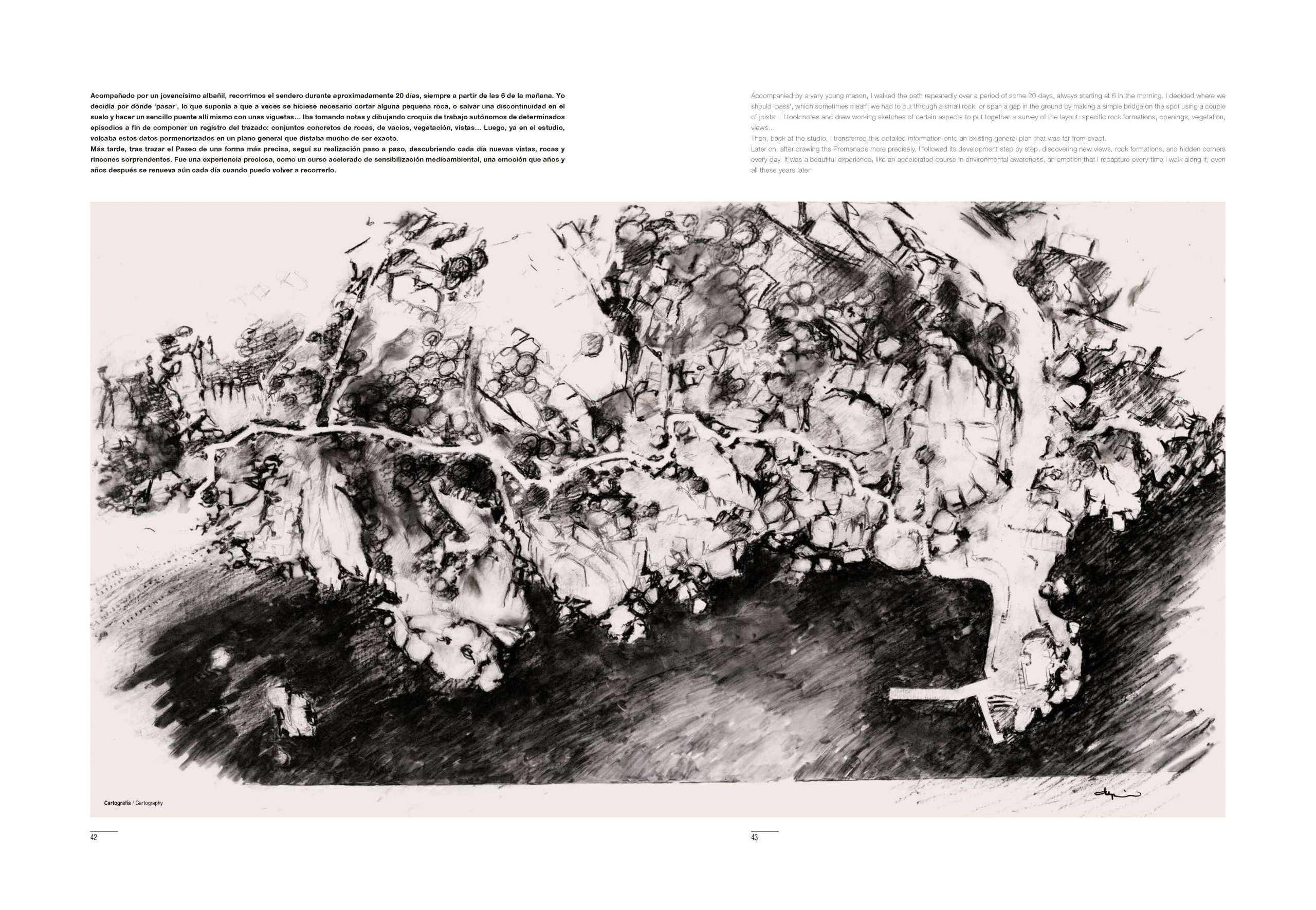
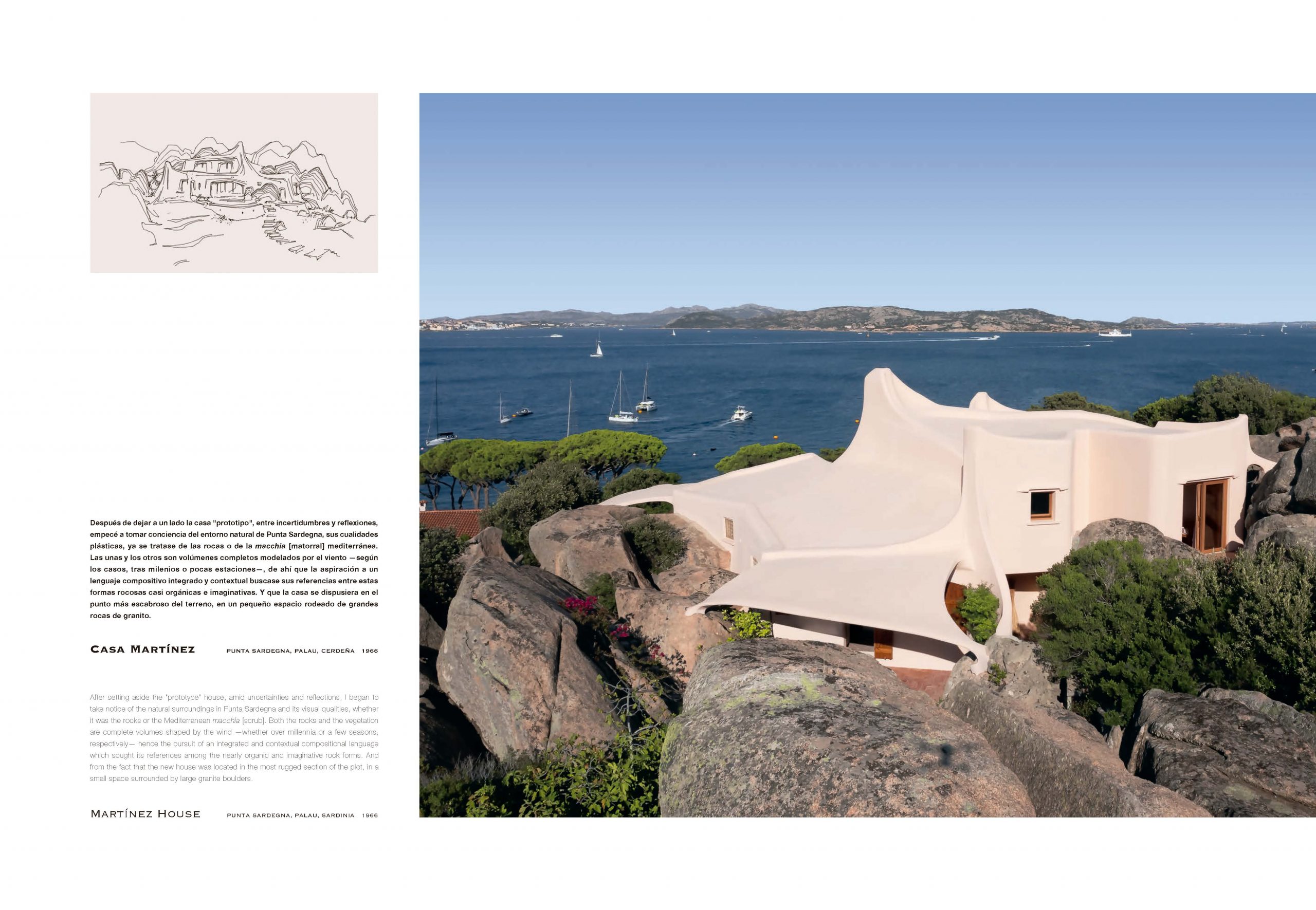
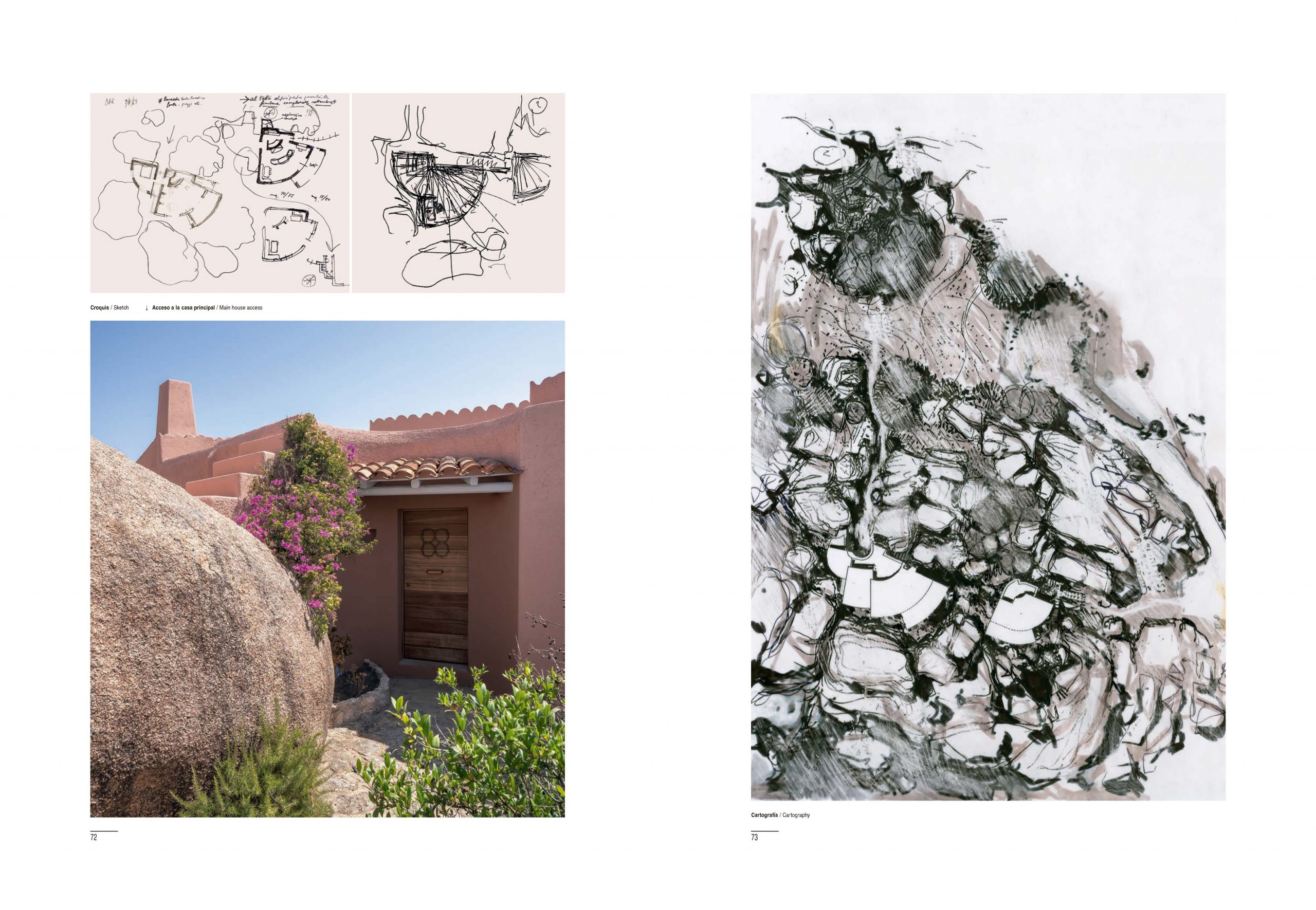
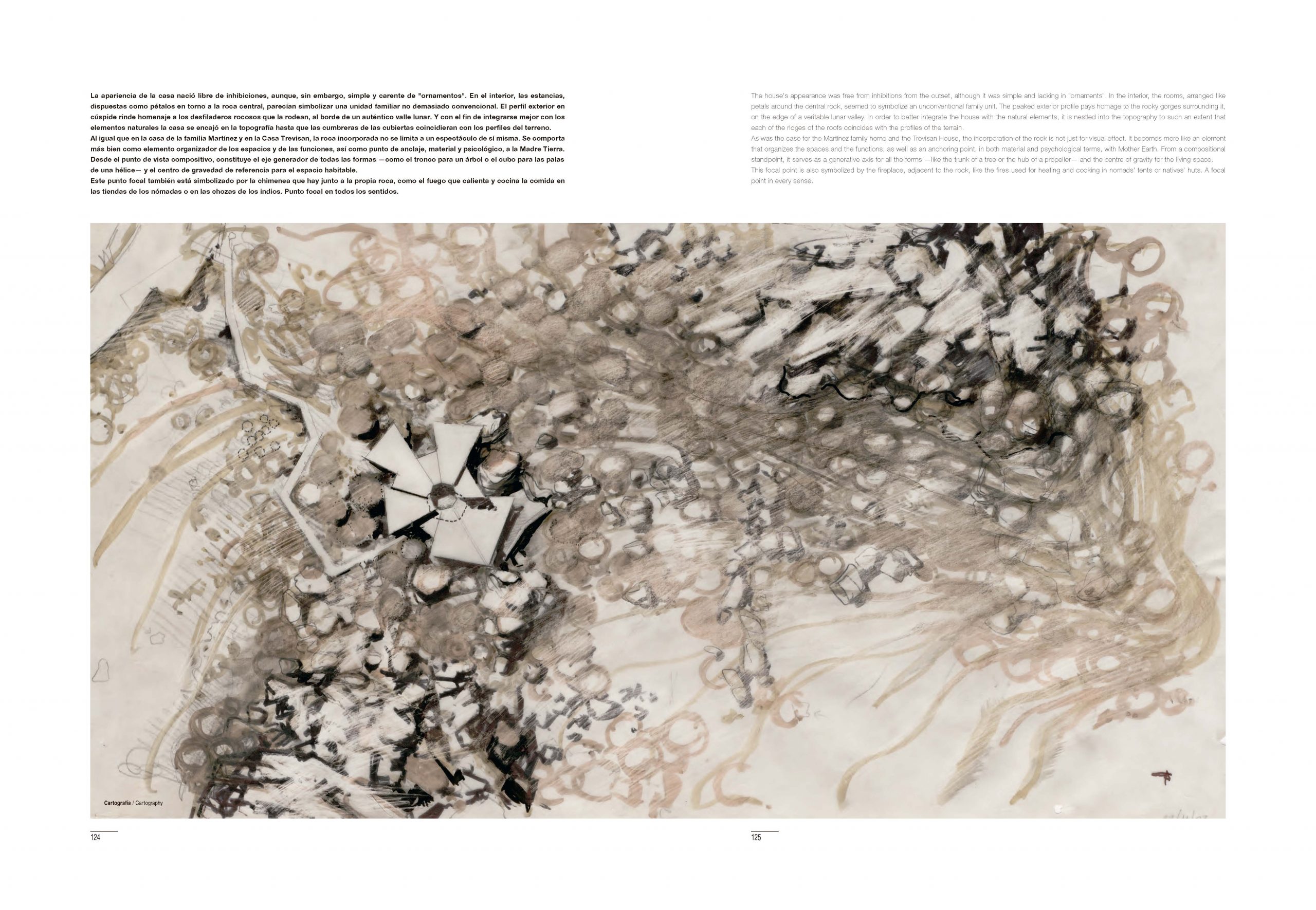
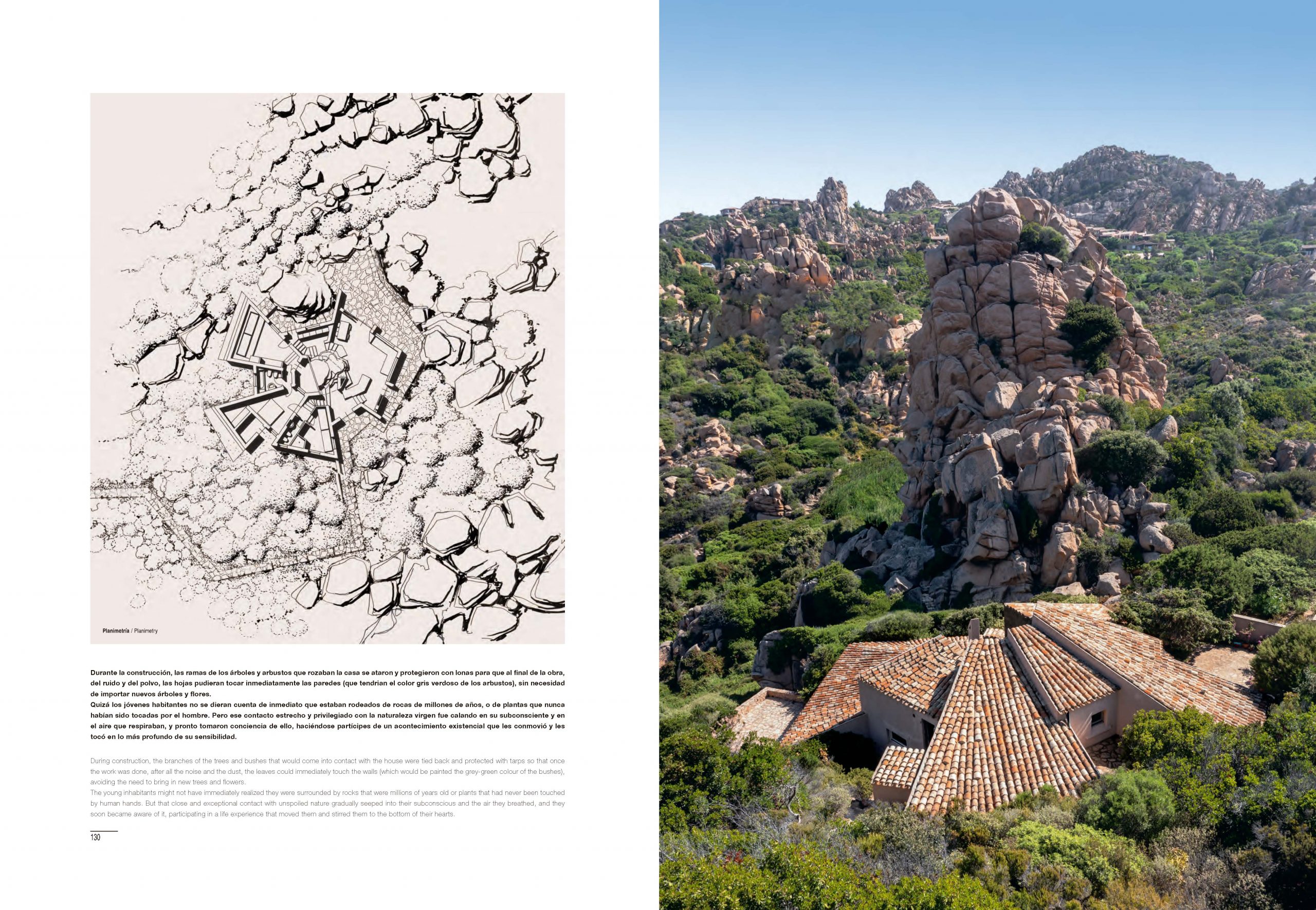
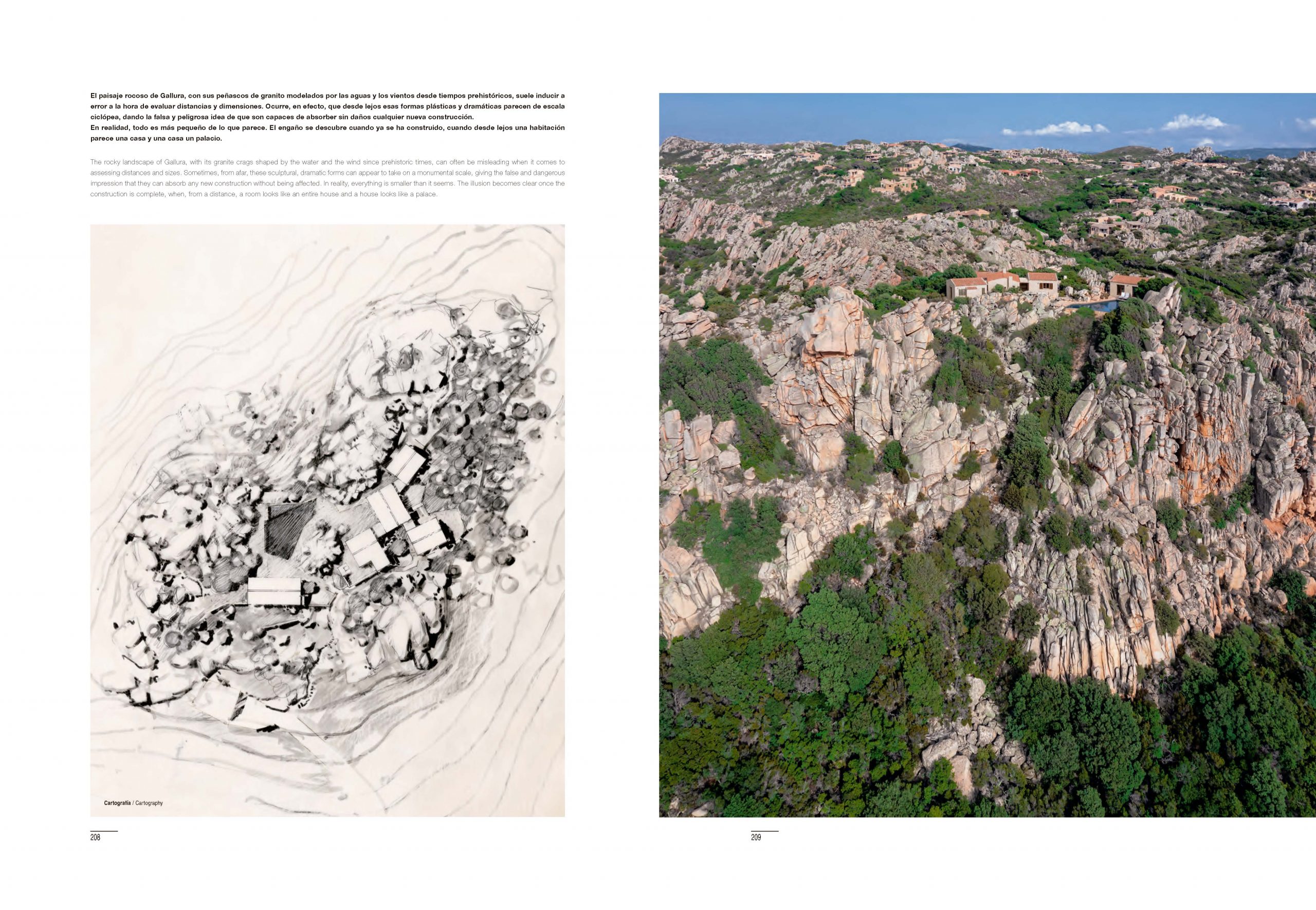
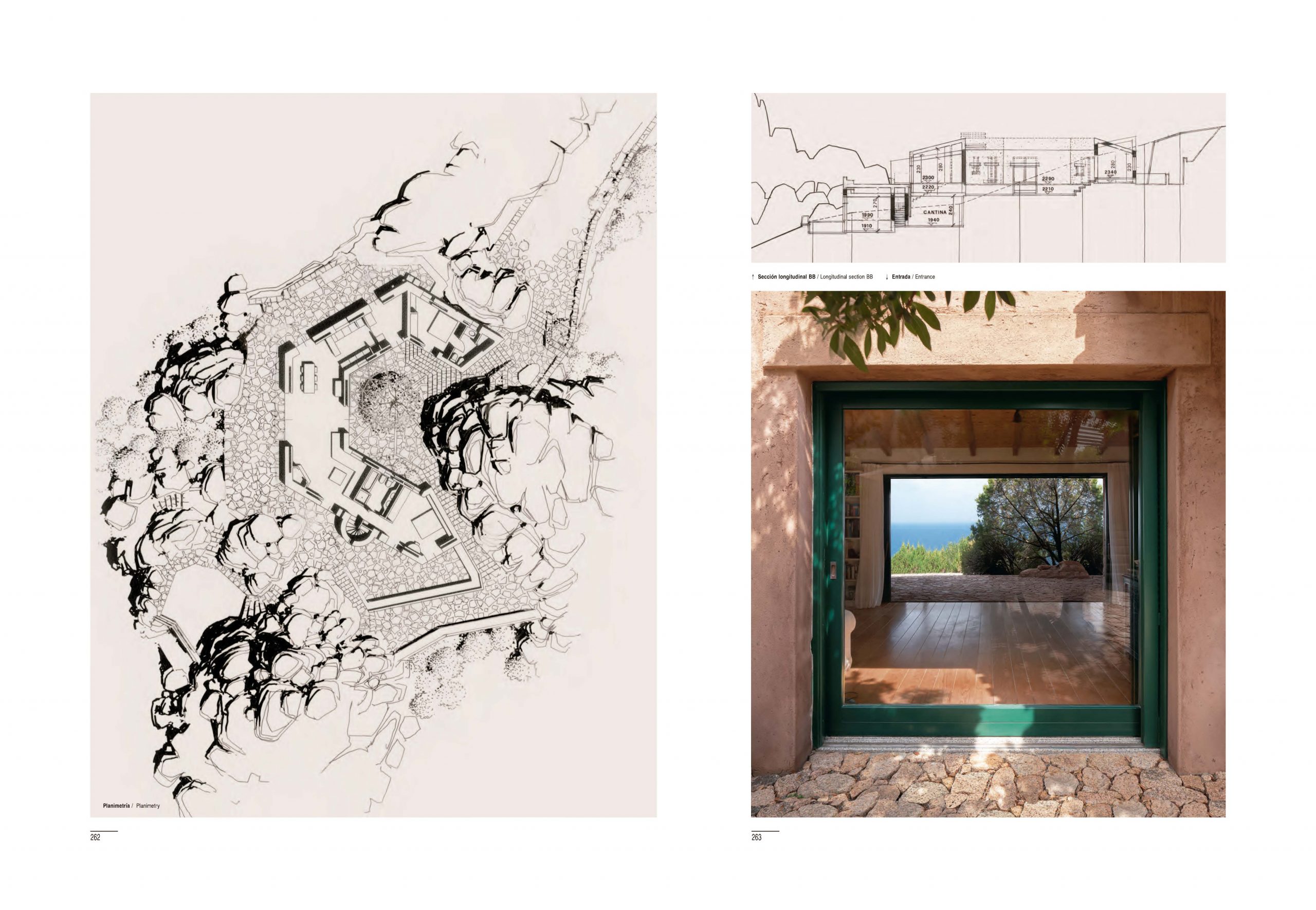
The written section of issue 227 of El Croquis is particularly significant due to its length and complexity, but we must not overlook the fact that the primary aim of this publication is, as is its custom, to present completed works in great detail, using both photographs and technical drawings. Alberto Ponis’s body of work appears, at least from our limited knowledge, to be very extensive. Sixteen completed projects are featured here, the majority of which are single-family homes, forming the most recognisable and essential body of work that defines the value of Alberto Ponis’s practice. The projects are explained using the original plans, amongst which the site plans stand out, rich in detail and artistic expression, beautifully drawn by the architect himself. One particularly noteworthy aspect, as is customary, is the photography. This monograph sets out a very clear intention from the outset: the projects will be presented with contemporary images that reflect the traces of habitation these spaces have accumulated over the years. We consider this approach to be of significant value, as it reveals the qualities of an architecture that has been lived in by its occupants—albeit occasionally—and by the passage of time, far removed from a nostalgic take on the preserved image of its origins. As explained in the monograph’s introduction, only two projects feature photographs of their original state taken by Alberto Ponis himself. The reason given for this decision is clear: their current condition does not allow the architectural qualities to be properly appreciated.
La parte escrita del número 227 de El Croquis es especialmente relevante por su extensión y complejidad, pero no debemos obviar que el objetivo fundamental de esta publicación es publicar, como acostumbra, obras ejecutadas con todo lujo de detalles, a partir tanto de fotografías como de planos técnicos. La obra de Alberto Ponis se antoja, al menos desde nuestro conocimiento parcial, muy extensa. Aquí aparecen publicados 16 proyectos construidos, la mayoría de los cuales son viviendas unifamiliares, que componen el cuerpo más reconocible y esencial para definir el valor de la praxis de Alberto Ponis. Los proyectos aparecen explicados a partir de los planos originales, entre los que destacan los planos de situación, ricos en detalles y expresividad artística, bellamente ejecutados por el propio arquitecto. Un aspecto especialmente reseñable resulta, también como viene siendo habitual, el de la fotografía. En esta monografía se afirma desde el inicio una intención muy clara: los proyectos serán presentados con imágenes actuales, que reflejen las trazas del habitar que estos espacios han ido acumulando durante años. Esta apuesta nos parece de una utilidad relevante, ya que nos presenta los valores de una arquitectura que ha sido habitada por sus ocupantes, si bien ocasionales, y por el tiempo, lejos de una aproximación nostálgica de la imagen embalsamada de su origen. Tal y como se expone en la introducción de la monografía, sólo dos proyectos presentan fotografías de su estado original tomadas por el propio Alberto Ponis. La razón argumentada para tal decisión es evidente: su estado actual no permite apreciar correctamente los valores de su arquitectura.
In conclusion, we believe that El Croquis’s innovative decision to publish the ‘complete’ body of work of a single architect in the form of a retrospective, rather than focusing on practices whose careers are still evolving in the present, has proved to be a relatively risky but unquestionably successful venture. In our view, combining the precision, rigour and practical approach of a publication such as El Croquis with the detailed presentation of works—taken with a necessarily more measured or reflective approach, as demanded by a career that is now somewhat more established—has resulted in an exceptional monograph. The documents accompanying the projects—be they texts, photographs or plans—are of the highest quality. And what we particularly value is that they are excellent not only in their own right, but also for their ability to prompt the reader to reflect actively. Thanks to this brilliantly presented collection, we have been able to embark on an exciting journey through some of the most stimulating and, at the same time, little-known works of recent decades. The thoughts—many of them uncomfortable due to the doubts they raise—that this work has prompted in us regarding certain issues will stay with us for a long time and have provided a tremendous learning experience. To cite a few examples: the relationship between architecture, property speculation and tourism; the capitalist colonisation of a territory for the enjoyment of a privileged few and its justification – even by the academic world – on the grounds of upholding a particular aesthetic; the erasure of gender issues; or the acceptance of work-related risks – closely linked to a particular understanding of the concept of class – simply for the sake of accomplishing the heroic feat of building in inaccessible locations… In short, whilst Alberto Ponis’s work is exceptional and also has the capacity to spark a wide-ranging debate on a multitude of highly topical issues, the monograph published by El Croquis is the ideal tool for such an exploration.
A modo de conclusión, creemos que la novedosa apuesta de El Croquis por publicar la obra “cerrada” de un arquitecto a modo de retrospectiva, en lugar de enfocarse en oficinas cuya trayectoria todavía evoluciona en el presente, ha resultado relativamente arriesgada pero incuestionablemente exitosa. A nuestro parecer, aunar la precisión, el rigor y la praxis de una publicación como El Croquis, con la publicación pormenorizada de obras con un acercamiento necesariamente más pausado o reflexionado que exige una trayectoria ya algo más distante ha tenido como resultado una monografía excepcional. Los documentos que acompañan los proyectos, ya sean escritos, fotografías o planos son de una calidad excelsa. Y lo que nosotros valoramos especialmente: no son excelentes sólo por su naturaleza intrínseca, sino por la capacidad que tienen para inducir al lector a reflexionar activamente. Gracias a este conjunto brillantemente presentado, hemos podido emprender un excitante viaje por una de las obras más estimulantes y, al mismo tiempo, desconocidas de las últimas décadas. Los pensamientos, muchos de ellos incómodos por las dudas que nos plantean, que nos ha suscitado en torno a algunos temas nos acompañarán durante mucho tiempo y han significado un tremendo aprendizaje. Por citar algunos ejemplos: la relación entre arquitectura, especulación y turismo; la colonización capitalista de un territorio para disfrute de unos privilegiados y su justificación, incluso desde la Academia, por profesar una determinada estética; la invisibilización por cuestiones de género o la aceptación de los riesgos laborales, muy vinculados a una determinada comprensión del concepto de clase, por el mero hecho de culminar un acto heroico de construir en enclaves inaccesibles… En definitiva, si la obra de Alberto Ponis es excepcional y posee, además, la capacidad de constituir en torno a ella un amplio debate sobre multitud de temas de imperante actualidad, la monografía de El Croquis es la herramienta idónea para tal disfrute.