This article is part of the Hidden Architecture series “A Hard Rain’s A-Gonna Fall”, where we will try to publish and bring back to current days forgotten texts and manifestos written by architects which are essential to understand the discipline of Architecture within our social context.
Este artículo forma parte de la serie desarrollada por Hidden Architecture llamada “A Hard Rain’s A-Gonna Fall”, donde intentaremos publicar y poner de actualidad nuevamente textos y manifiestos olvidados, escritos por arquitectos y fundamentales para entender la arquitectura dentro de nuestro contexto social.
***
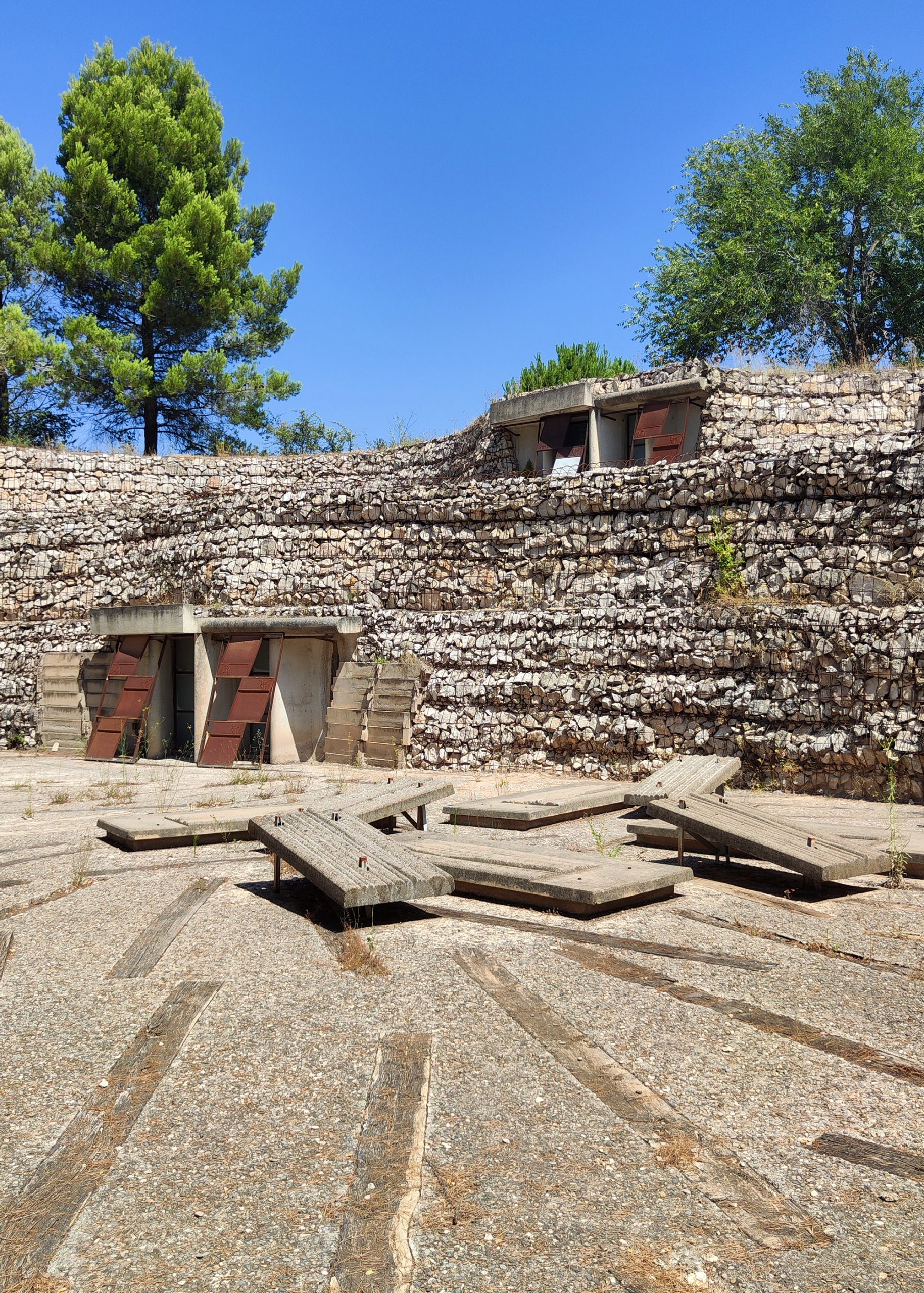
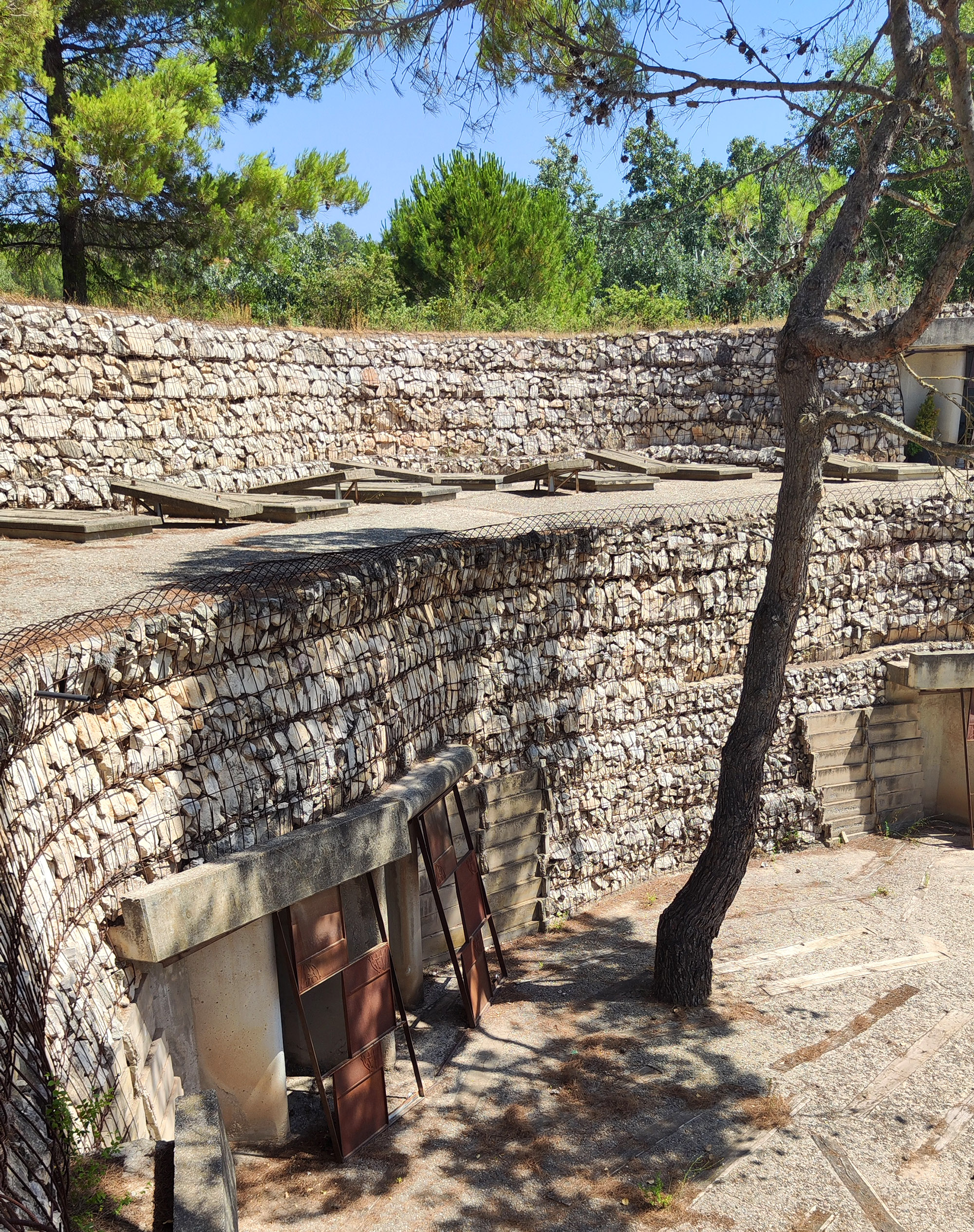
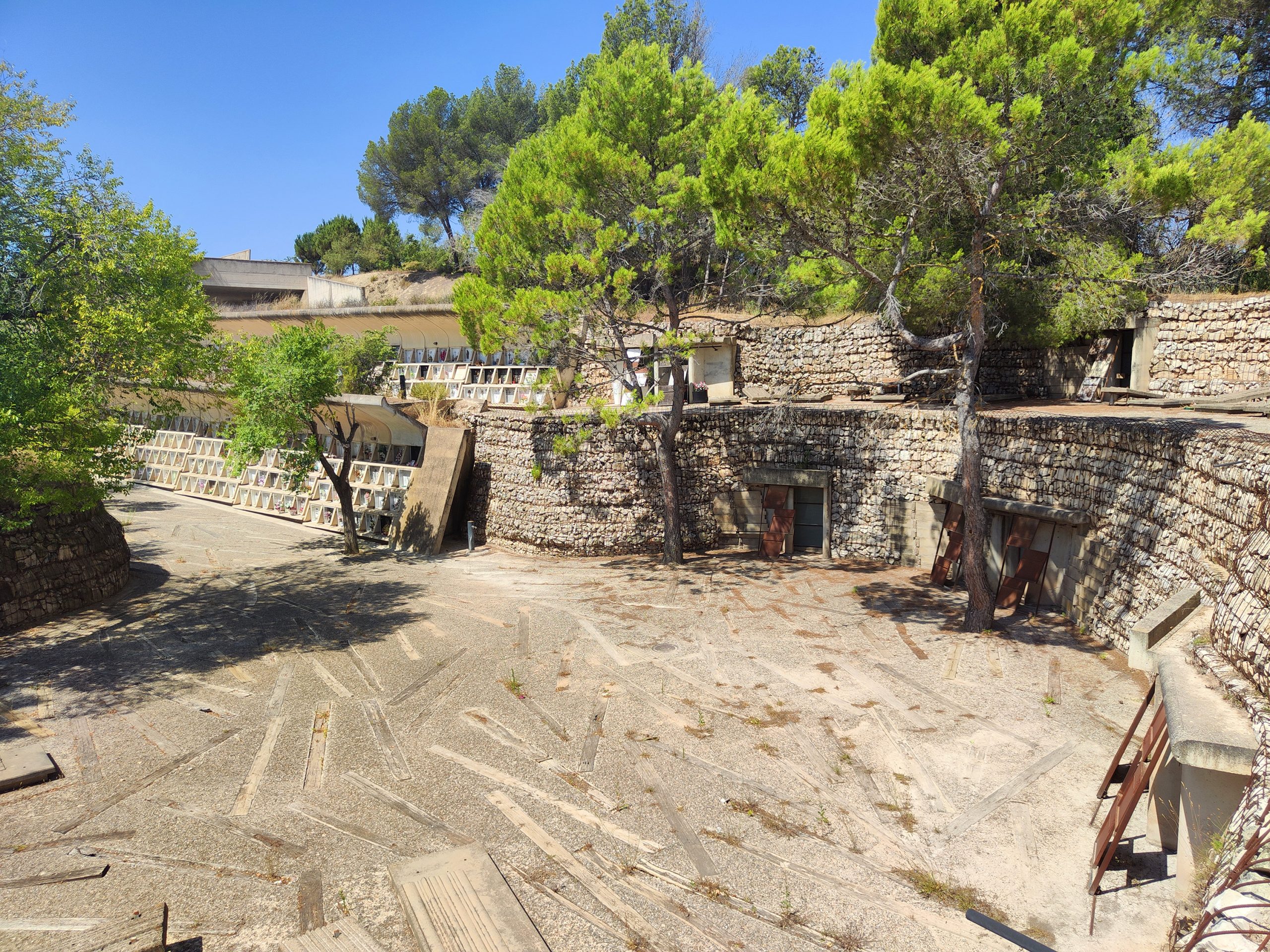
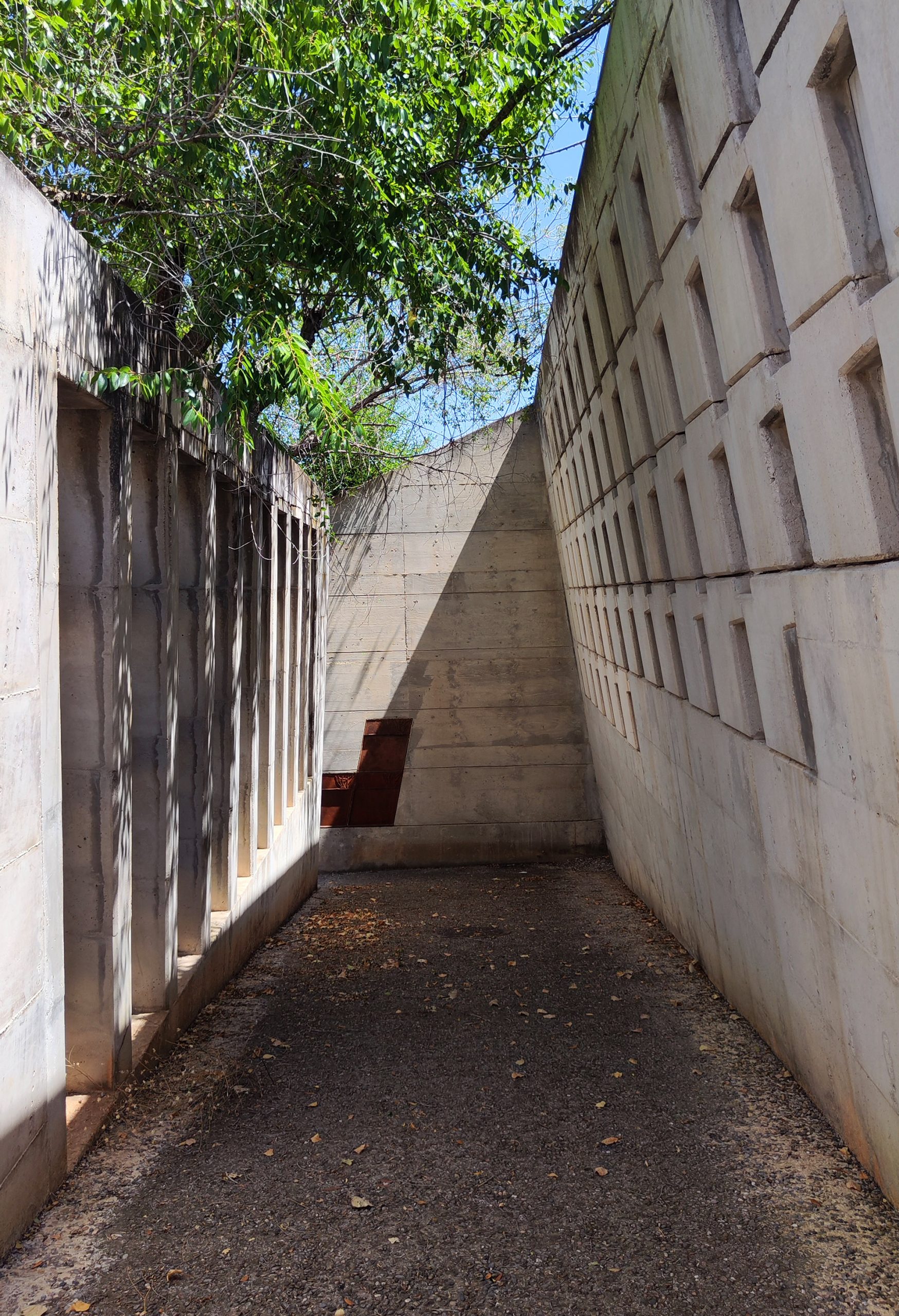
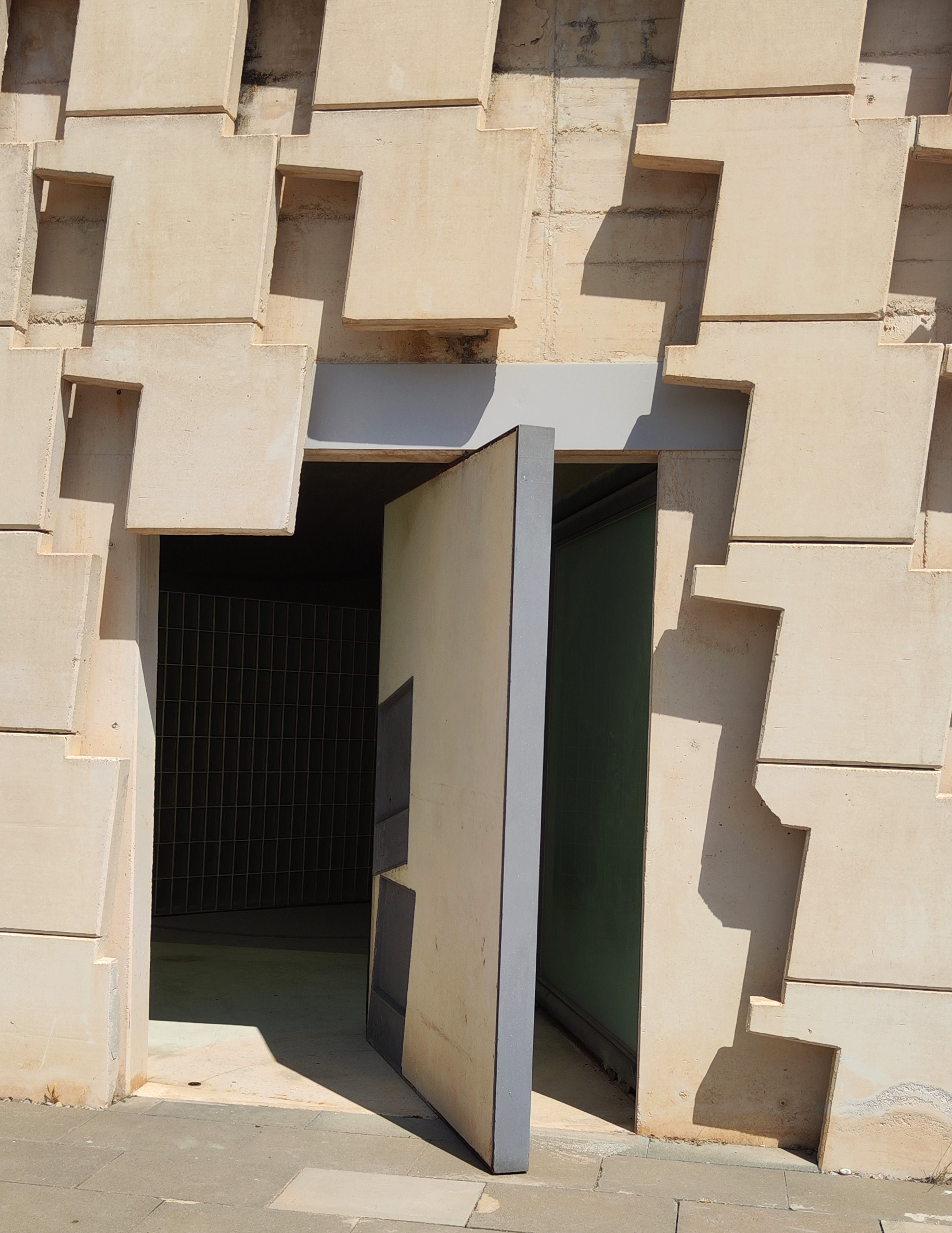
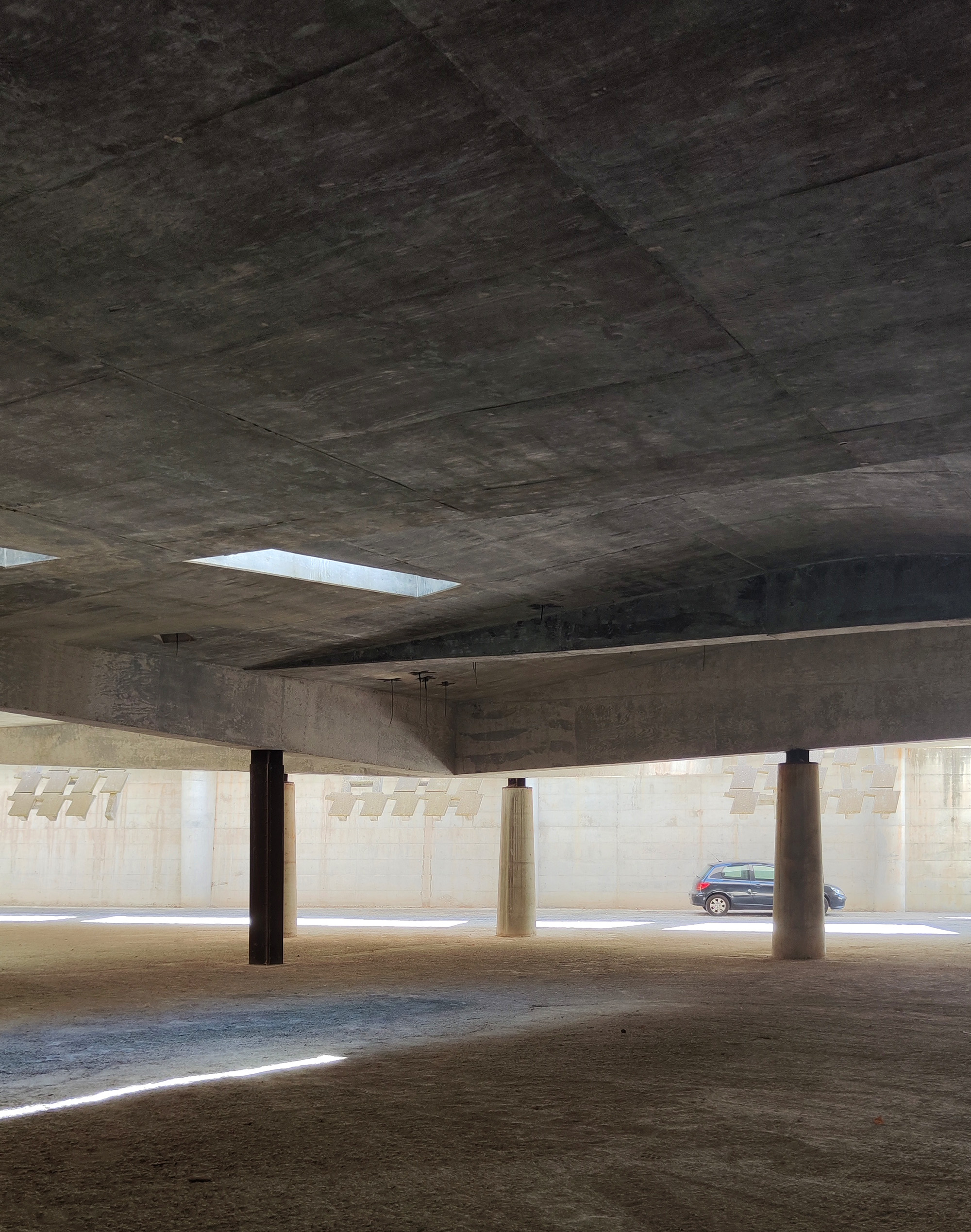
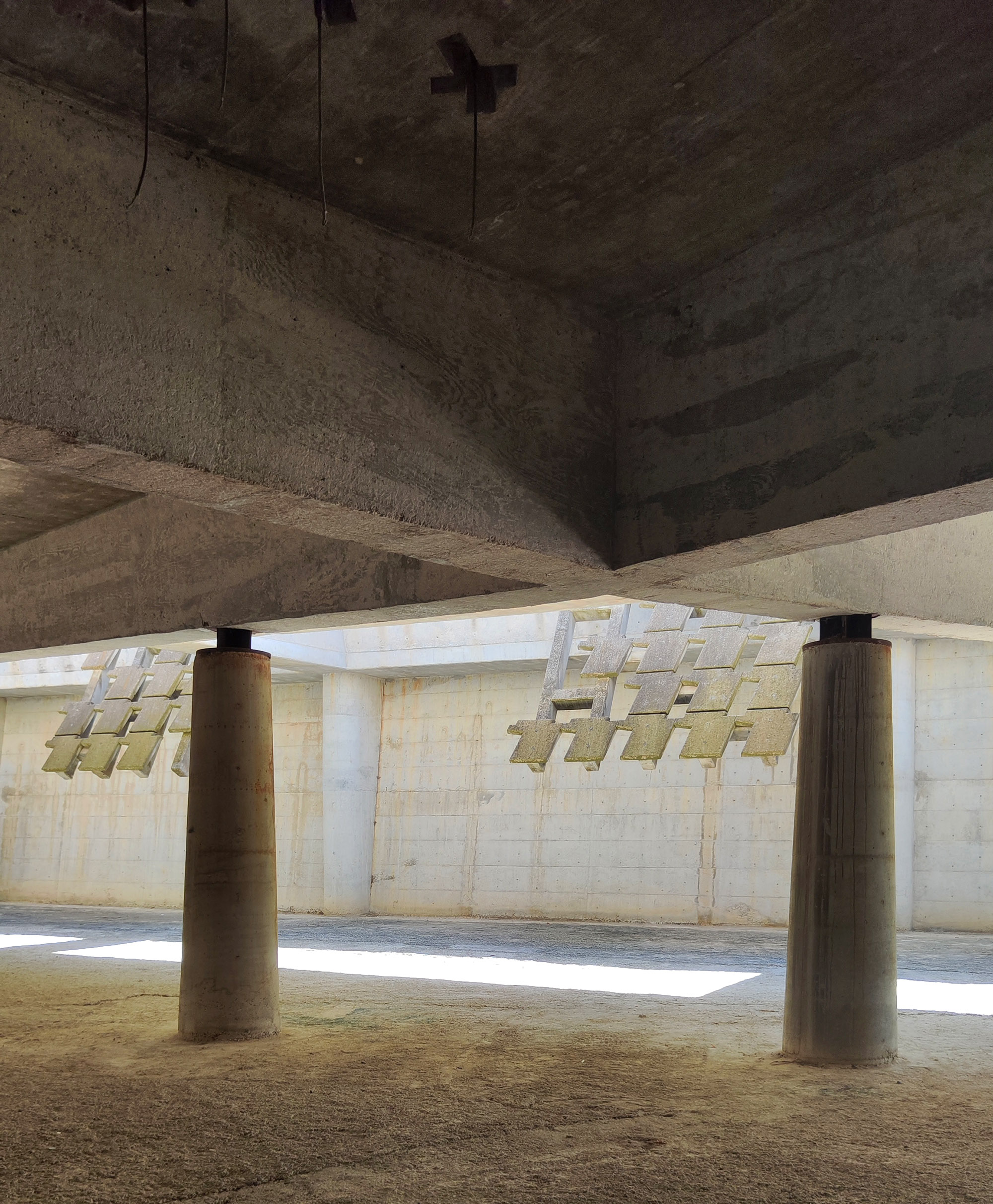
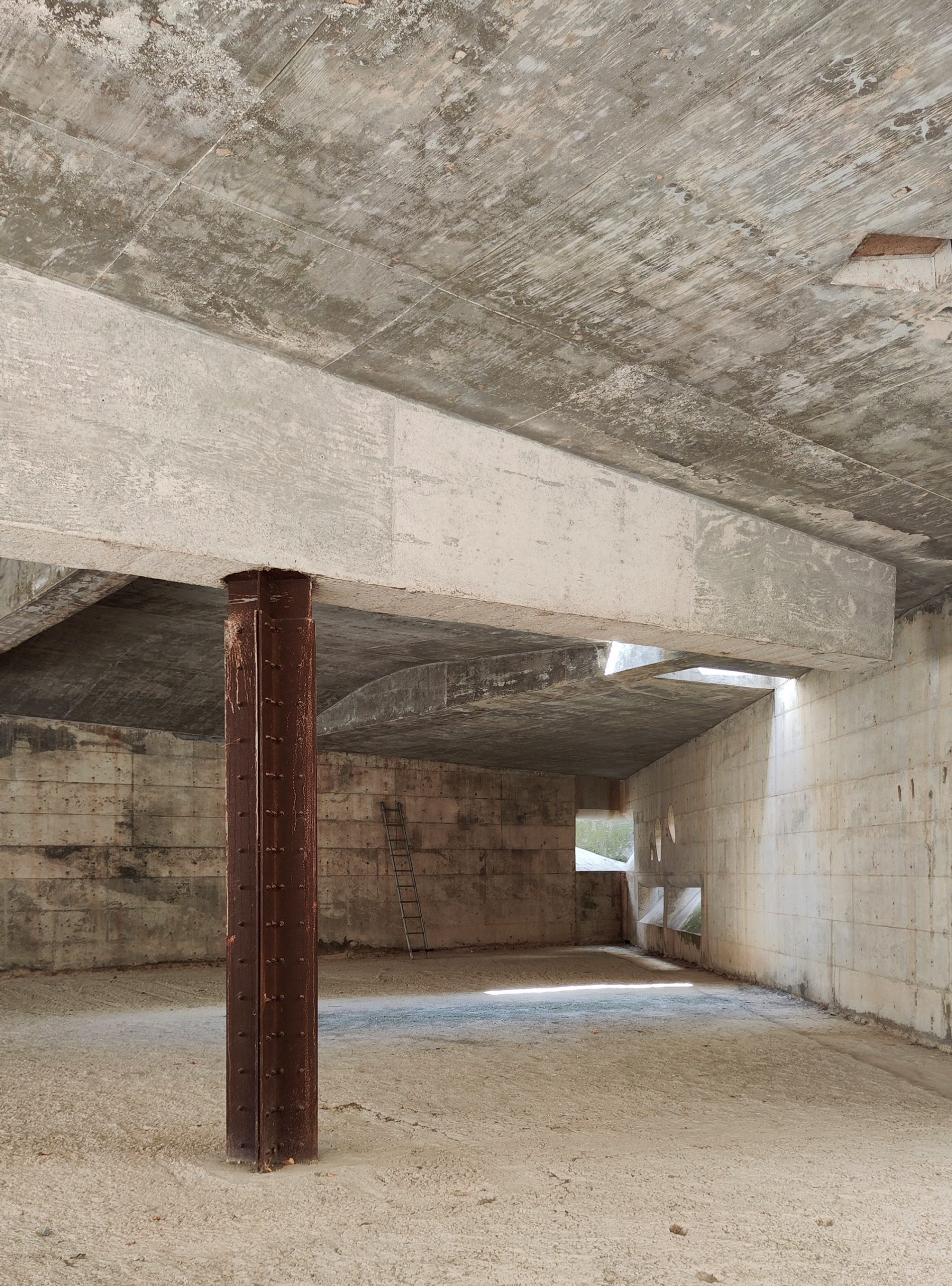
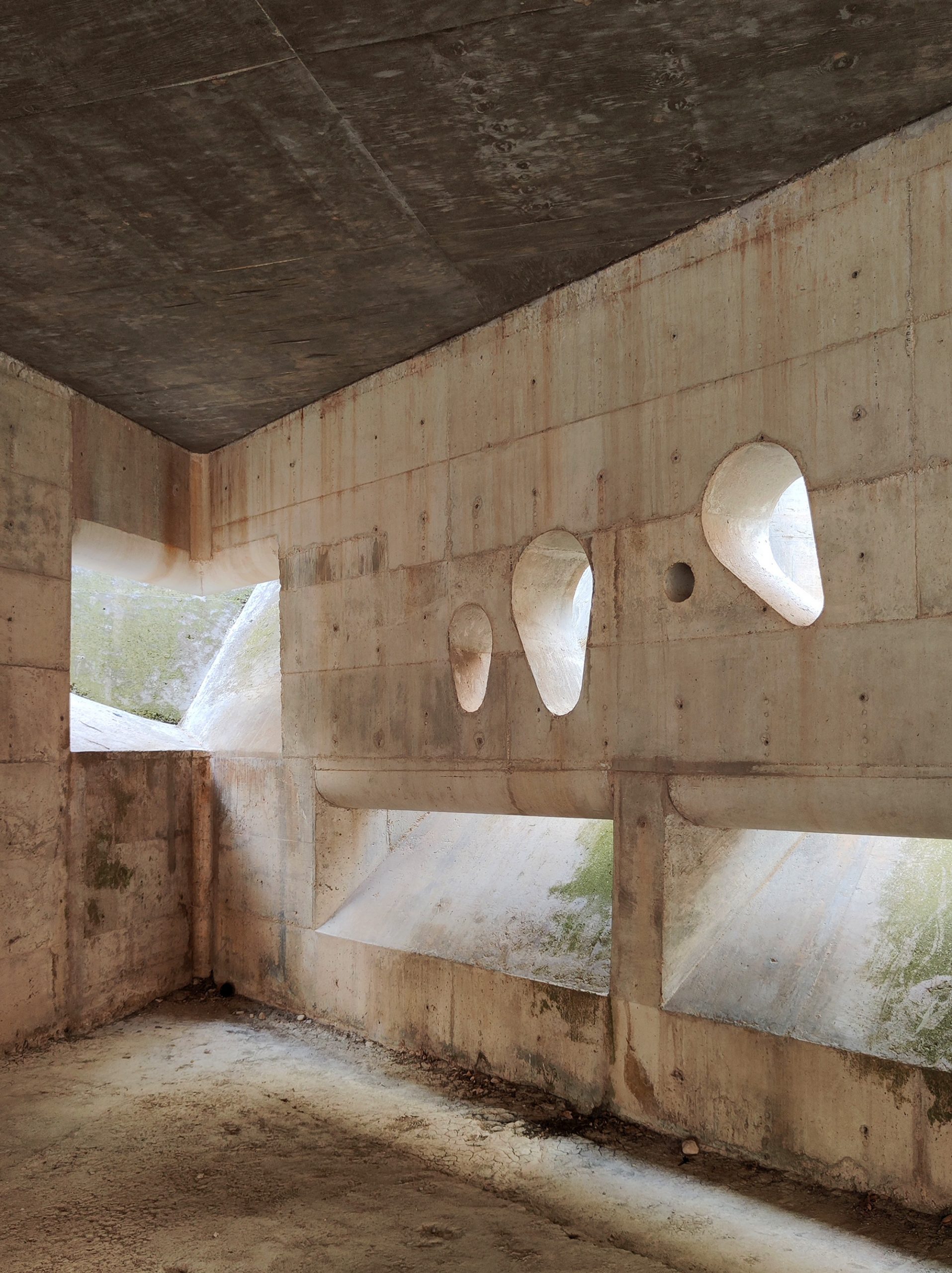
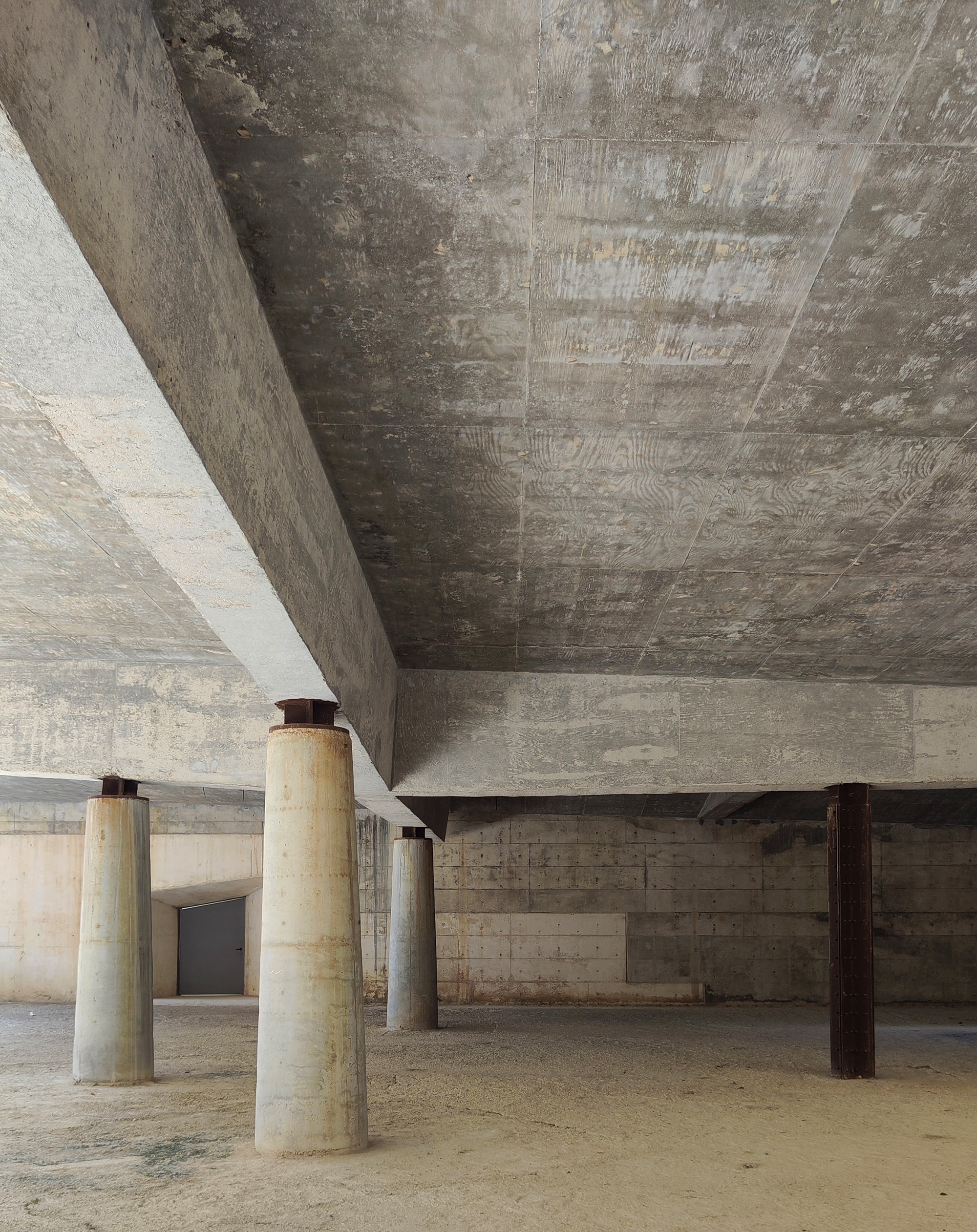
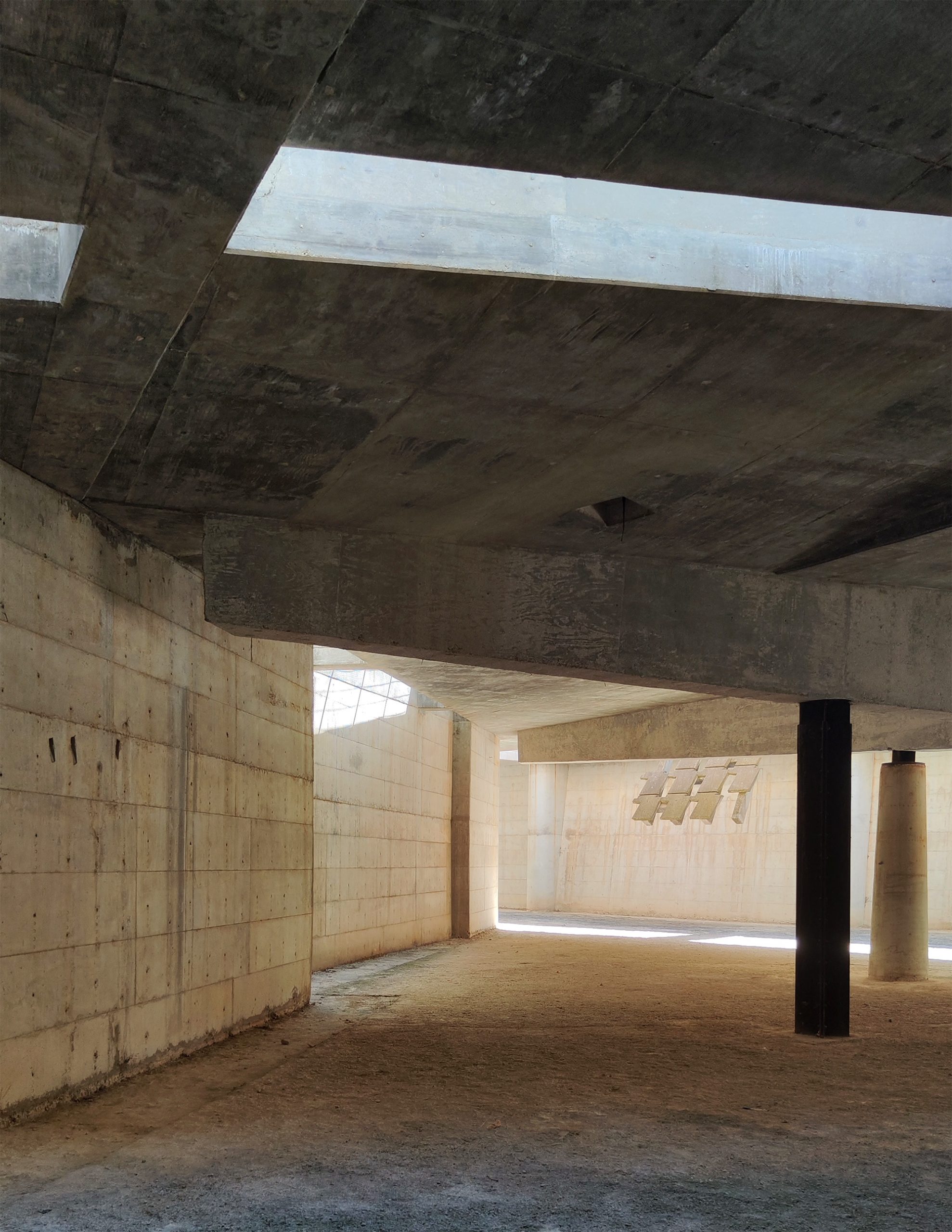
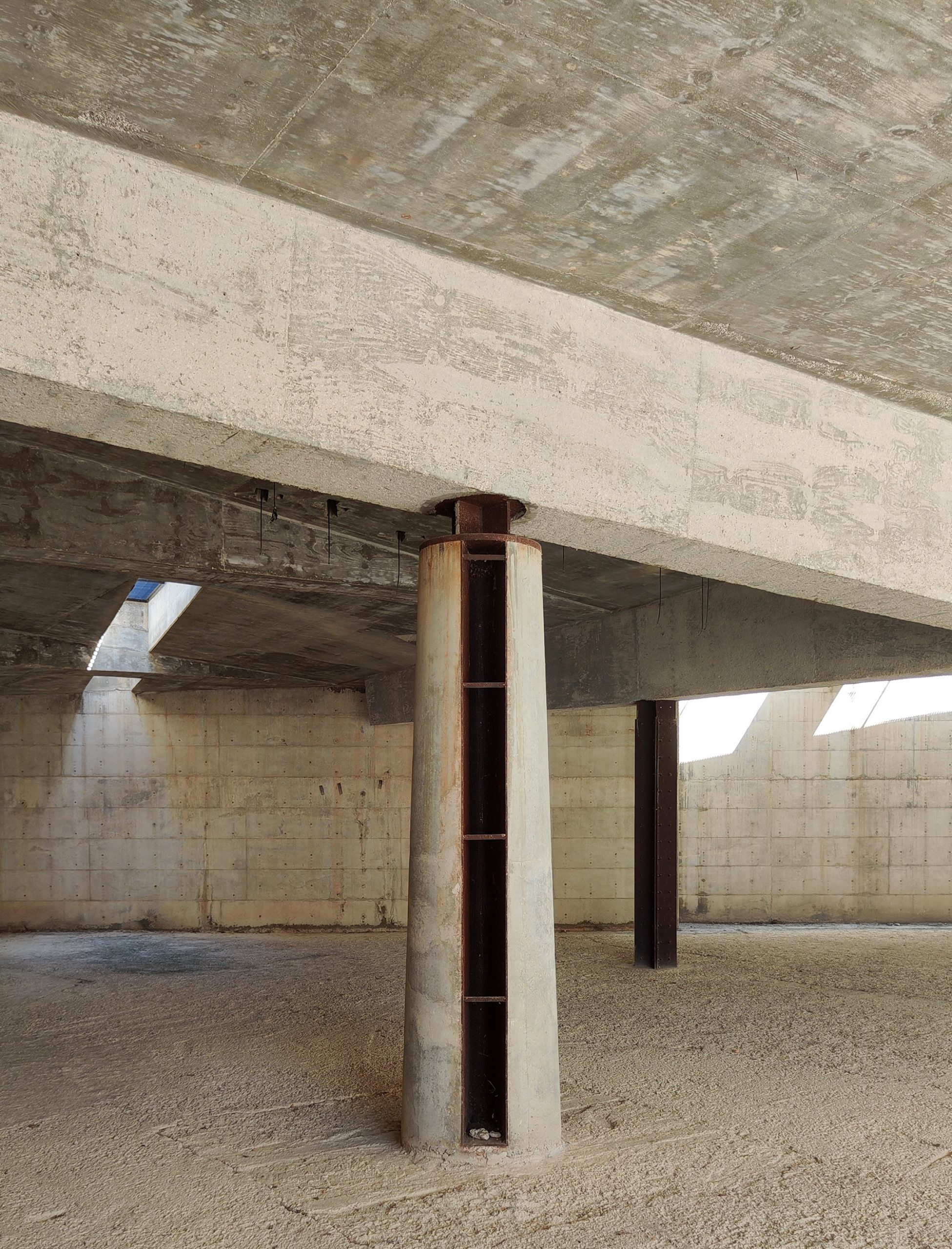
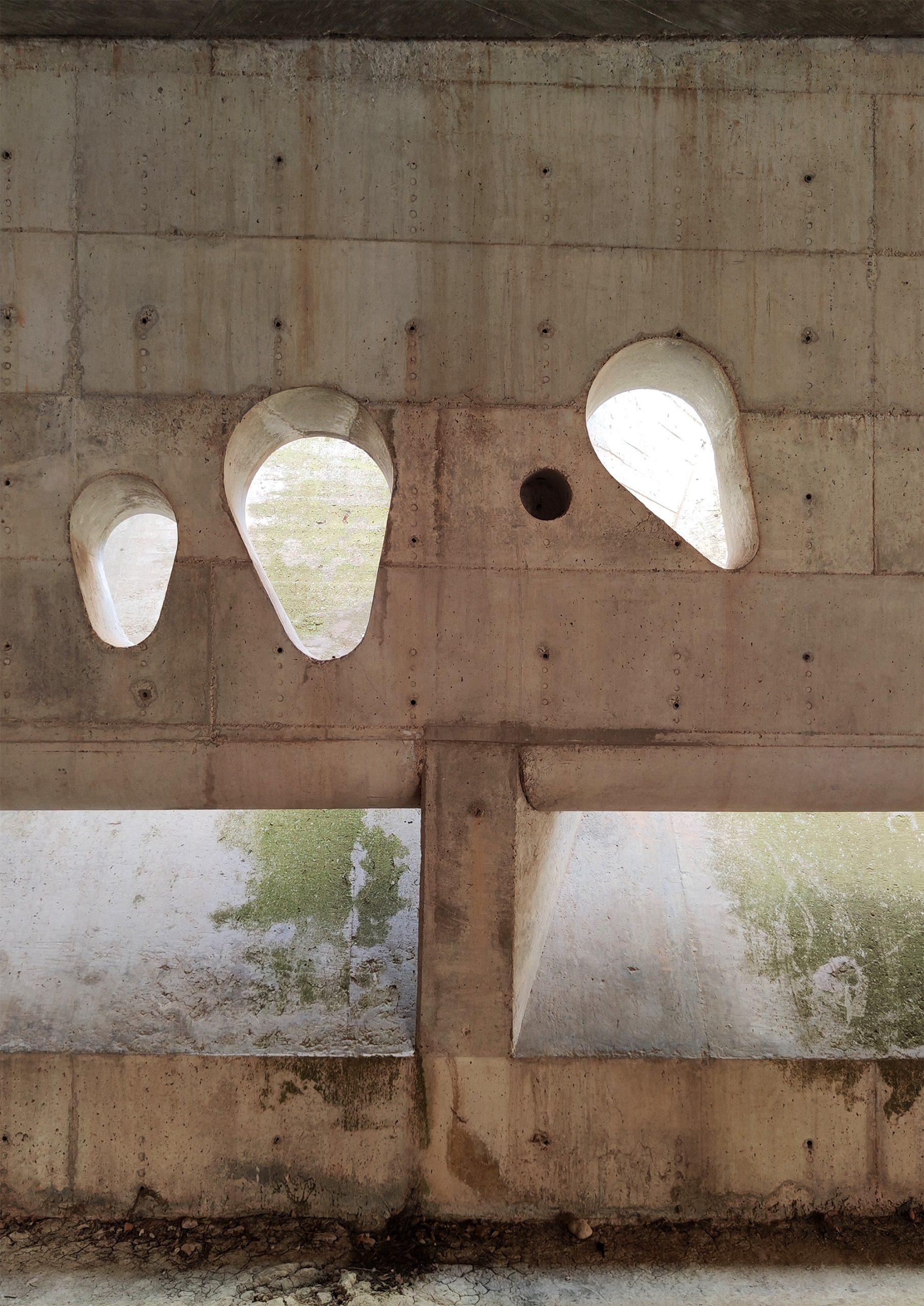
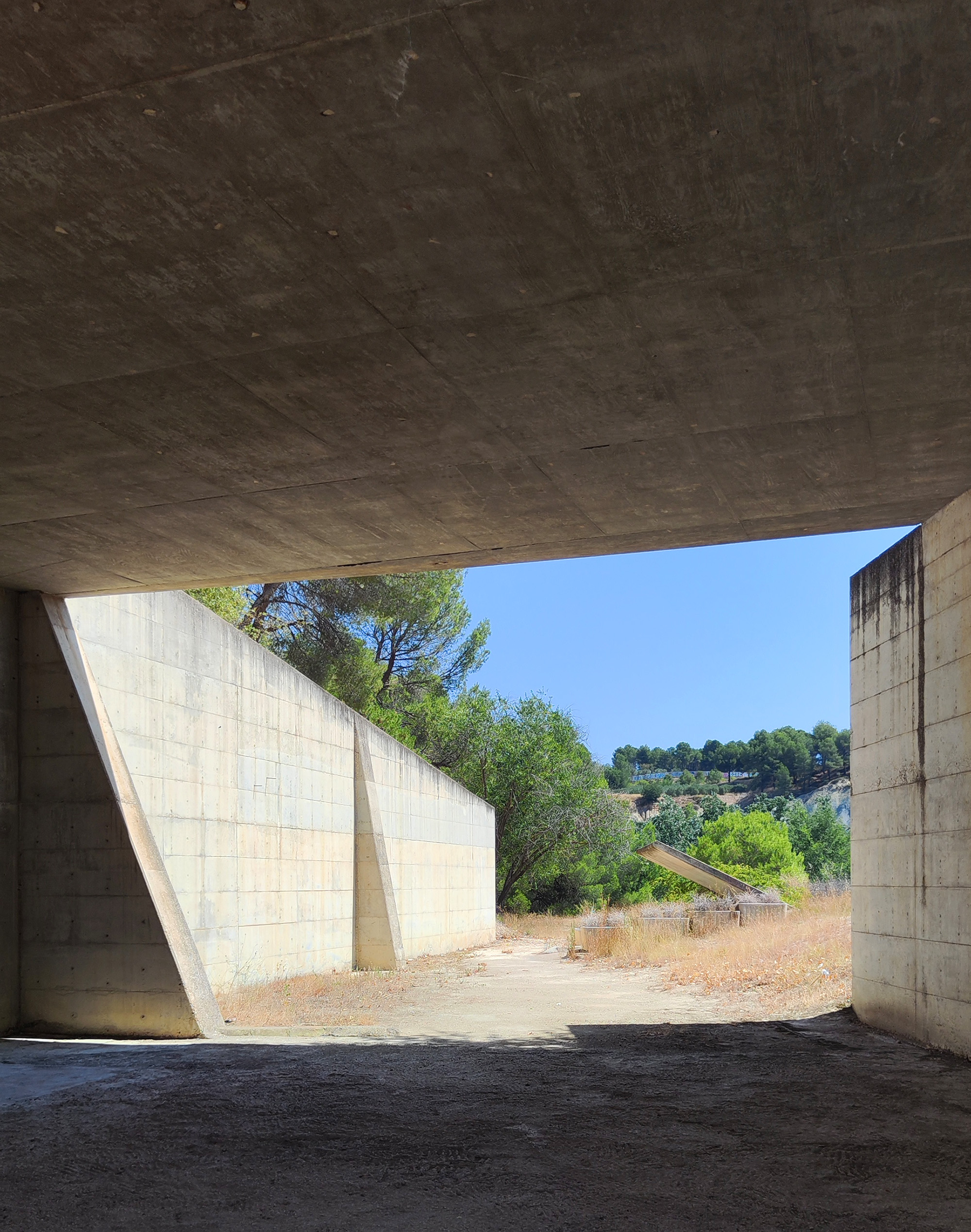
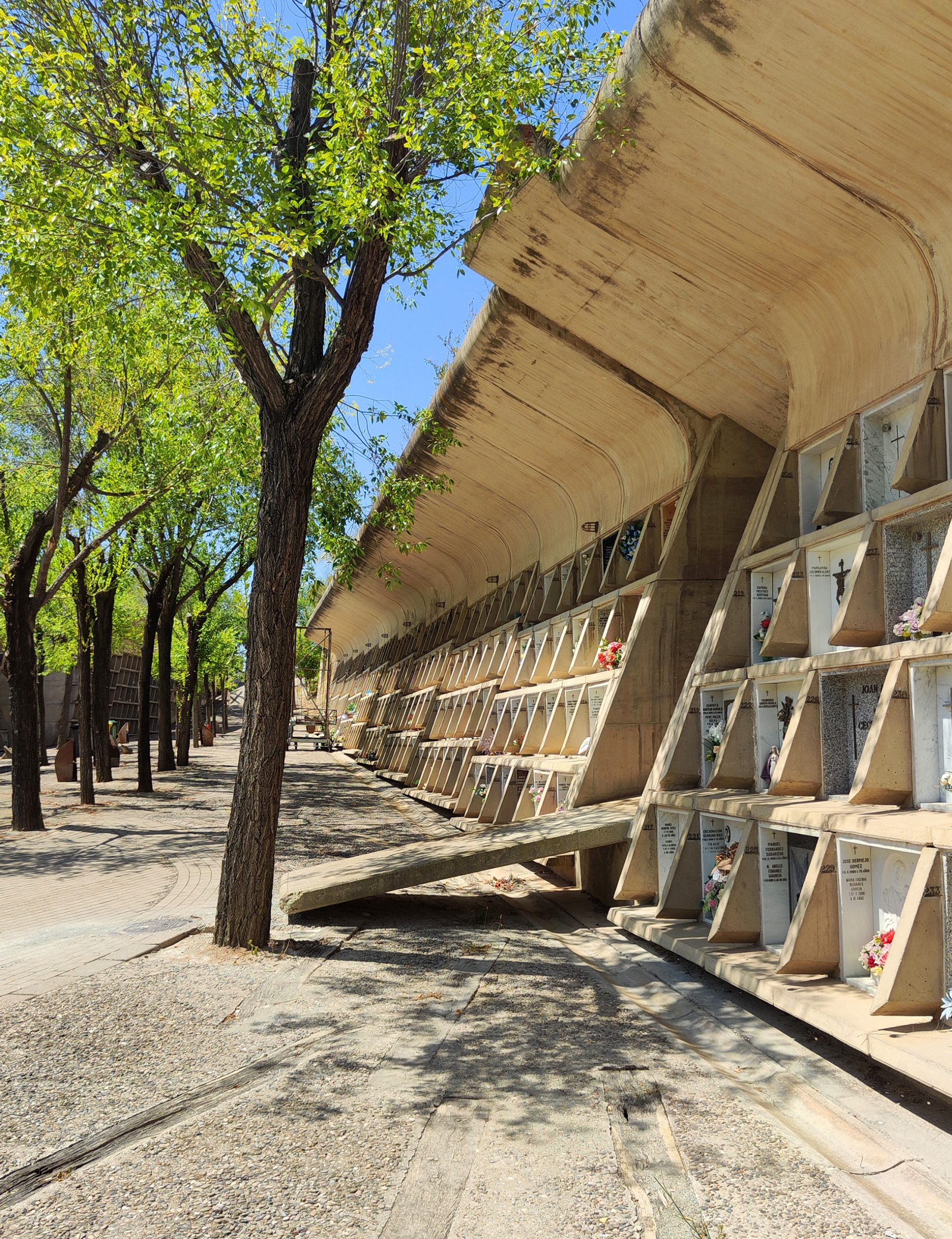
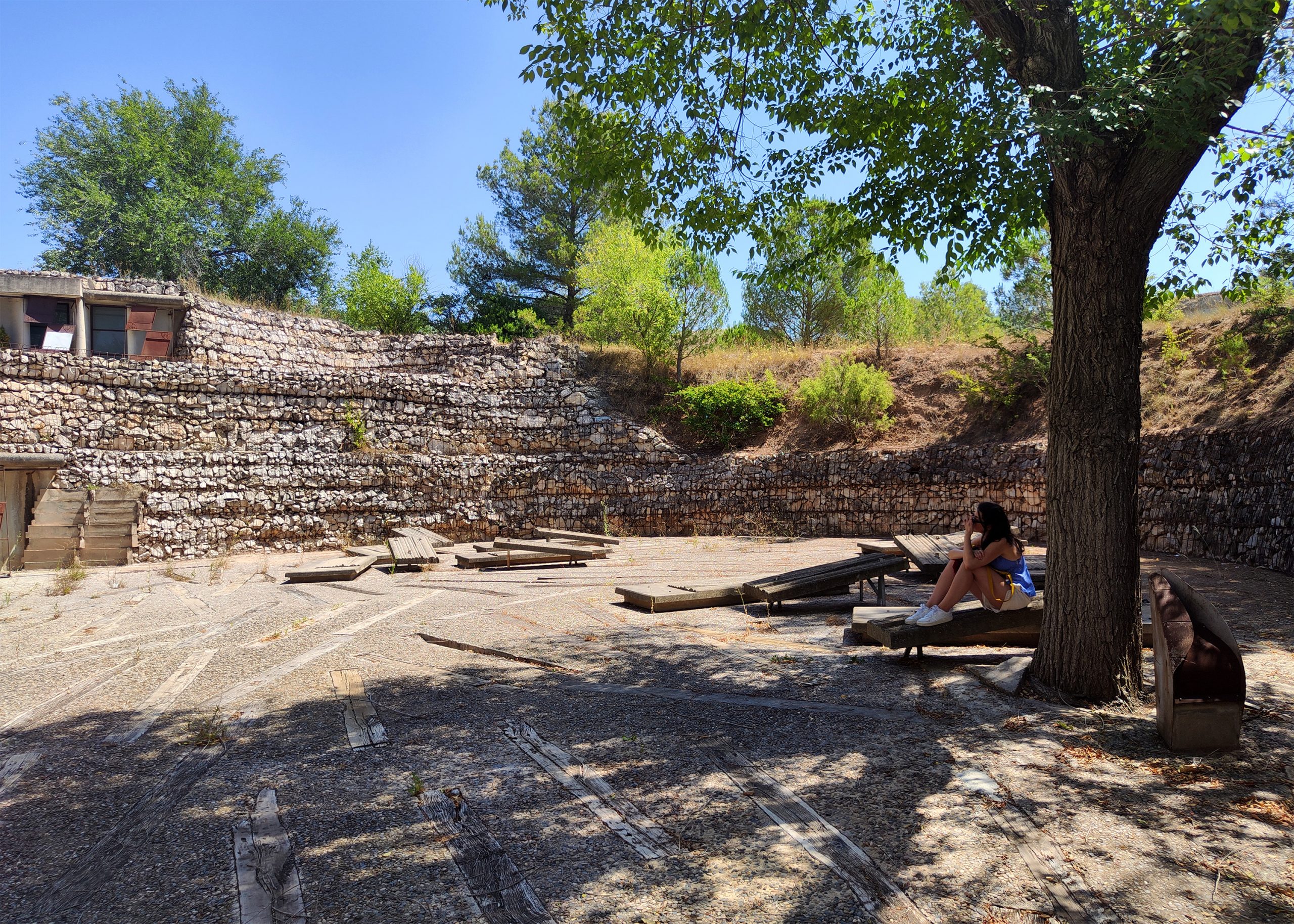
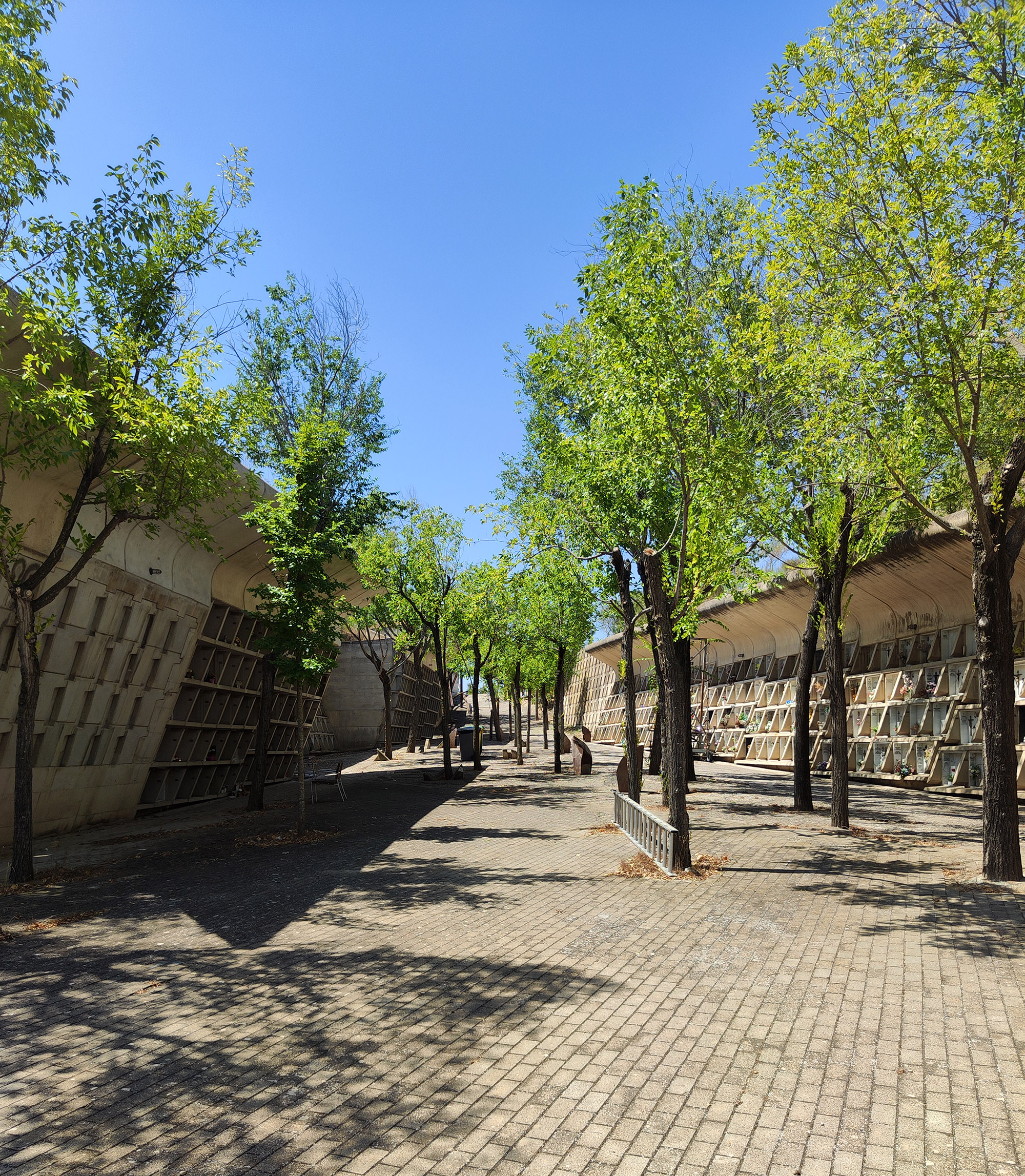
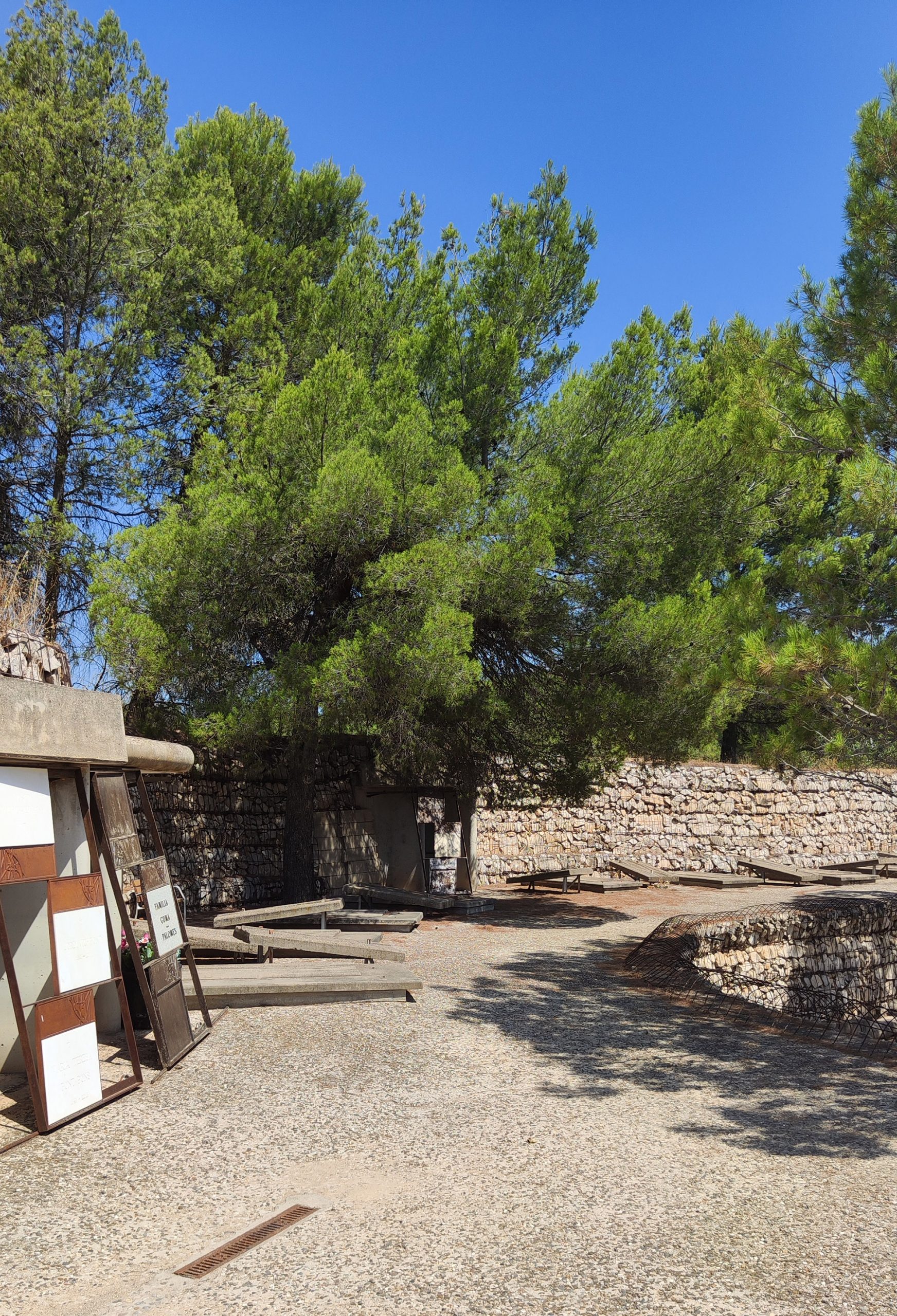
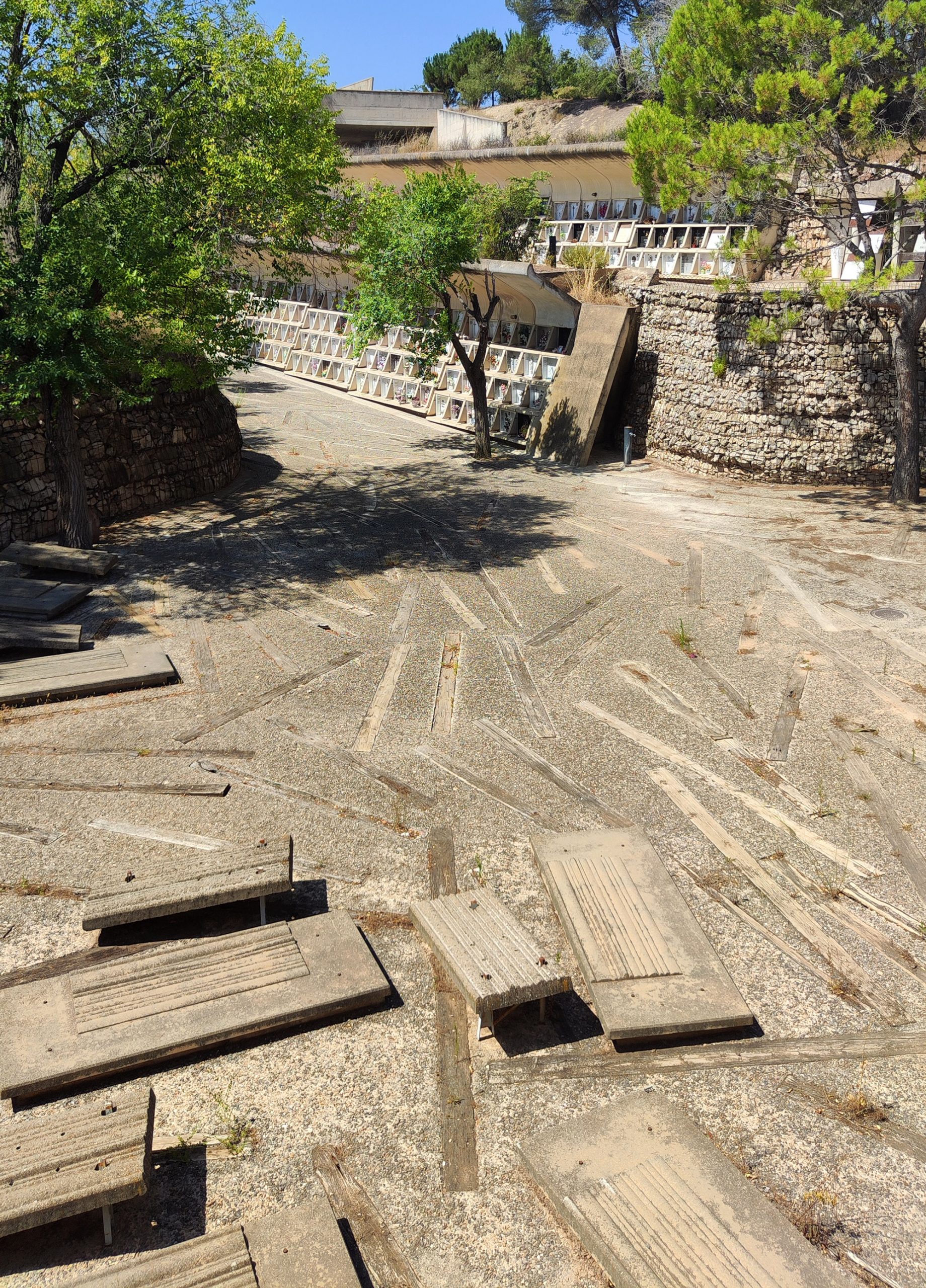
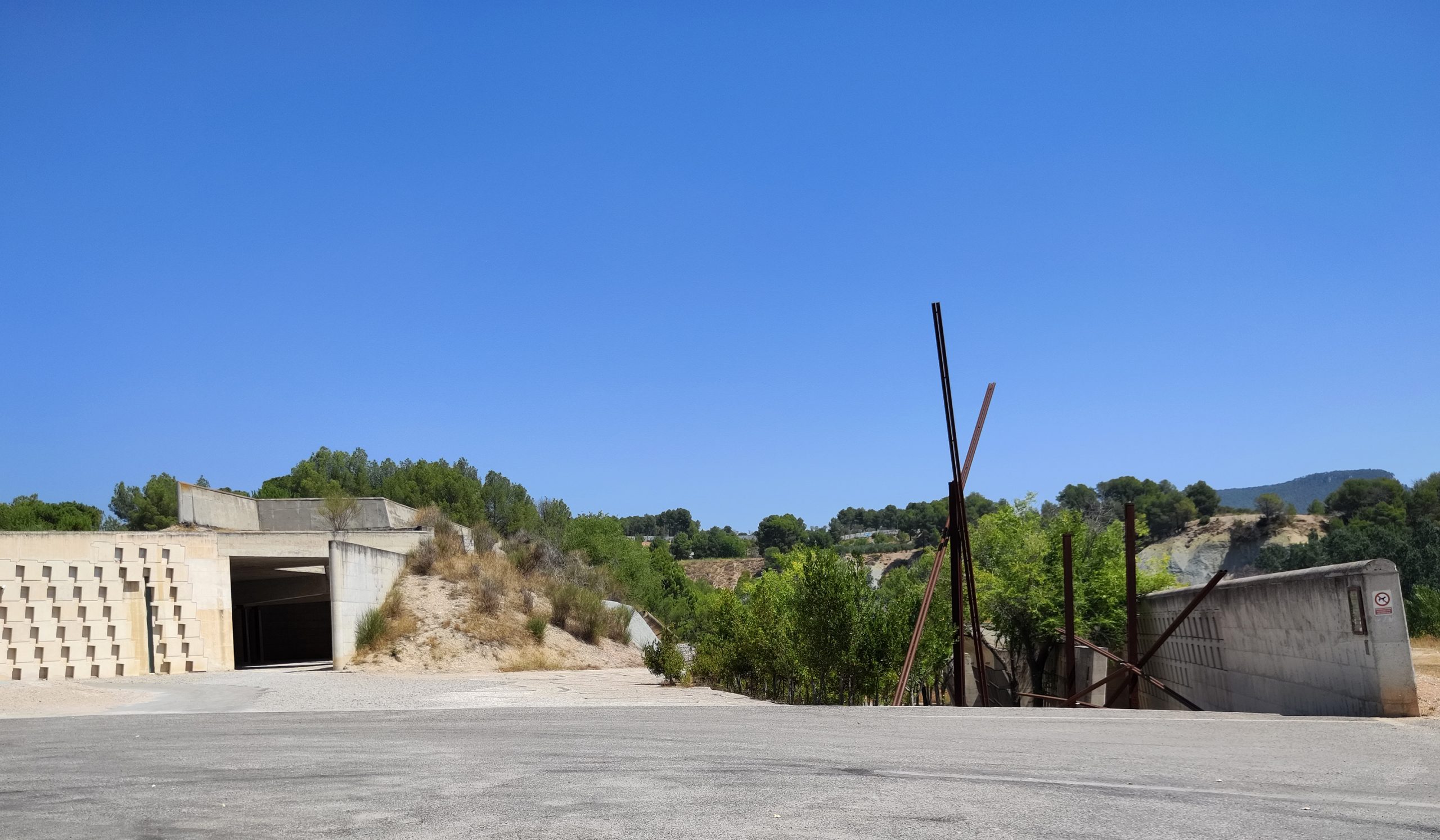
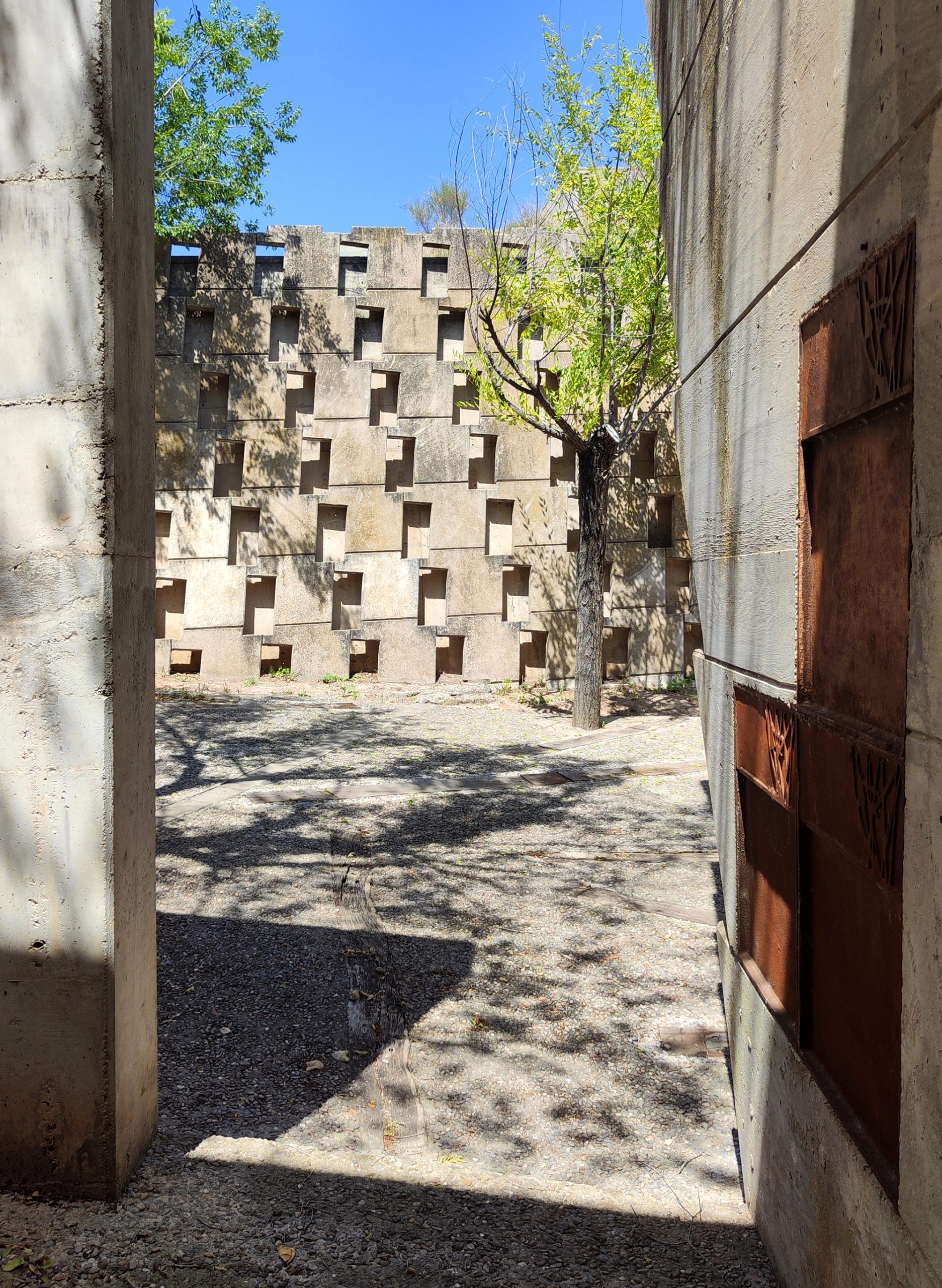
I remember the first thoughts I put down on paper for the design of the Igualada cemetery. At that time, I had the idea of working on the surrounding landscape, which until then had been used for agriculture, in such a way that it resembled a canal cutting into a field, eroding it. Through excavation, I was able to hollow out the landscape much faster than the natural process itself. This artificial erosion accelerated the passage of time. On the other hand, the cut made cannot escape time, as its appearance determines the natural growth rate of the new trees. It will not be until their trunks have grown and their crowns have fully developed that they will visually seal the incision and, in a way, reconstruct the original level of the terrain. The entire cemetery will then seem to disappear underground, forming a kind of mass grave, covered by a green tombstone.
Recuerdo los primeros pensamientos que plasmé sobre el papel para el diseño del cementerio de Igualada. En ese momento tenía la idea de trabajar el paisaje circundante, que hasta ese momento había tenido un uso agrícola, de manera que recordara el canal que se adentra en el campo de cultivo, erosionándolo. Mediante la excavación fui capaz de ahuecar el paisaje mucho más rápido que el propio proceso natural. Esta erosión artificial aceleró el curso del tiempo. Por otra parte, el corte realizado no puede escapar del tiempo, ya que su apariencia determina la velocidad natural de crecimiento de los nuevos árboles. No será hasta que sus troncos hayan crecido y hasta que sus copas se hayan desarrollado plenamente que estos sellarán visualmente la incisión, y, de alguna manera, reconstruirán el nivel original del terreno. El cementerio entero parecerá entonces desaparecer bajo la tierra formando una especie de fosa común, cubierta por una verde lápida.
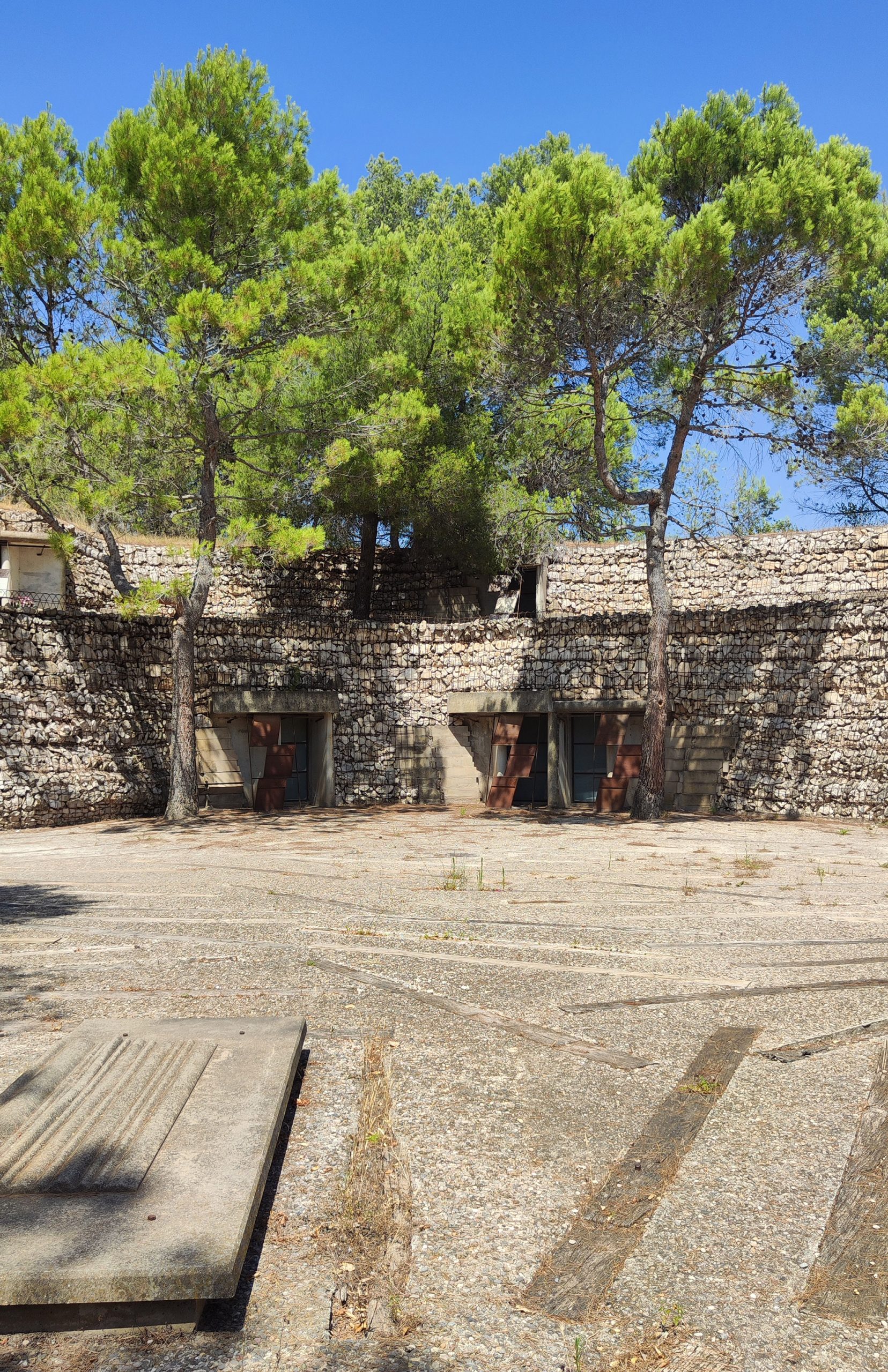
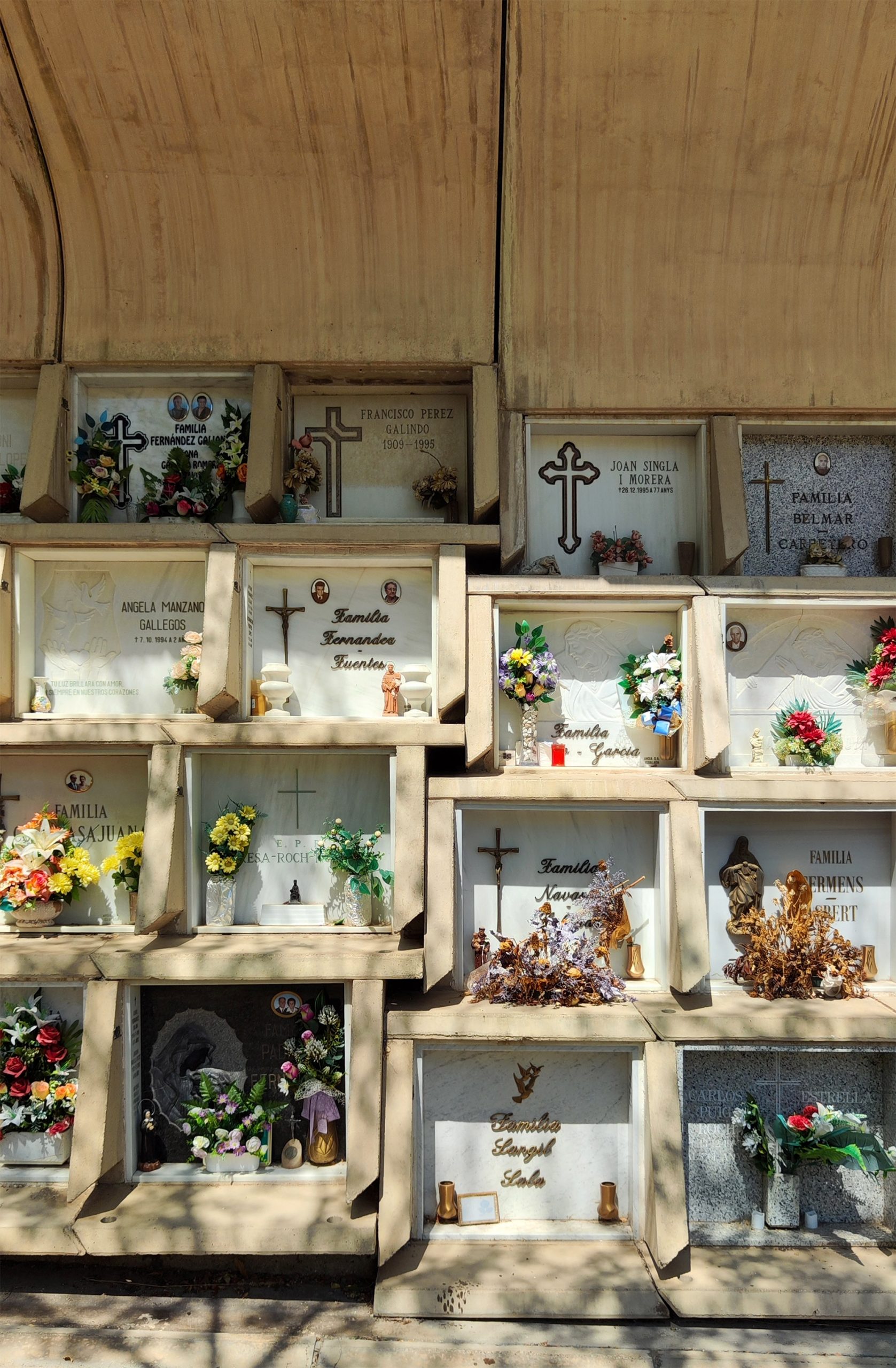
My initial efforts focused on giving the cemetery as a whole a certain subterranean character; in other words, transferring the property of burial place from the individual grave to the whole complex. It was then a matter of finding ways to transfer this desire, or this hypothesis, into reality. The way I achieved my goal was not, however, straightforward. I experimented, searched and even discovered parallels with traditional forms of tombs, such as the Etruscan ones, located under pine trees. The development of the language of forms in the Igualada project did not, however, mean starting with an idea and ending up with a reality. Design has neither a beginning nor an end.
Mis primeros esfuerzos se concentraron en darle al cementerio en su totalidad un cierto carácter subterráneo; en otras palabras, transferir la propiedad de lugar de entierro de la tumba individual a todo el conjunto. Fue cuestión entonces de encontrar formas que trasfirieran este deseo, o esta hipótesis, a la realidad. La forma que tuve de conseguir mi propósito no fue, de todos modos, directa. Experimenté, busqué e incluso descubrí paralelismos con formas tradicionales de tumbas, como las etruscas, emplazadas bajo los pinos. El desarrollo del lenguaje de las formas del proyecto de Igualada no significó, de todos modos, comenzar con una idea y acabar con una realidad. El diseño no tiene ni comienzo ni final.
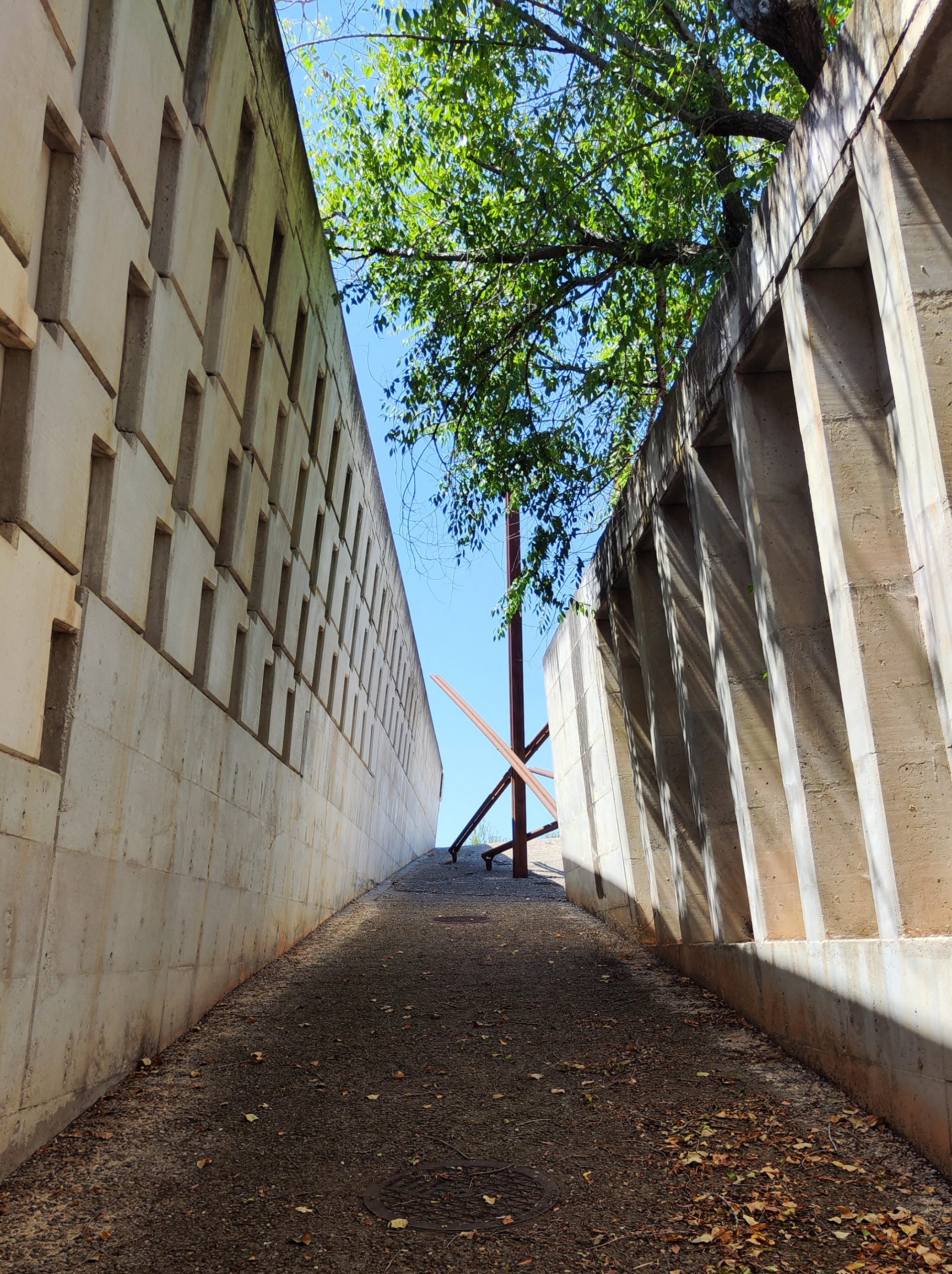
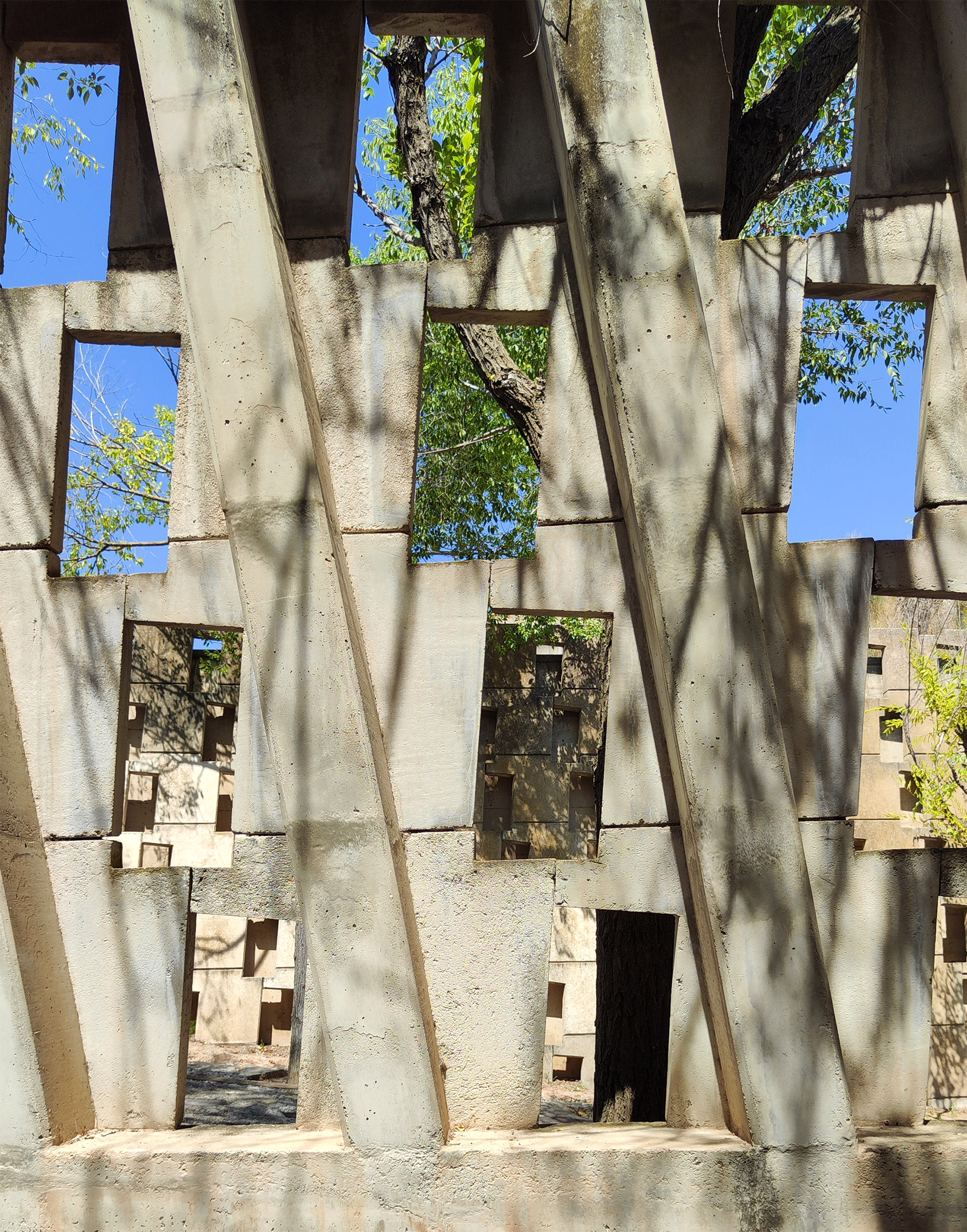
The beginning of the work necessarily comes from an idea, in my case the idea of a path. Sverre Fehn, a Norwegian architect, describes it this way: a path begins to exist when it resolves the process from one place to another, and this act determines its form. An abstract definition, followed by a series of sketches on paper that, as they are drawn, take on increasingly concrete forms and are gradually filled with memories, external references, and associations. Later, once the work was completed, I understood that it was only possible to experience these timeless and constant contents during the design phase and through the finished product, and that the project is subject to other rules and time constraints during the construction phase.
El inicio de la obra procede necesariamente de una idea, en mi caso de la idea de camino. Sverre Fehn, un arquitecto noruego, lo describe así: un camino comienza a ser cuando resuelve el proceso de un lugar a otro, y este acto determina su forma. Una definición abstracta, seguida de una serie de bocetos sobre el papel que al dibujarse asume formas cada vez más concretas y se llenan gradualmente de memorias, de referencias externas, de asociaciones. Más adelante, una vez finalizada la obra, entendí que solo era posible experimentar estos contenidos intemporales y constantes durante la fase de diseño y a través del producto finalizado, y que el proyecto está sujeto a otras normas y otros apremios de tiempo durante la fase de construcción.
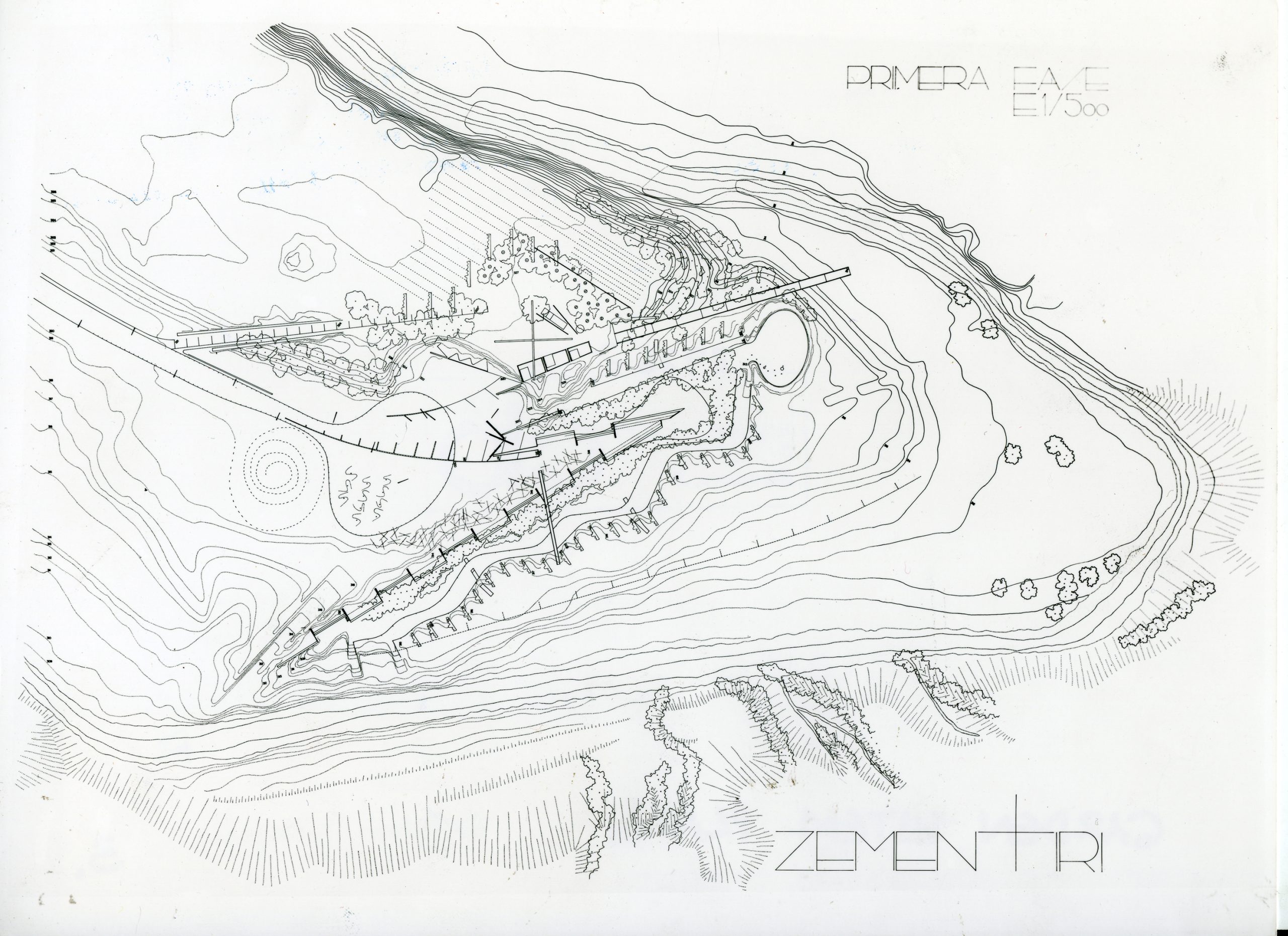
Drawing is a way of thinking, or at least an activity that accompanies thinking. Perhaps it is only our consciousness that forces us to concentrate on a piece of paper and, in doing so, to reach a motionless, static state, which will then be apparent in the constructed designs. However, many elements in the Igualada cemetery contradict this norm; they express movement, invite digression: the eroded furrows in the earth, their zigzag geometry, the tortuous curve of a stream’s tongue.
Dibujar es una forma de pensar, o al menos una actividad que acompaña al pensamiento. Quizá es únicamente nuestra conciencia que nos obliga a concentrarnos en un trozo de papel, y, con ello, a llegar a un estado inmóvil, estático, que será luego apreciable en los diseños construidos. Sin embargo, muchos elementos en el cementerio de Igualada contradicen esta norma; expresan movimiento, invitan a la digresión: los surcos erosionados en la tierra, su geometría en zig zag, la tortuosa curva de la lengua de una corriente.
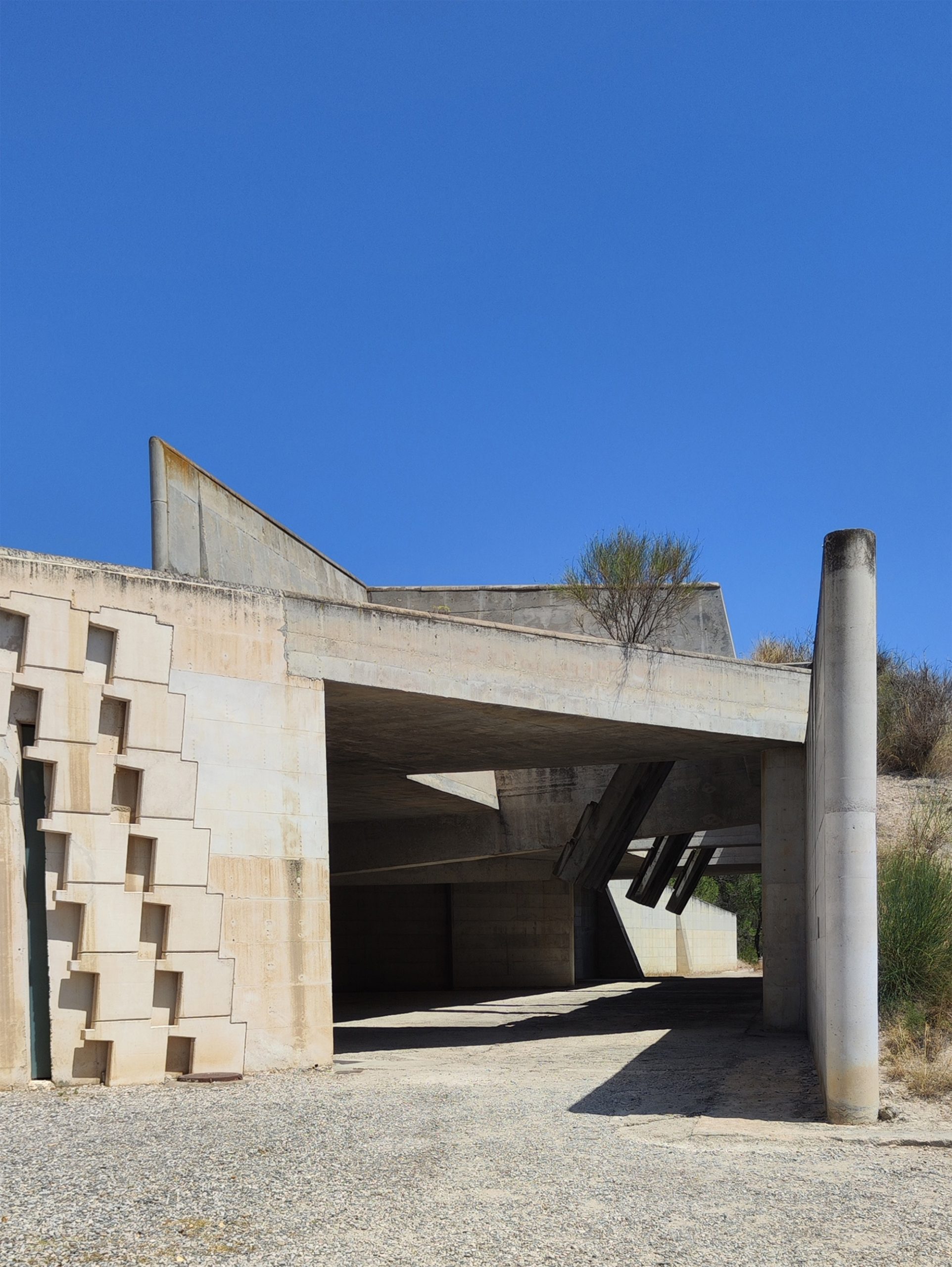
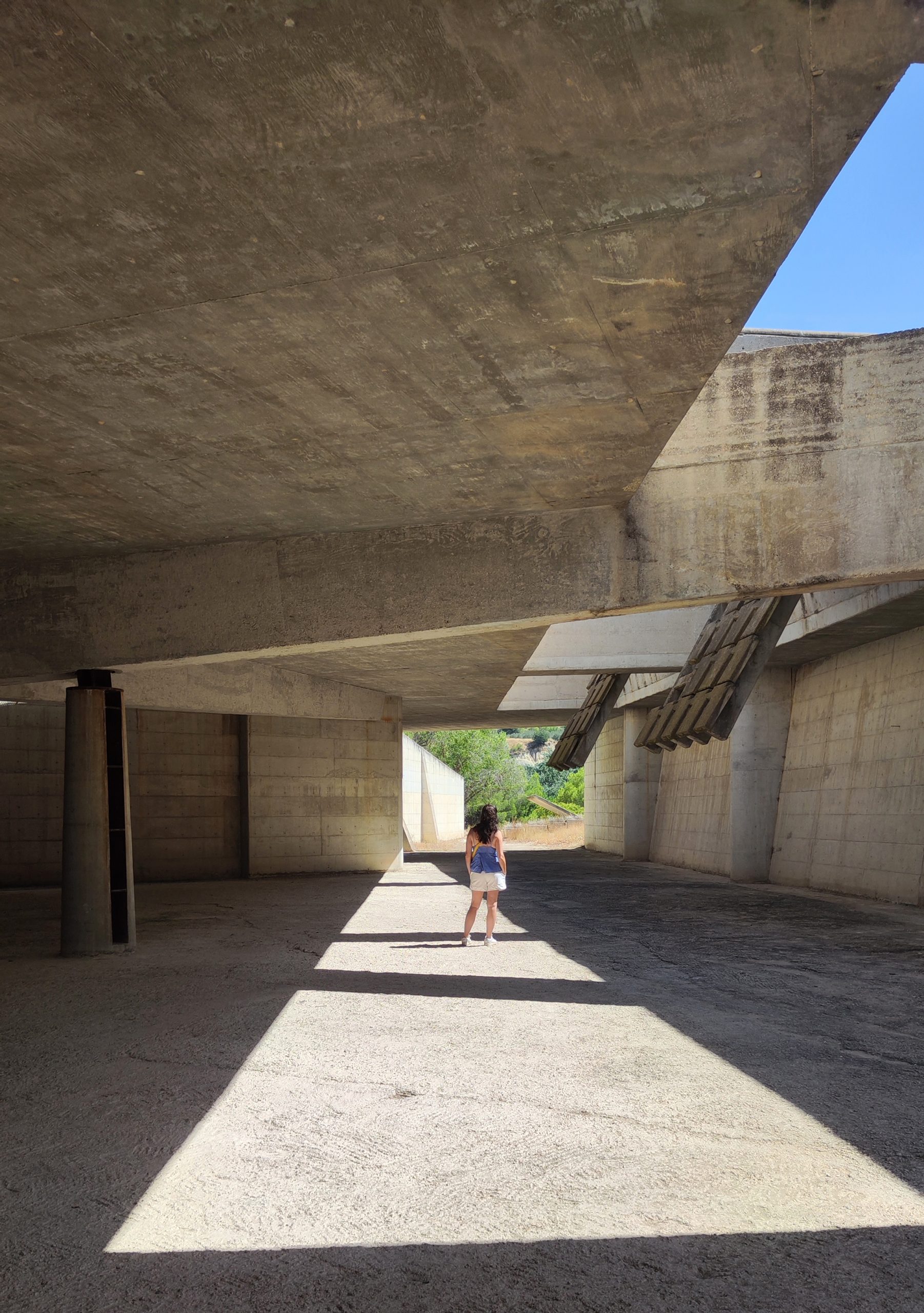
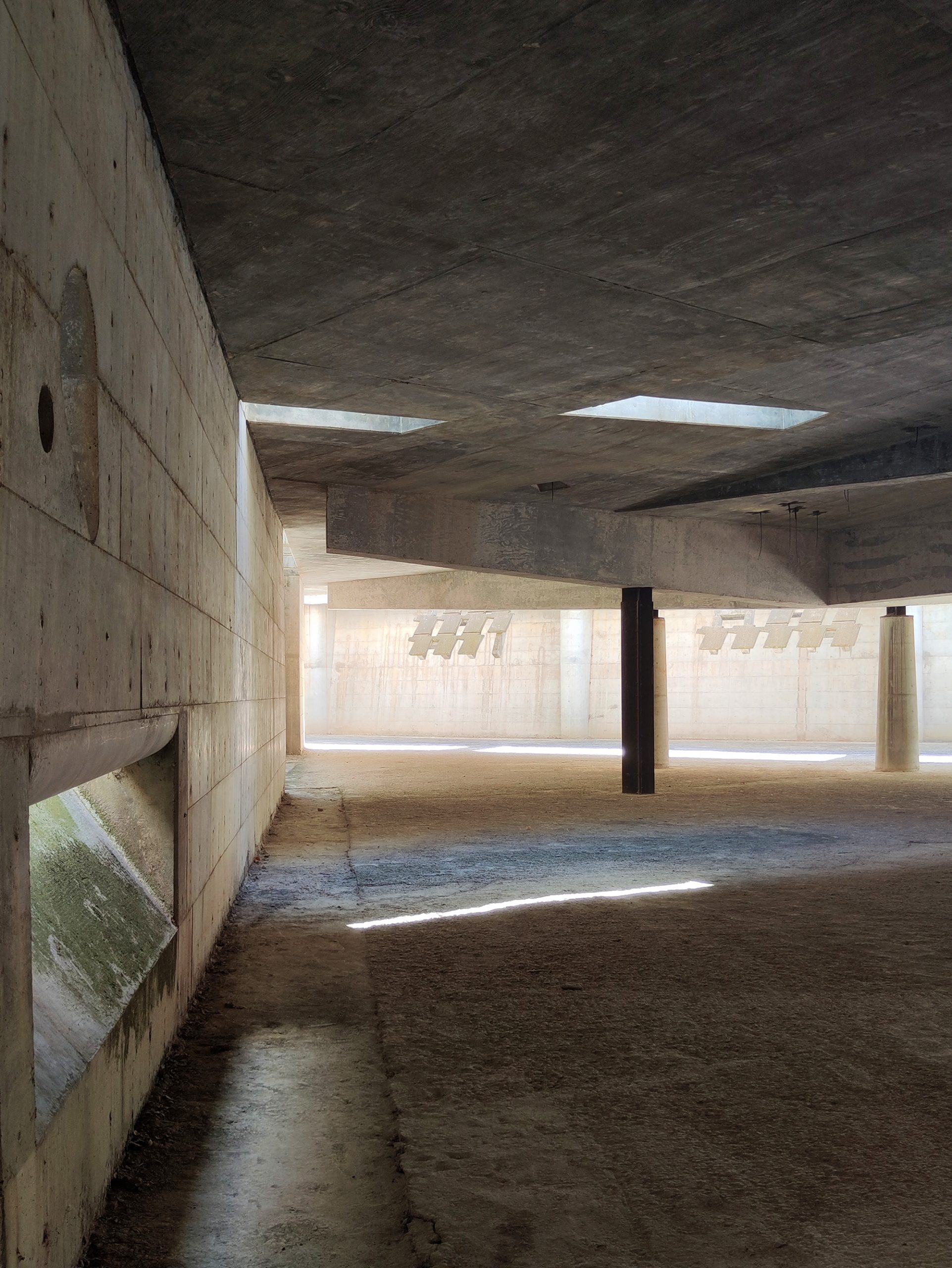
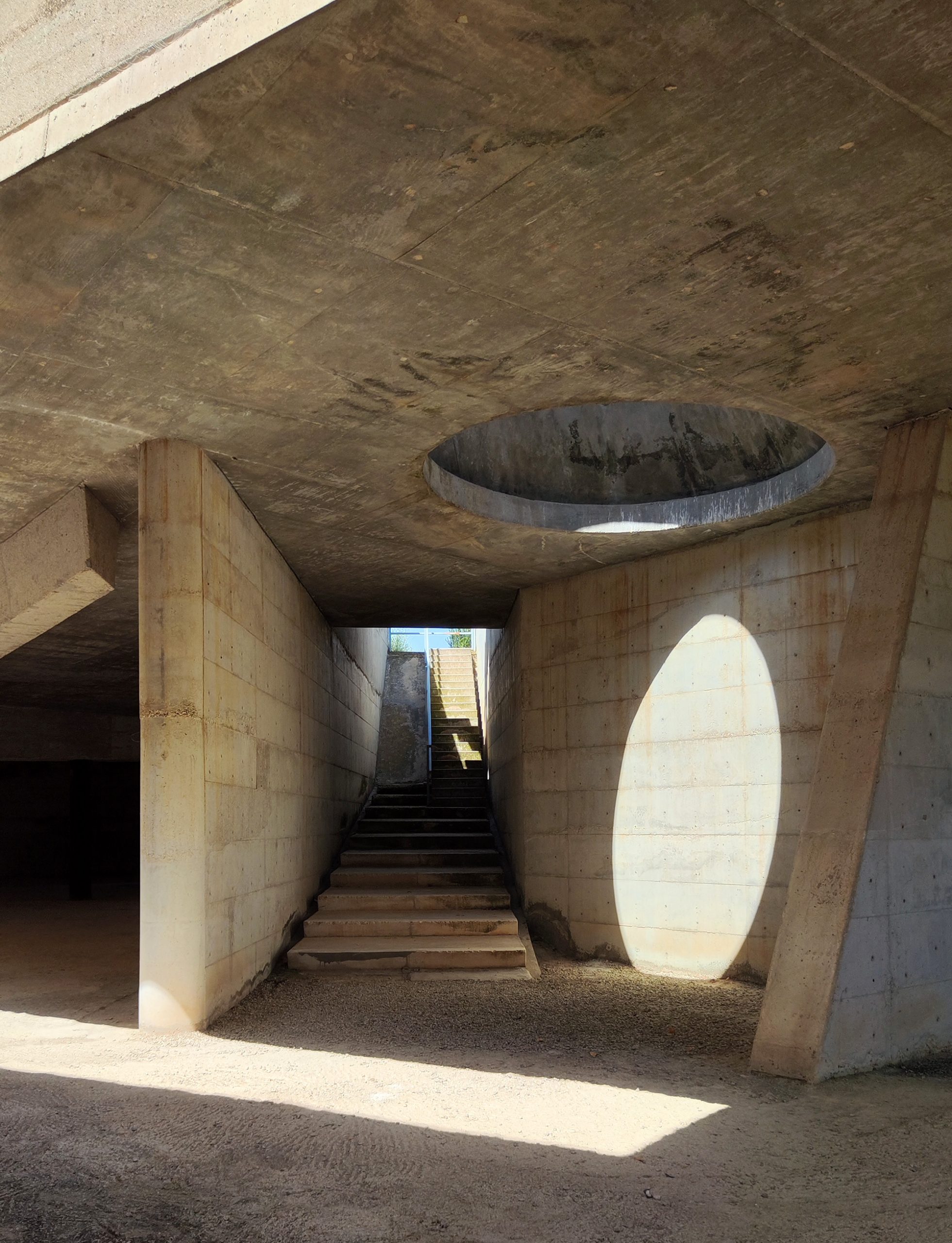
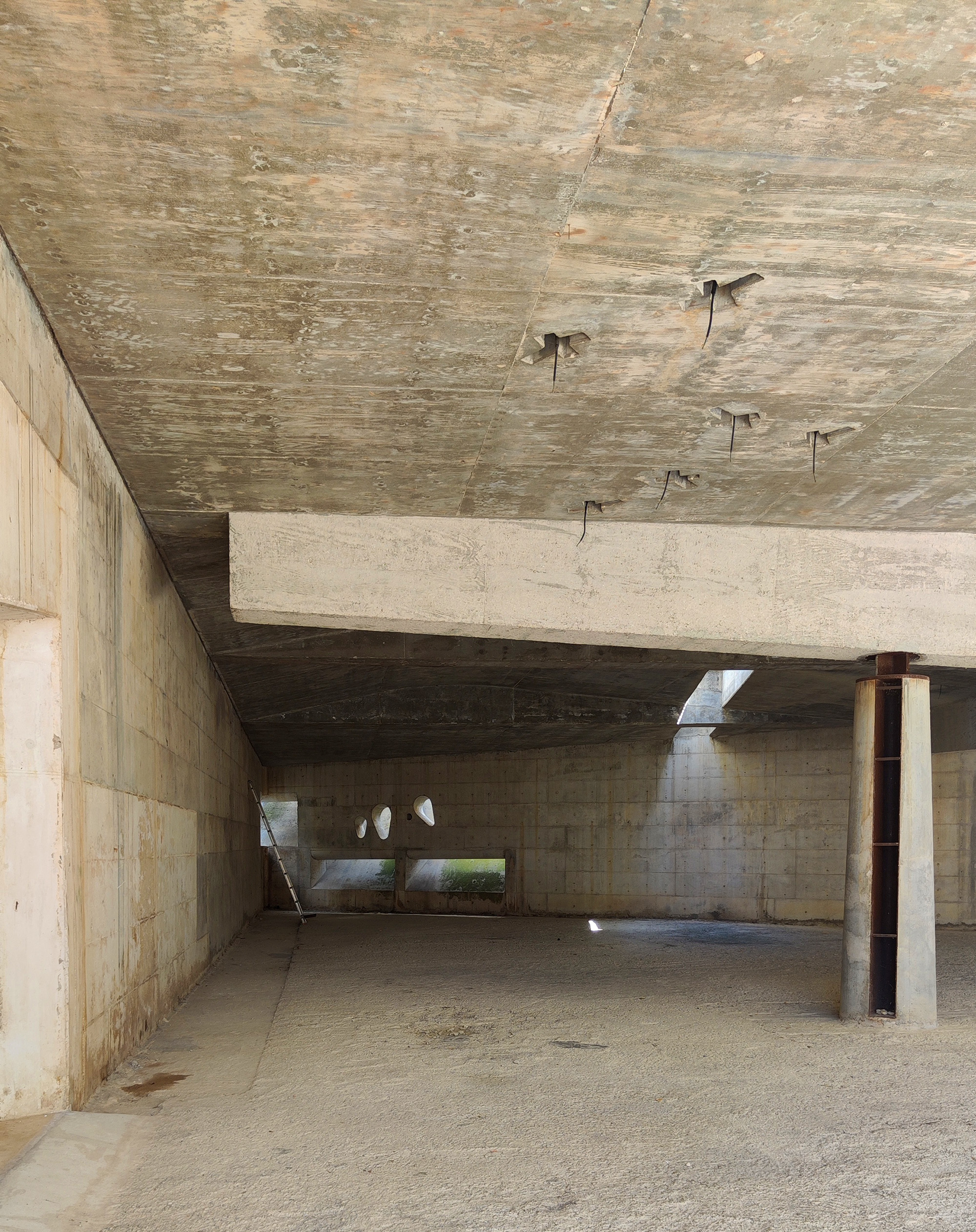
During the long period of its realisation, between 1985 and 1994, this project overlapped with many other projects I was working on. Over this long period of time, it became a place where I had lost myself and then found myself again, ultimately a place for persistence. I remember some corners as places where I had the feeling of having already been, even though they had only existed through the eye of my mind, as in a dream. I undoubtedly drew some of the structures from those visions. I wanted to allow situations and things that I would have liked to have in front of me, not just in my imagination, to exist.
En el largo período de su realización, entre 1985 y 1994, este proyecto se solapó con otros muchos proyectos en los que estaba trabajando. Se ha convertido, a lo largo de este largo período de tiempo, en un lugar en el que me había perdido para luego reencontrarme, en el fondo un lugar para la persistencia. Recuerdo algunas esquinas como lugares donde tenía la sensación de ya haber estado, aunque no hubieran existido más que a través del ojo de mi mente, como en un sueño. Sin duda, saqué de aquellas visiones algunas de las estructuras. Quería permitirles la existencia a situaciones y a cosas que me hubiera gustado tener frente a mí, no solo en mi imaginación.
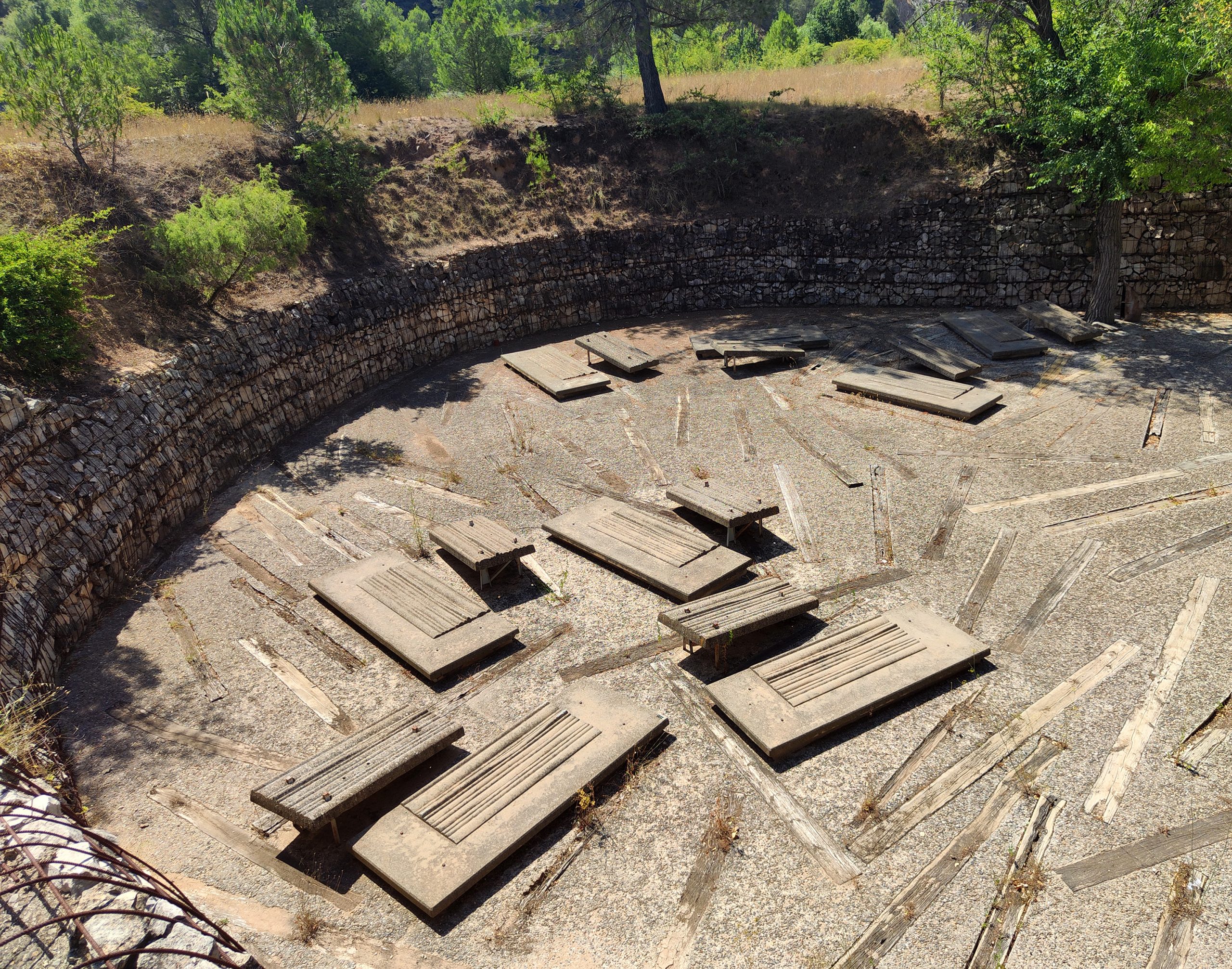
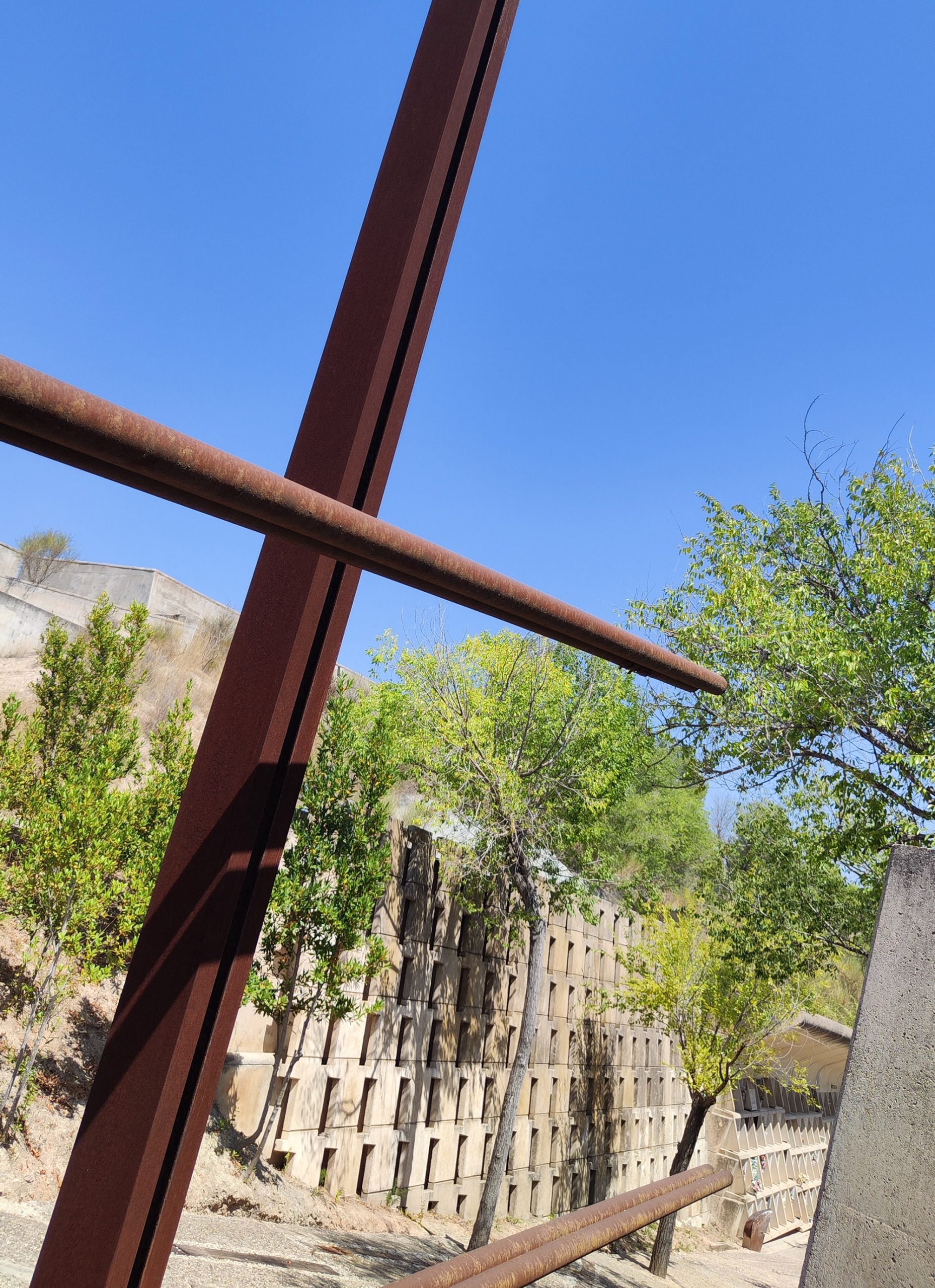
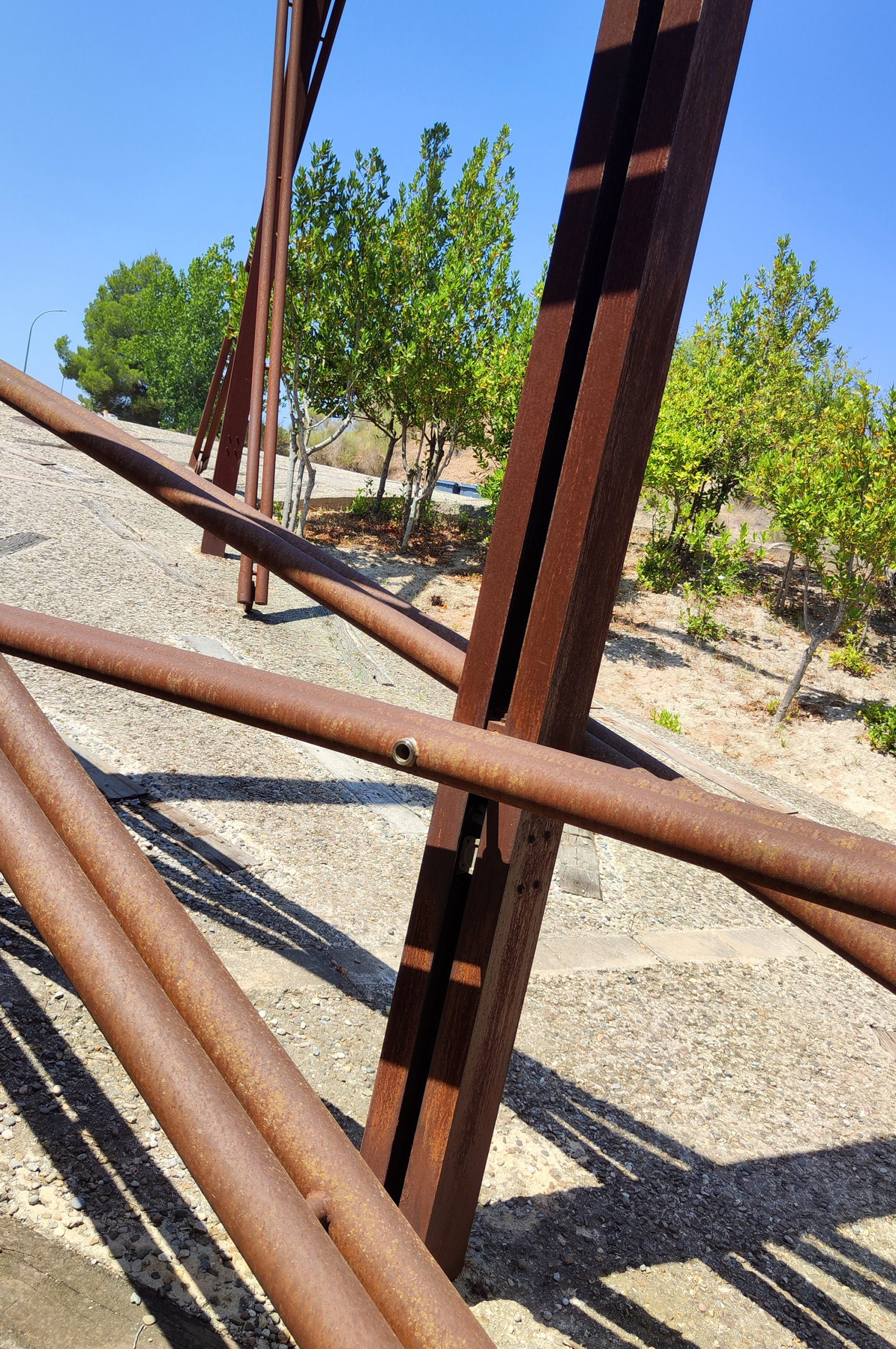
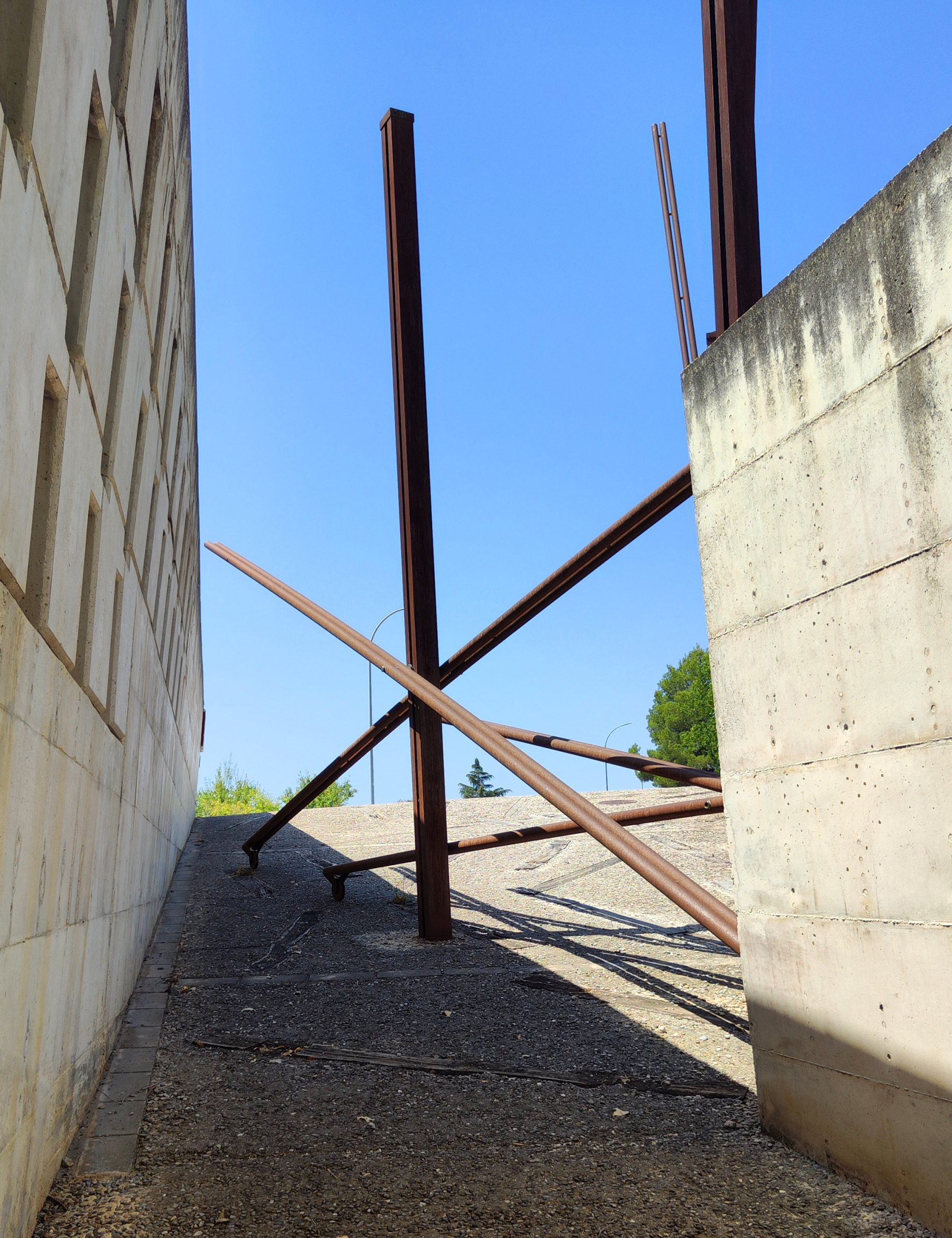
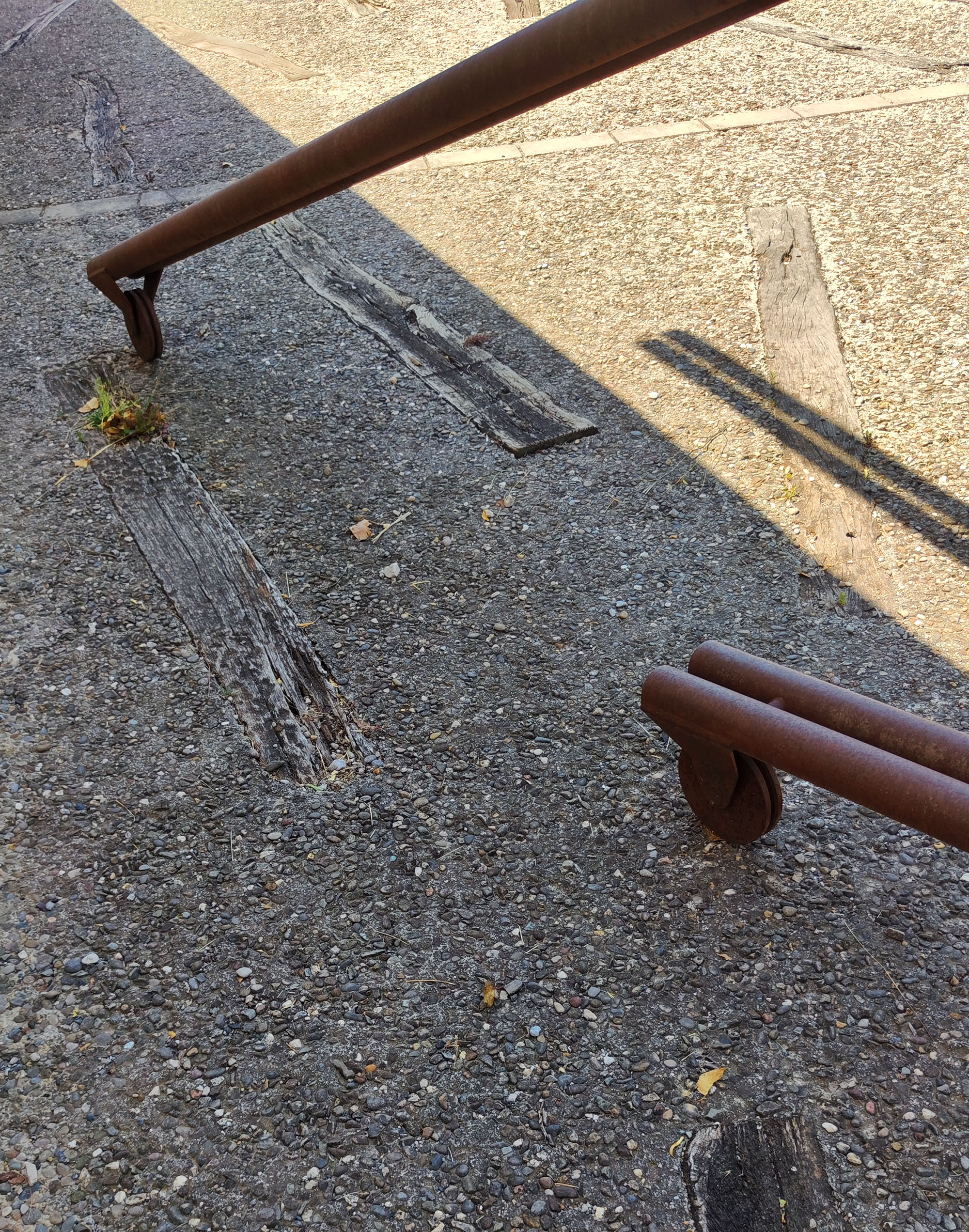
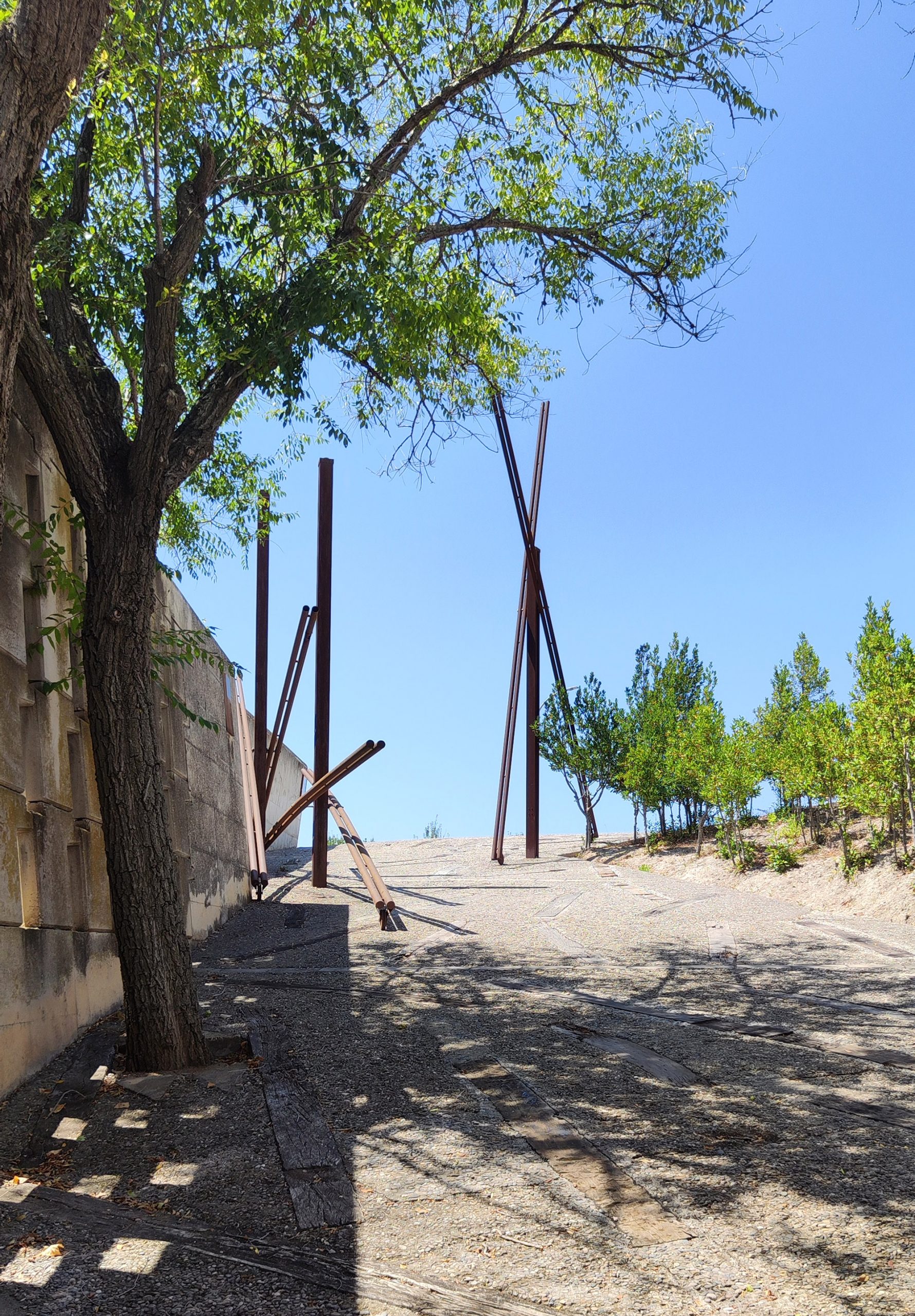
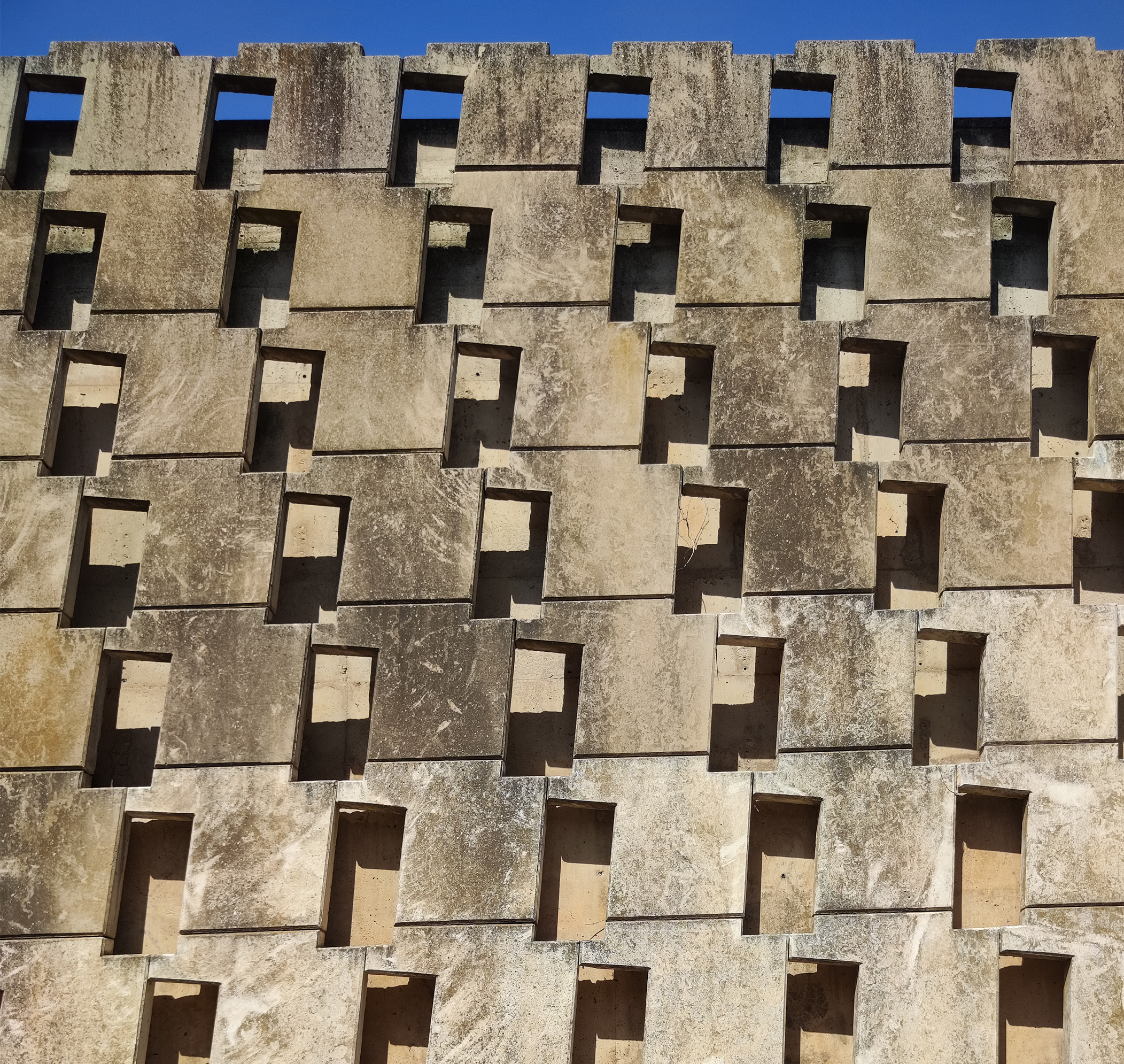
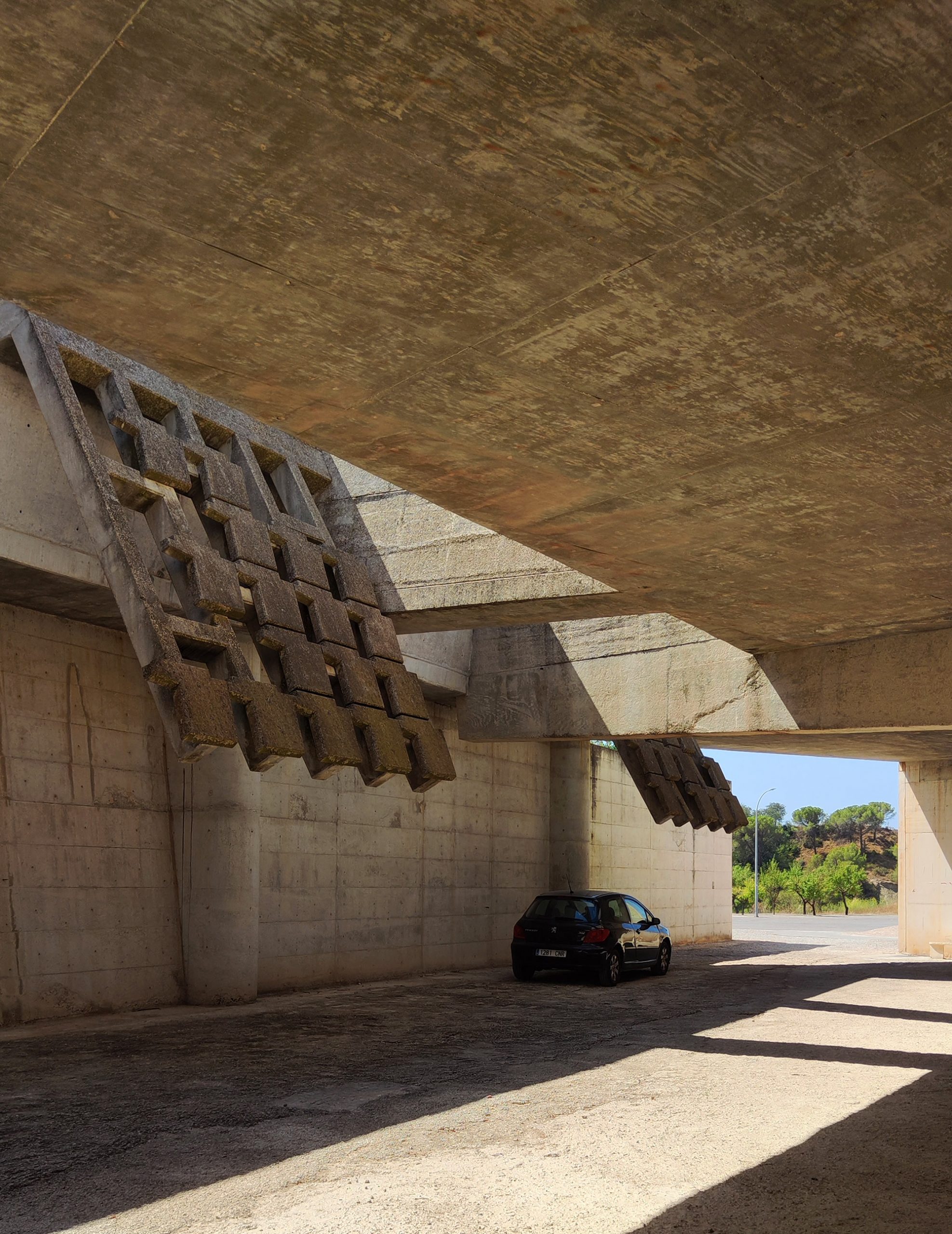
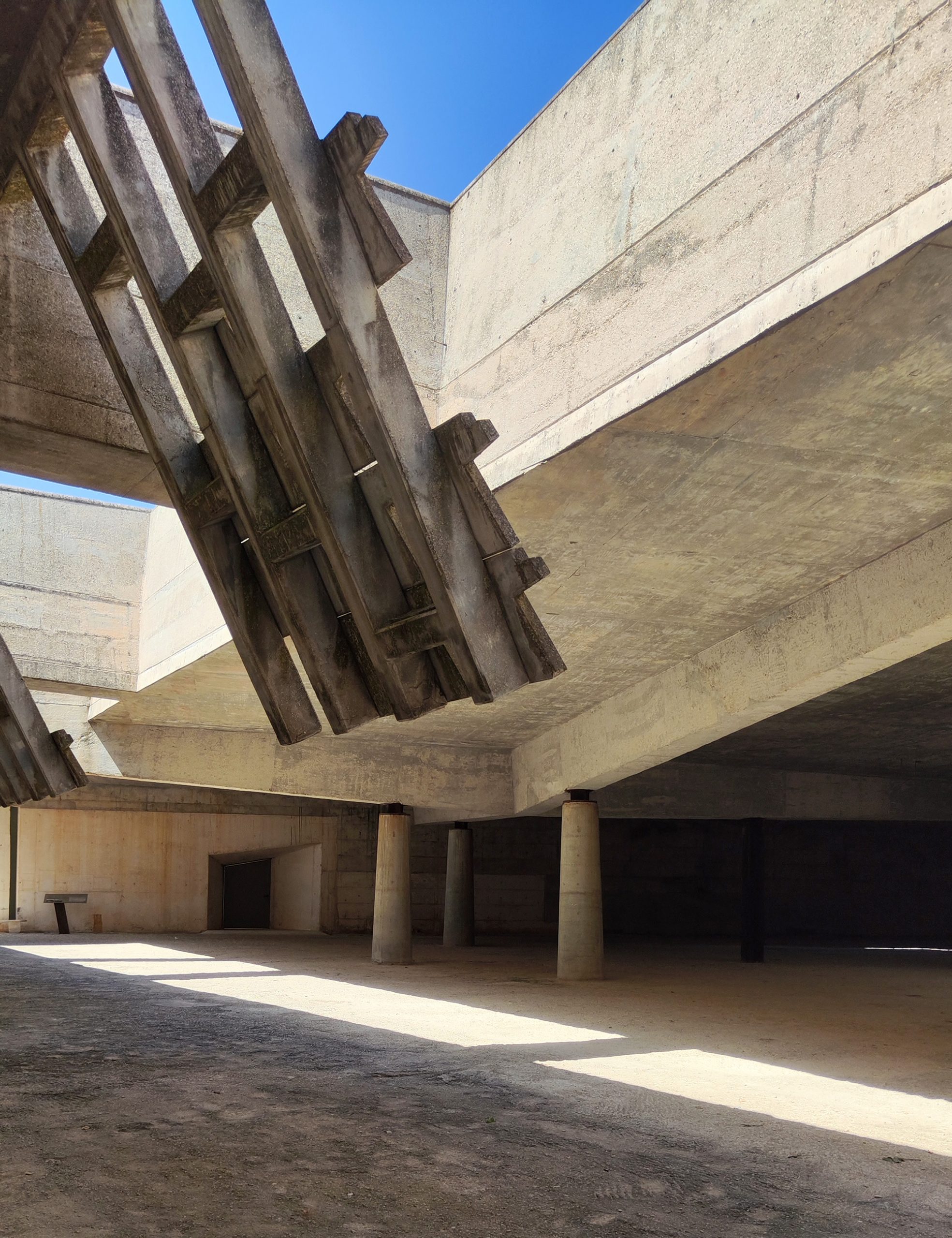
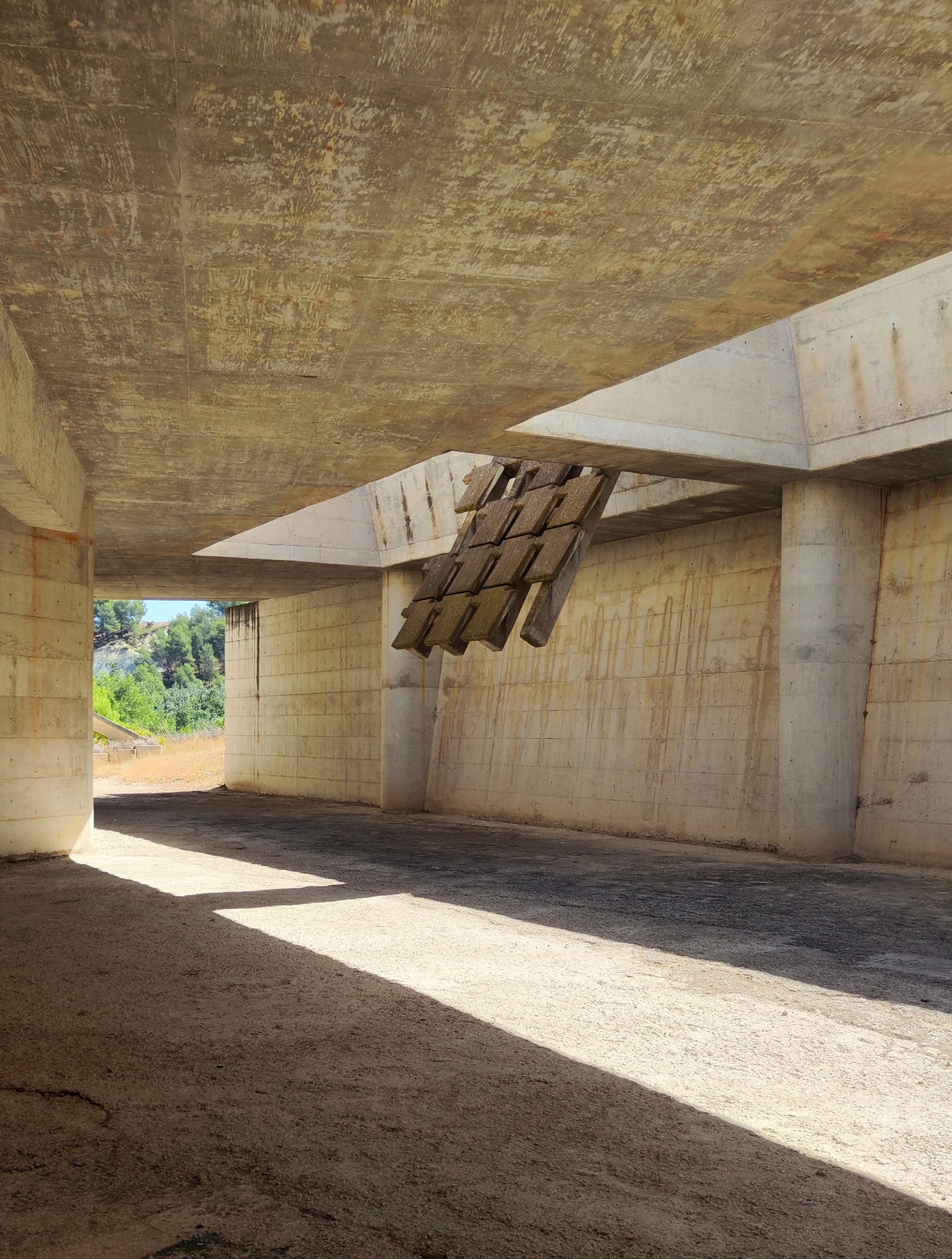
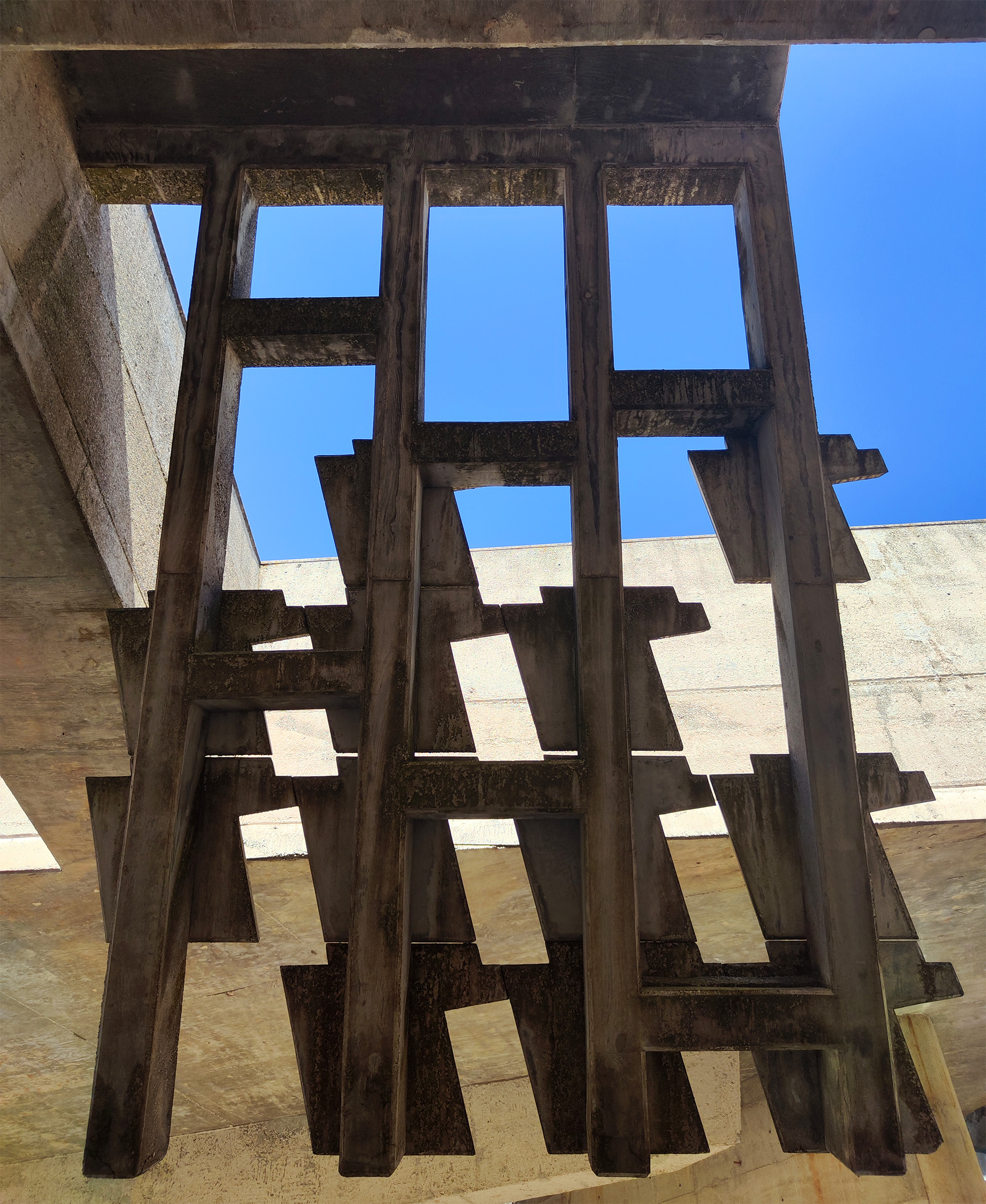
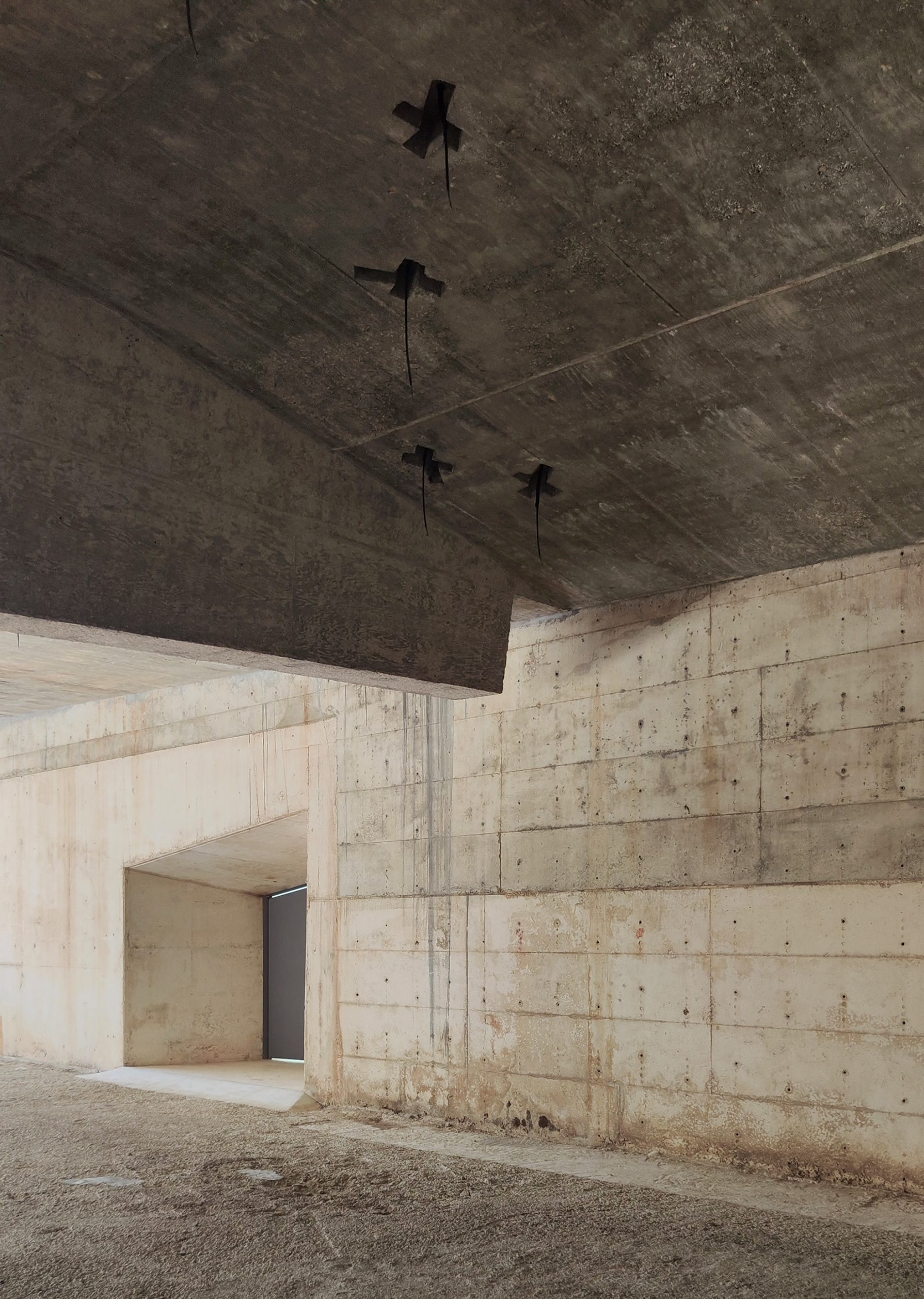
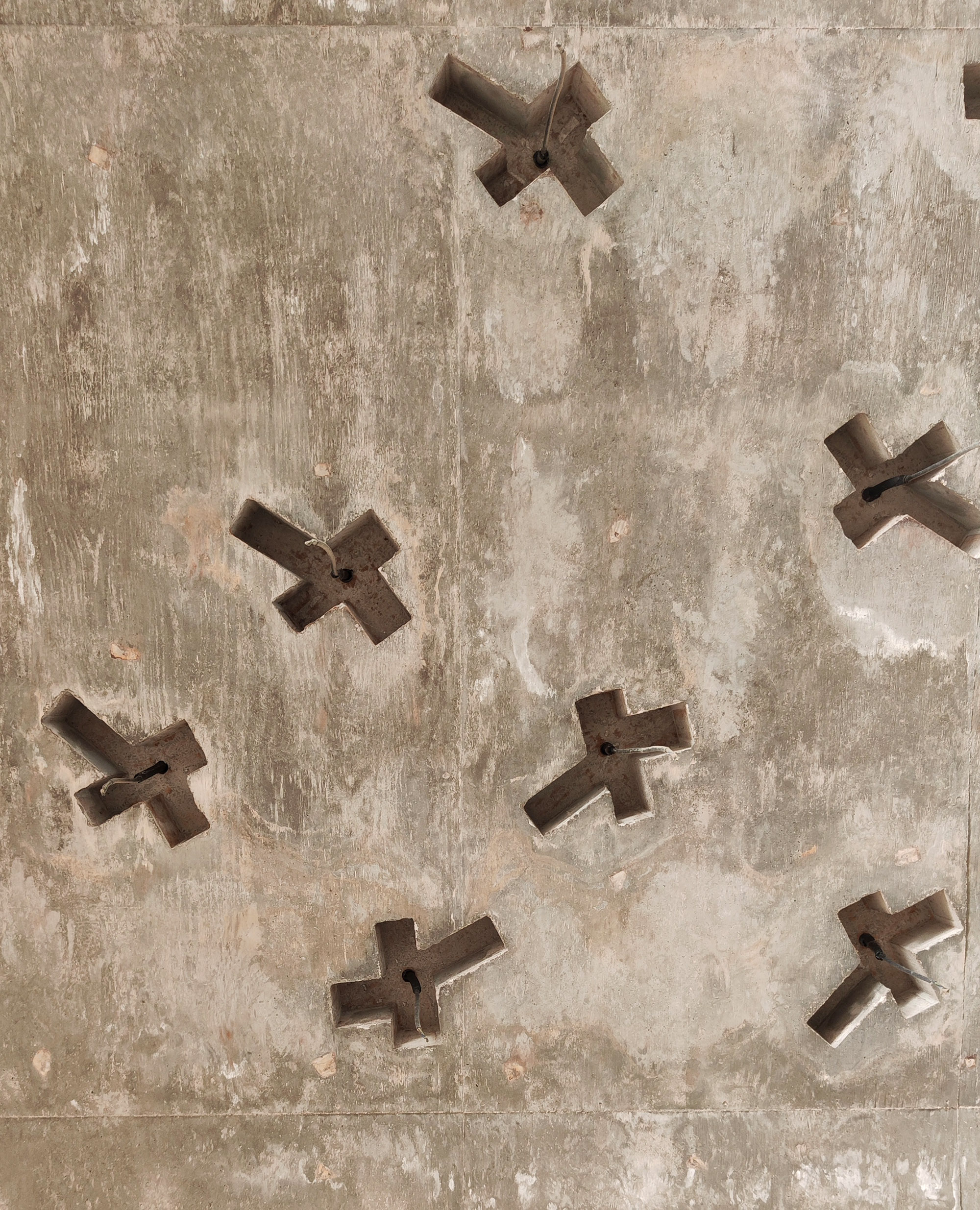
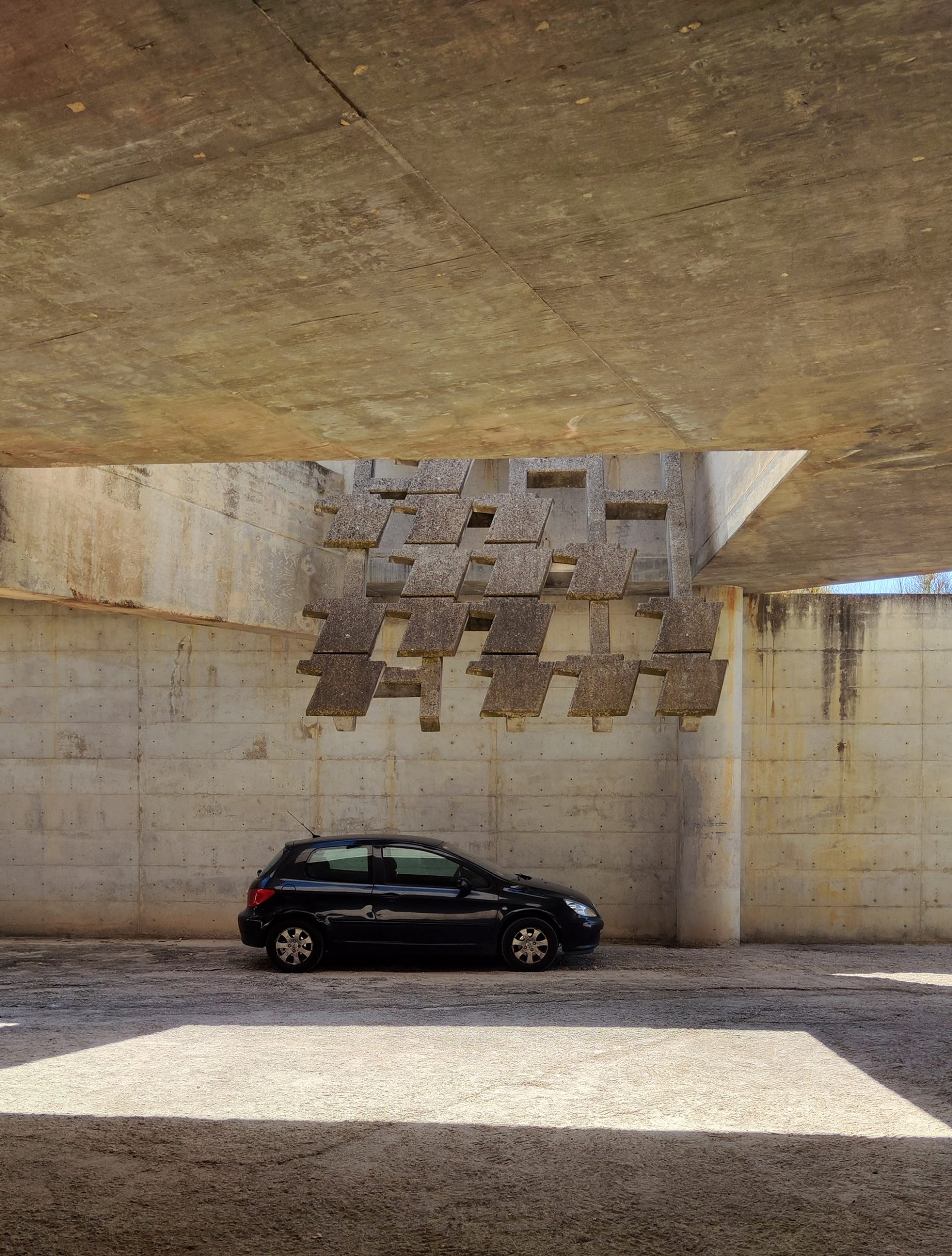
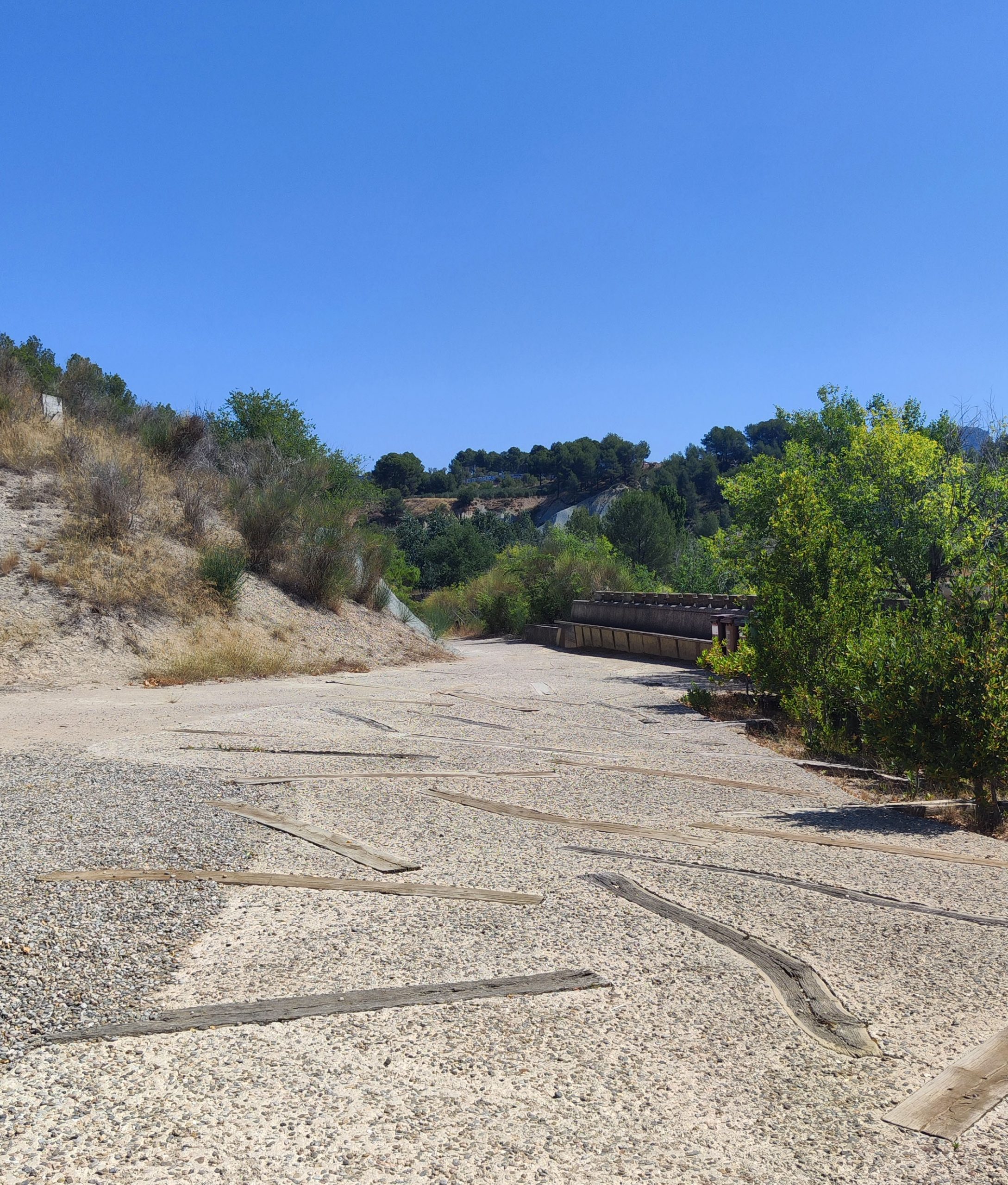
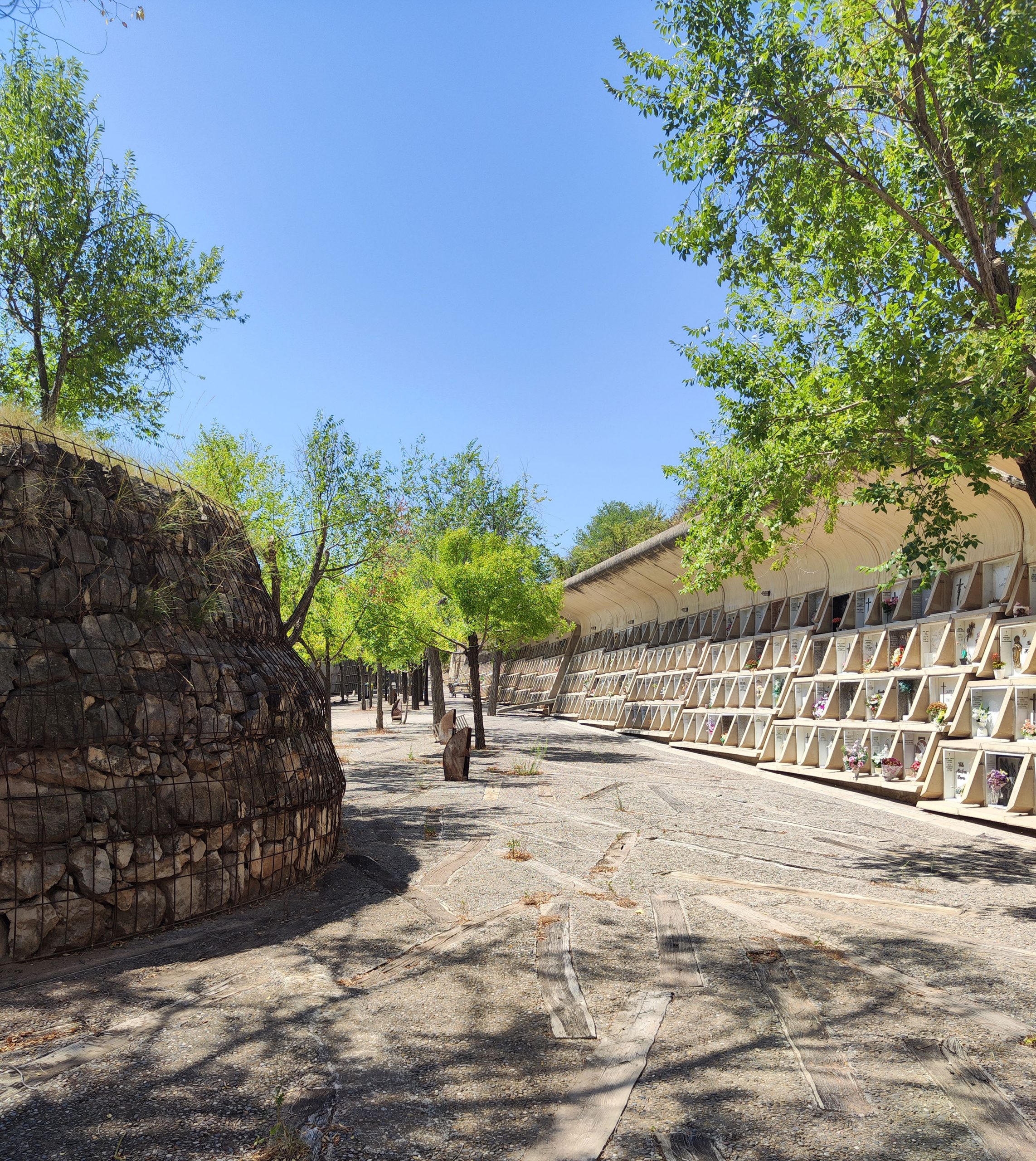
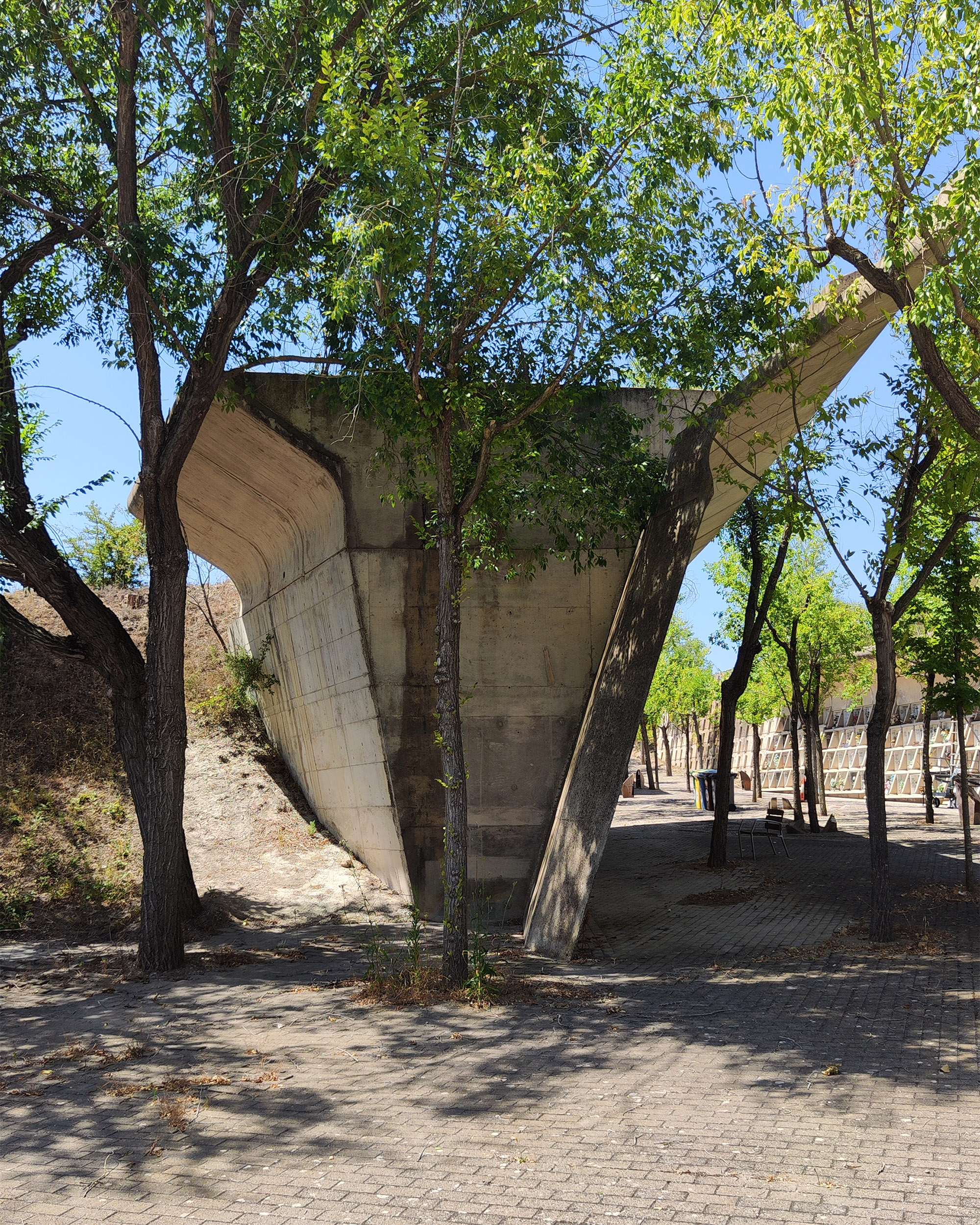
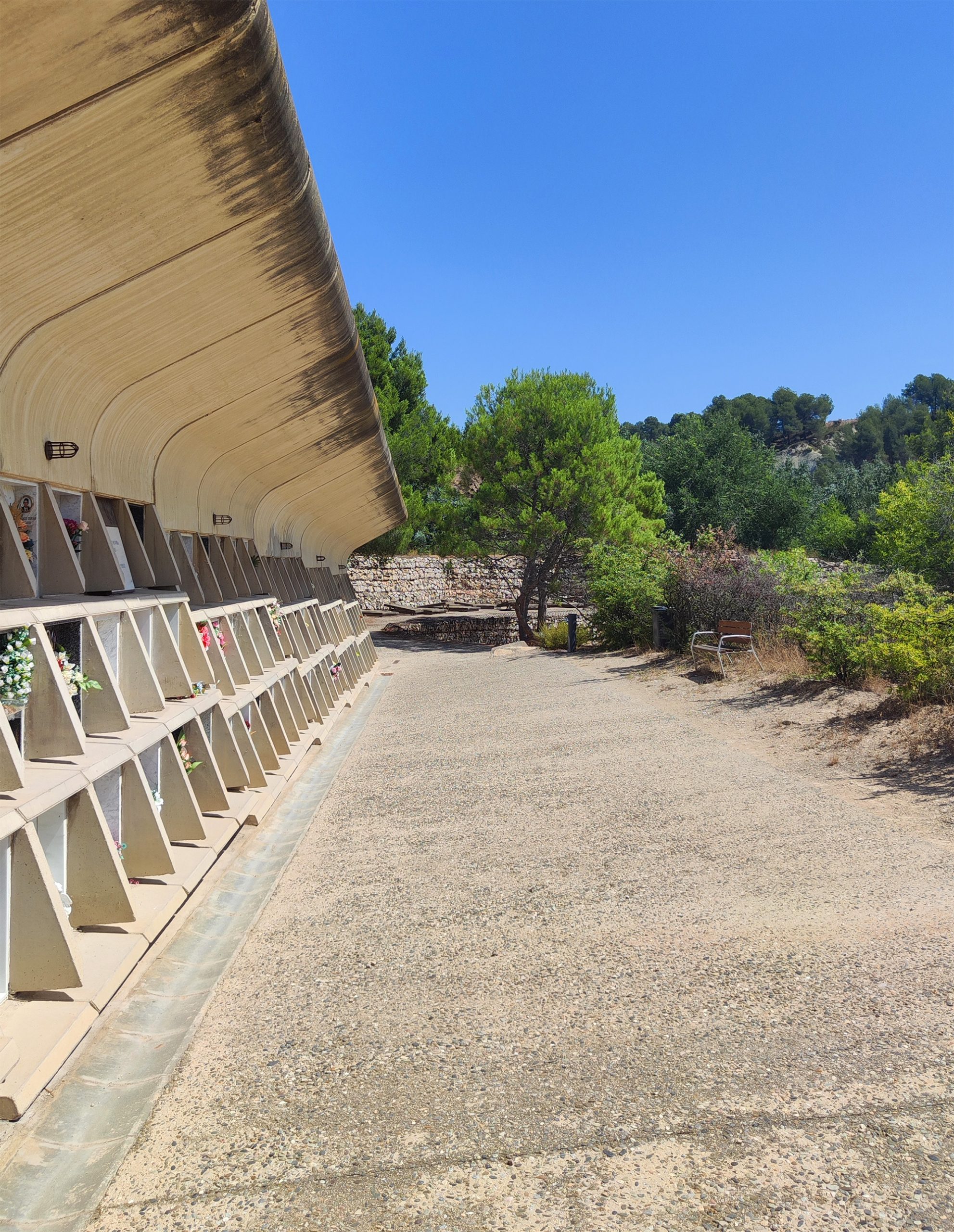
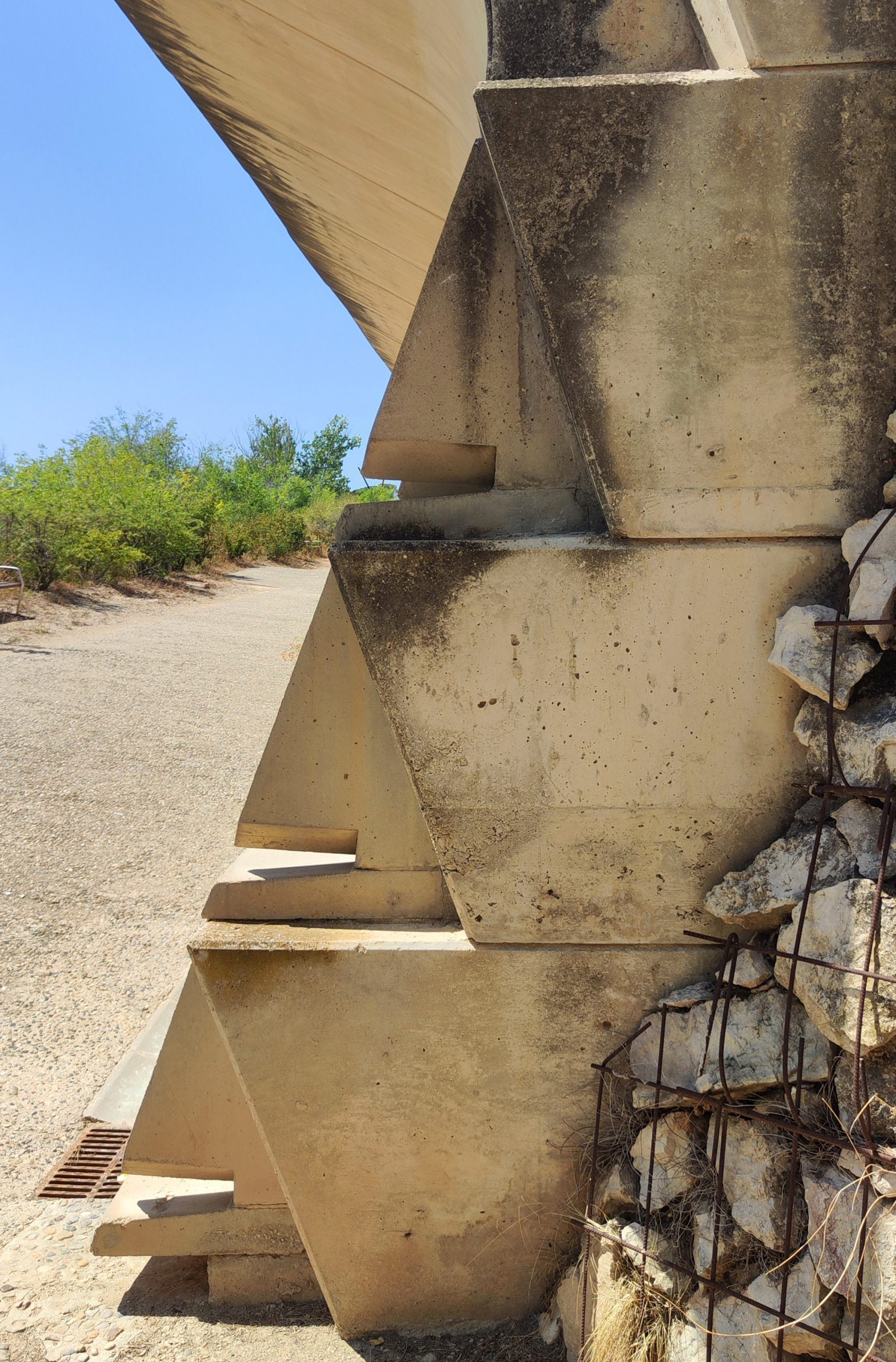
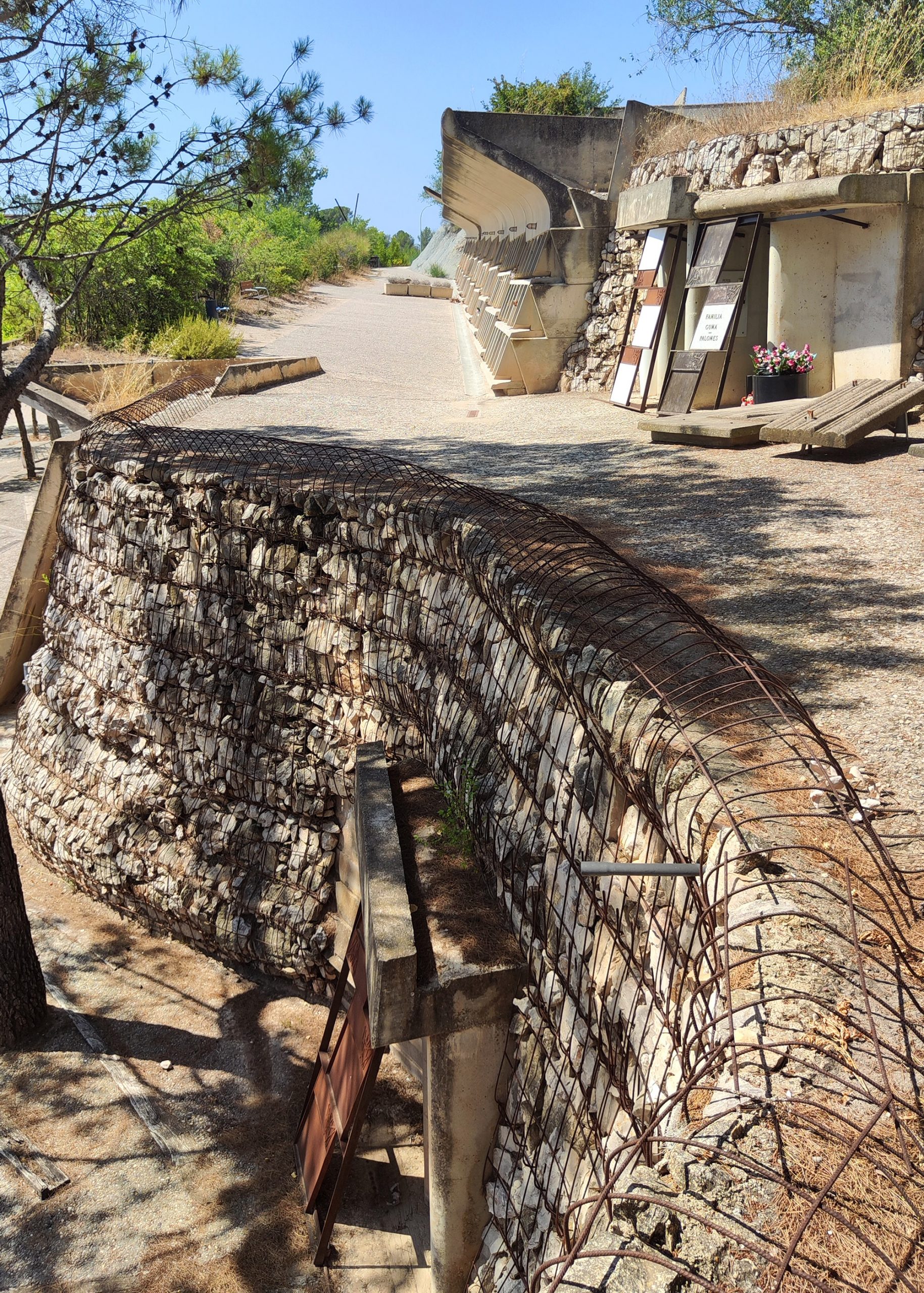
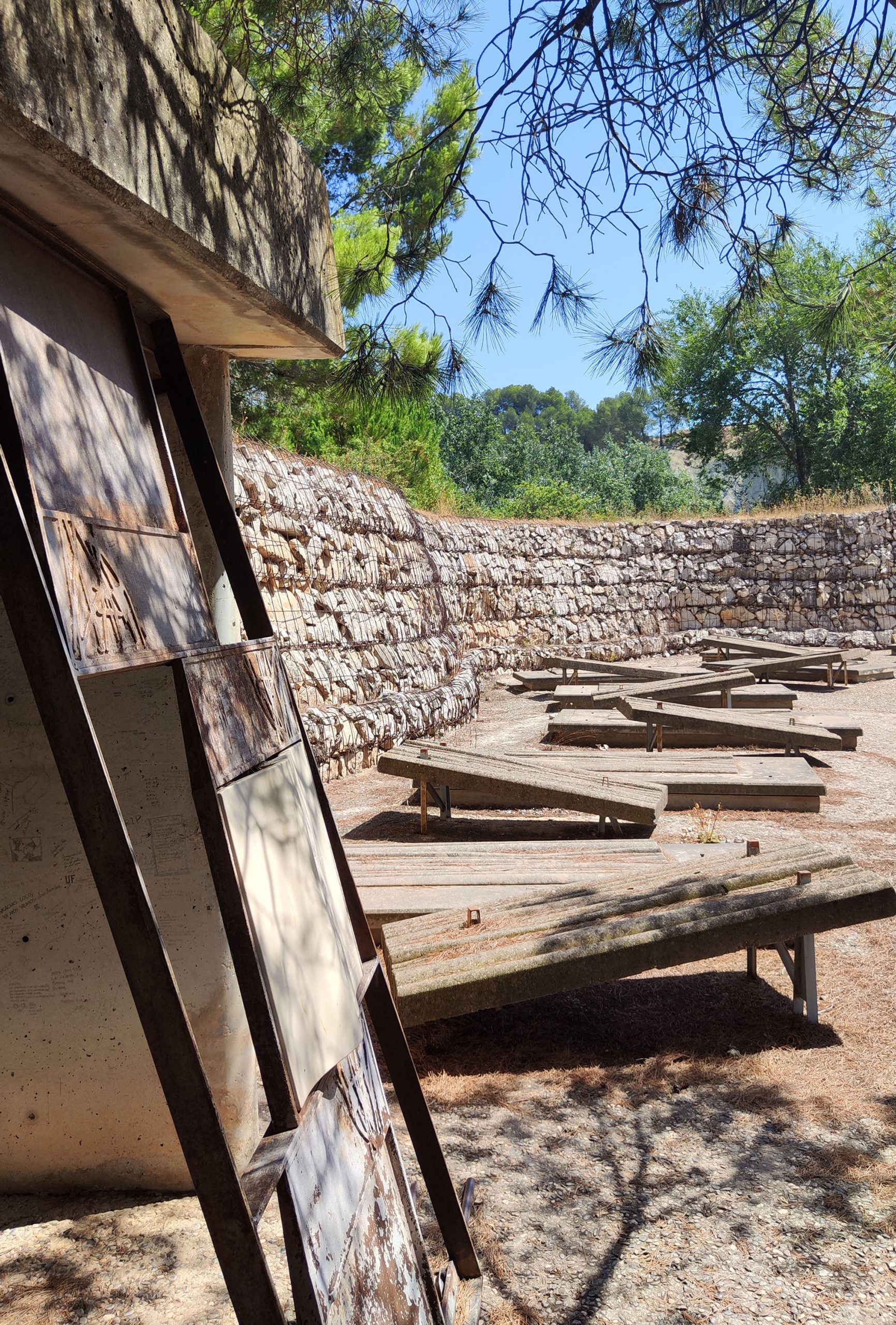
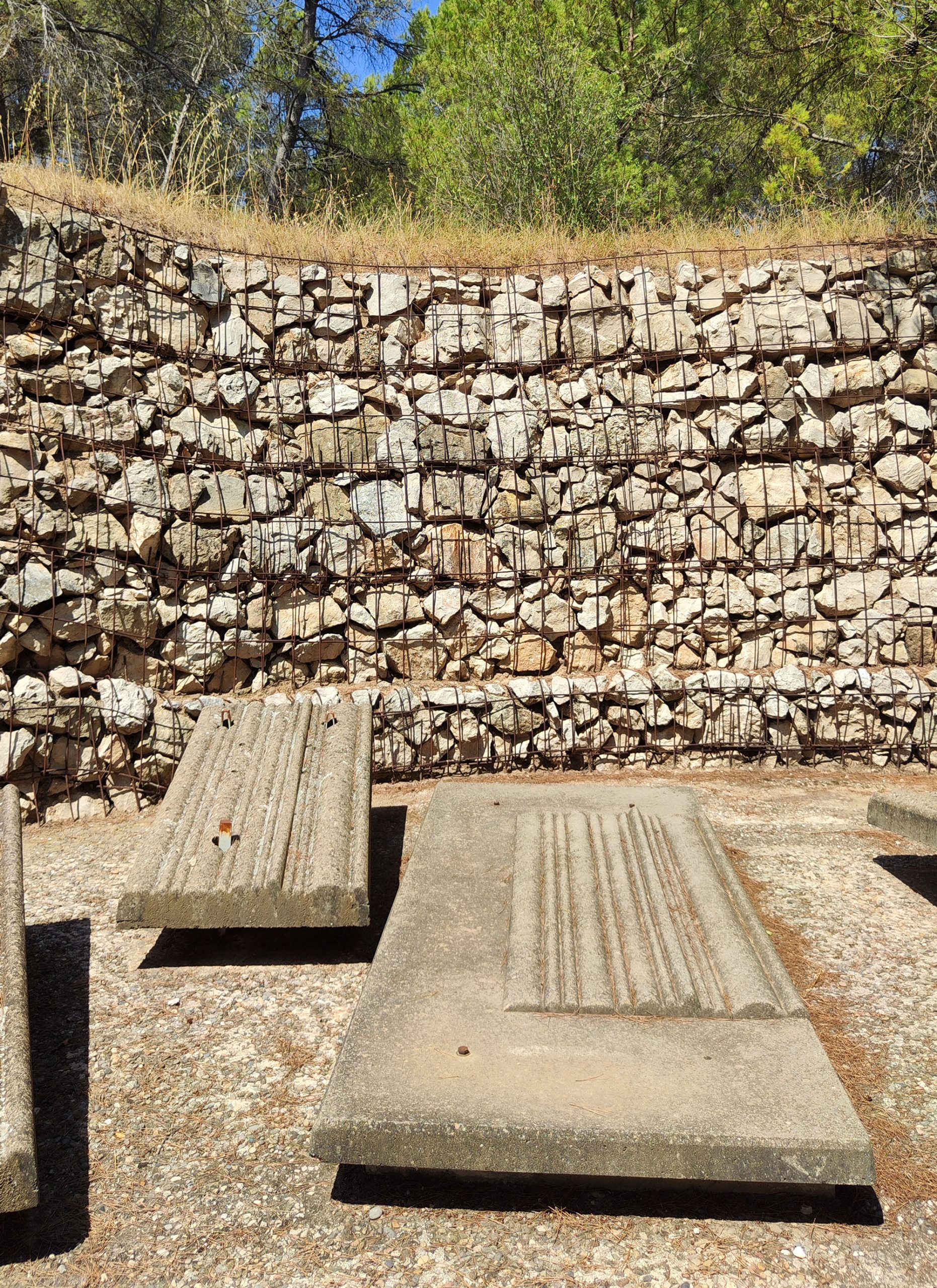
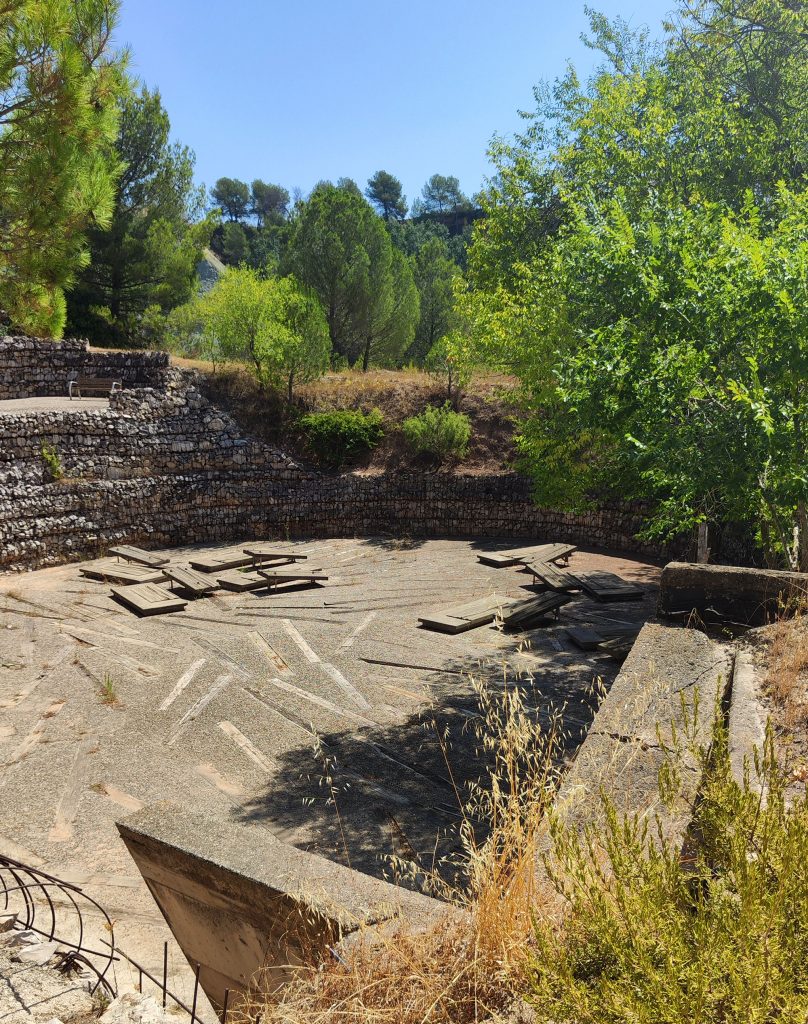
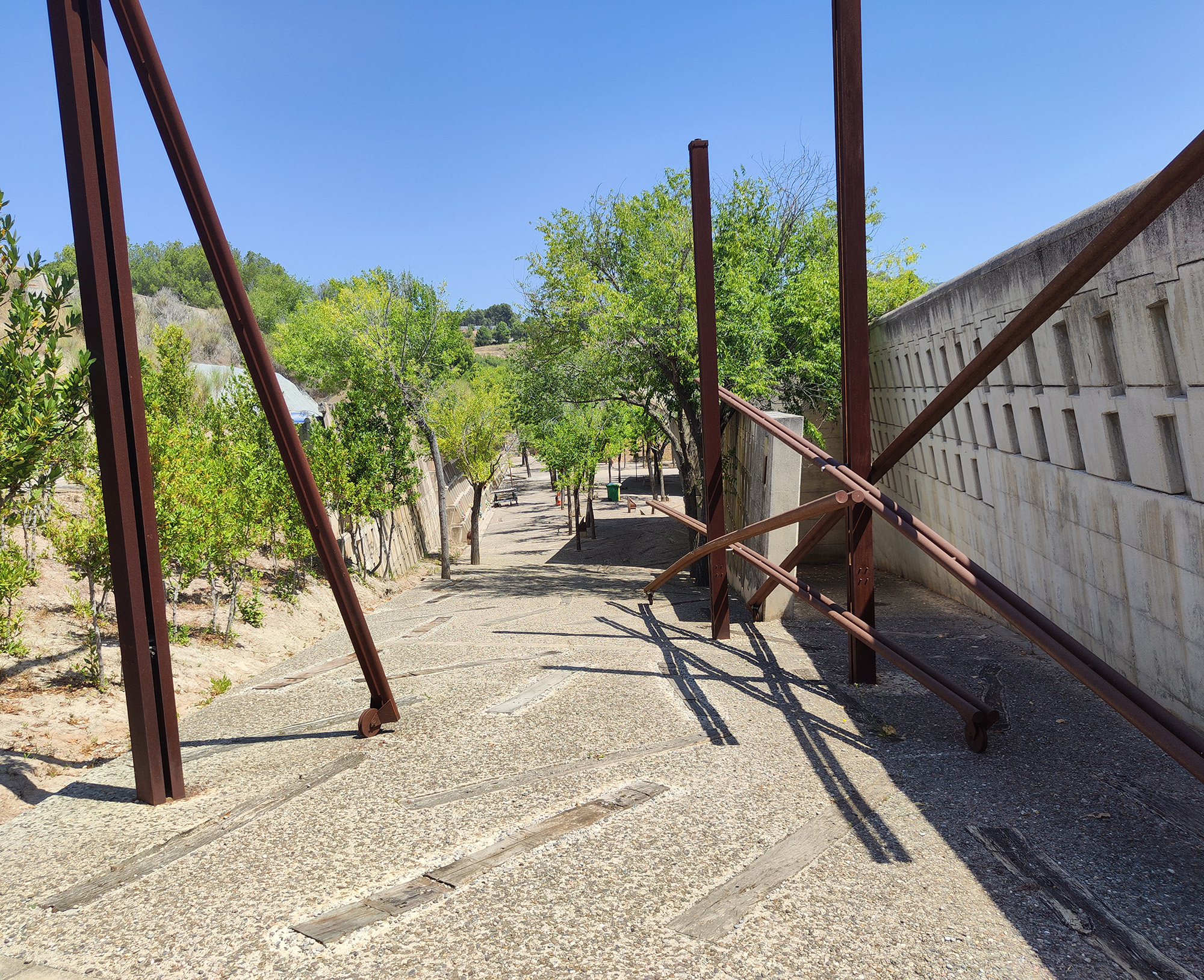
The way in which different states of time are expressed through shapes is perhaps one of the most important insights I gained from the Igualada project. For example, I chose an extreme zigzag geometry for the cemetery’s layout so that its radical and abstract shapes would differentiate it from the layout of a town, which is constructed according to very different rules. This radical geometry was shown to leave visitors with the impression of moving through a timeless space. The incision represents absolute time, while its different details materialise the measurable flow of time: the small almond trees between the cars at the entrance, the laurel bushes along the access ramps, the bare earth in front of the different buildings, the small shrubs and the different types of poplars that seal the incision in the ground with their small, silvery leaves. The slightest breeze makes them move and shine in the sun. Then the ground covered with mass-produced cement, in which old planks have been submerged, reminiscent of driftwood carried by the river, seems to be sliding downhill. Time can be perceived in all these elements as their appearance is altered by the changing position of the sun throughout the day and the year. These things are familiar to us, they give us orientation. By this I mean that we can obtain different forms of nature, those connected with time, and those that are outside of it.
La manera en que diferentes estados de tiempo son expresados mediante formas es quizá uno de los conocimientos más importantes que obtuve del proyecto de Igualada. Por ejemplo, escogí una geometría extrema en zigzag para la planta del cementerio para que sus formas radicales y abstractas la diferenciaran de la planta de un pueblo, que se va construyendo con reglas muy diferentes. Se mostró que esta geometría radical deja al visitante con la impresión de estar moviéndose por un espacio intemporal. La incisión representa el tiempo absoluto, mientras sus diferentes detalles materializan el mesurable flujo del tiempo: los pequeños almendros entre los coches en la entrada, los arbustos de laurel a lo largo de las rampas de acceso, la tierra desnuda frente a los diferentes edificios, los pequeños arbustos y los diferentes tipos de chopos que sellan la incisión del terreno con sus hojas pequeñas y plateadas. La más ligera brisa las hace moverse y brillar al sol. Luego el suelo cubierto con cemento en masa, en el que se han sumergido viejos tablones, recordando la madera flotante arrastrada por el río, parece estar deslizándose cuesta abajo. El tiempo puede percibirse en todos estos elementos al verse su apariencia alterada con los cambios de posición del sol a lo largo del día y del año. Estas cosas nos resultan familiares, nos dan orientación. Con esto quiero decir que podemos obtener diferentes formas de la naturaleza, aquellas conectadas con el tiempo, y aquellas que se encuentran fuera de él.
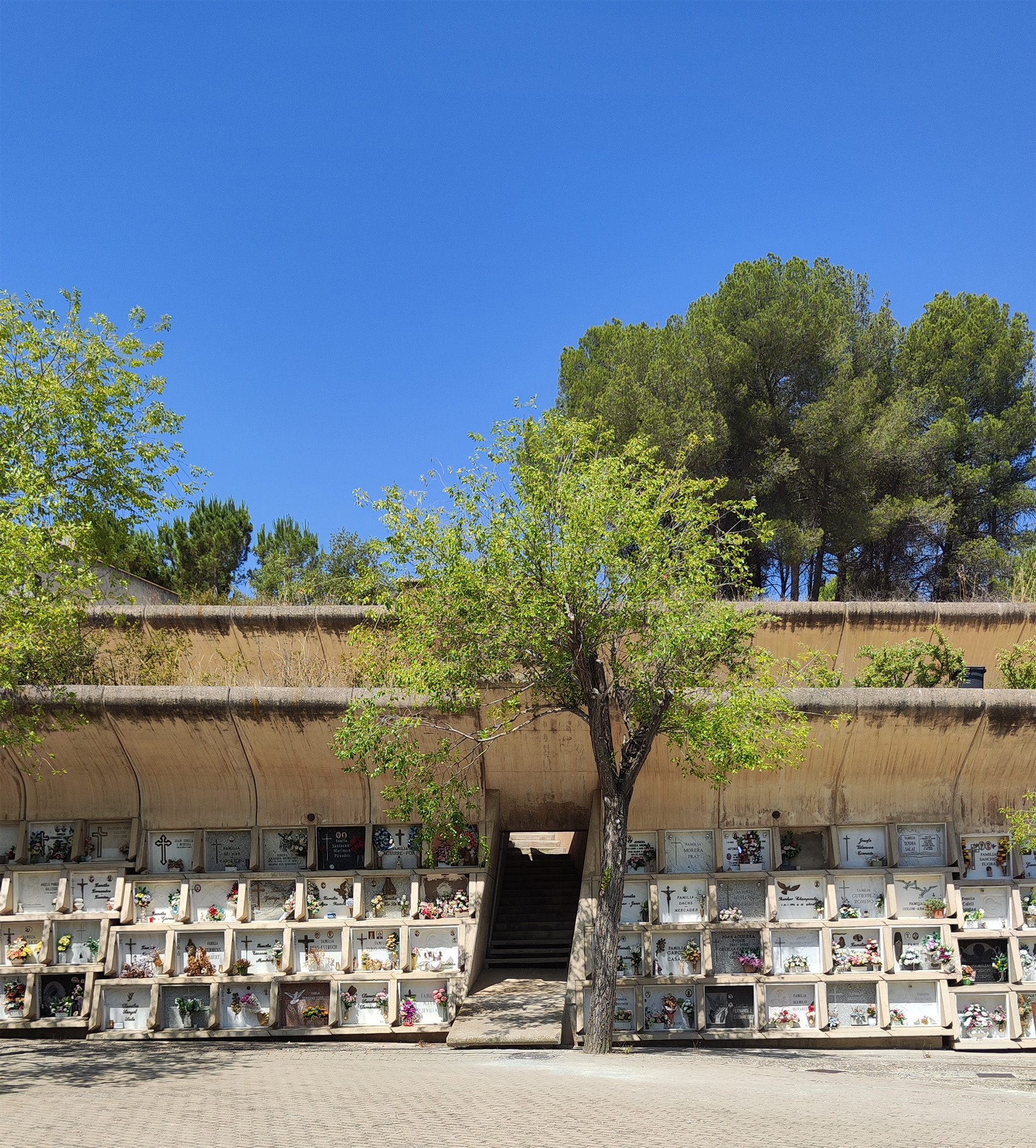
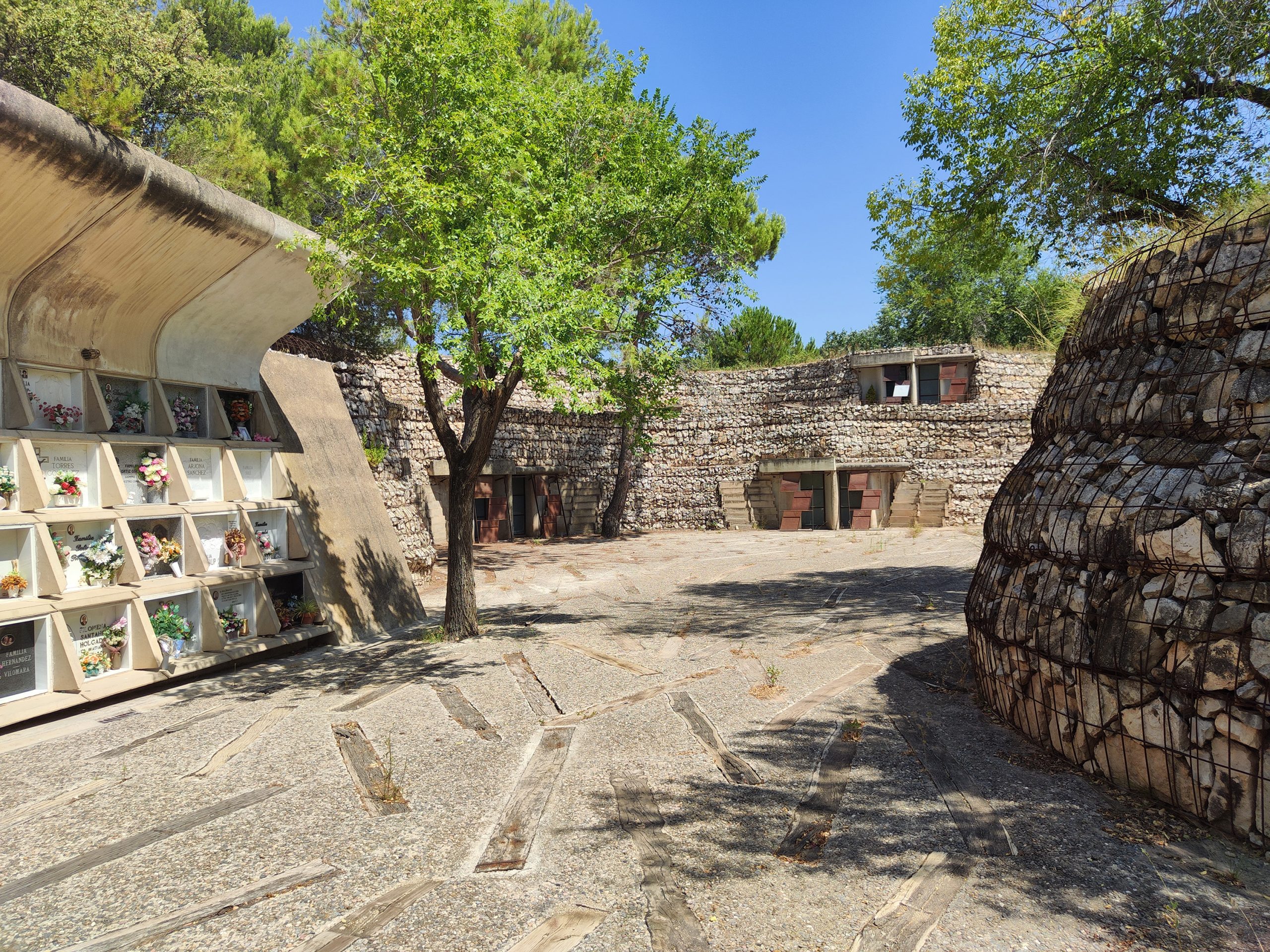
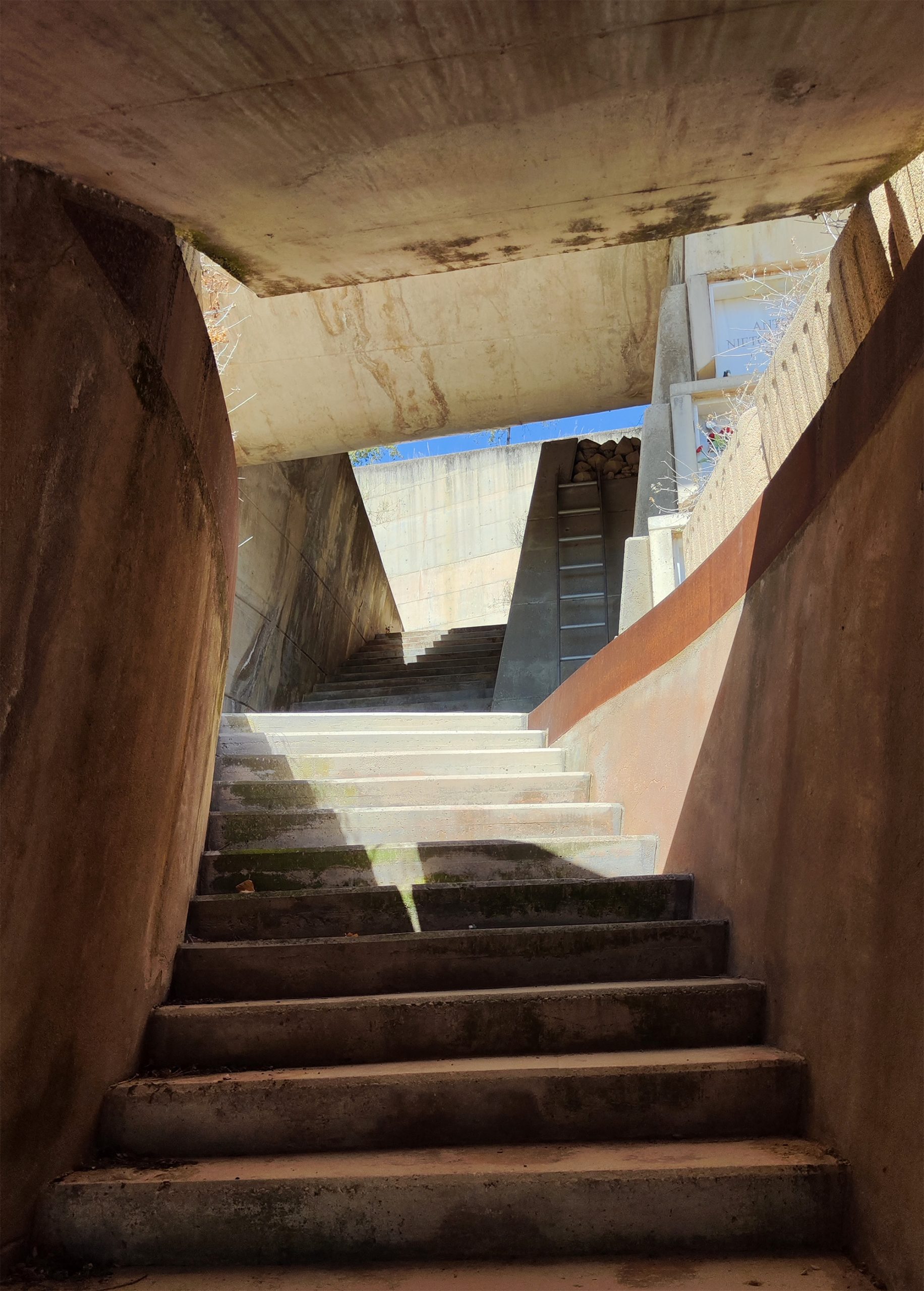
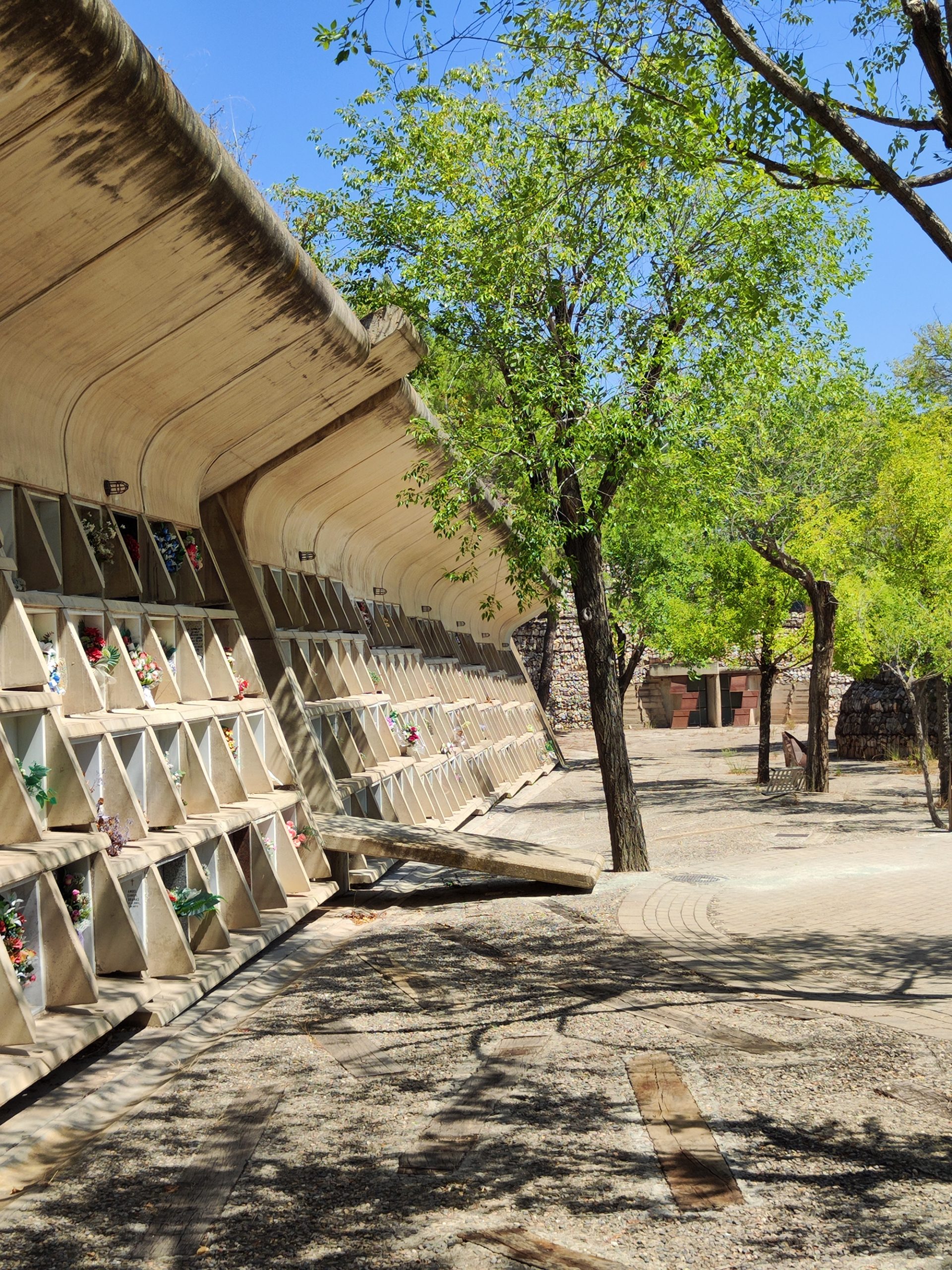
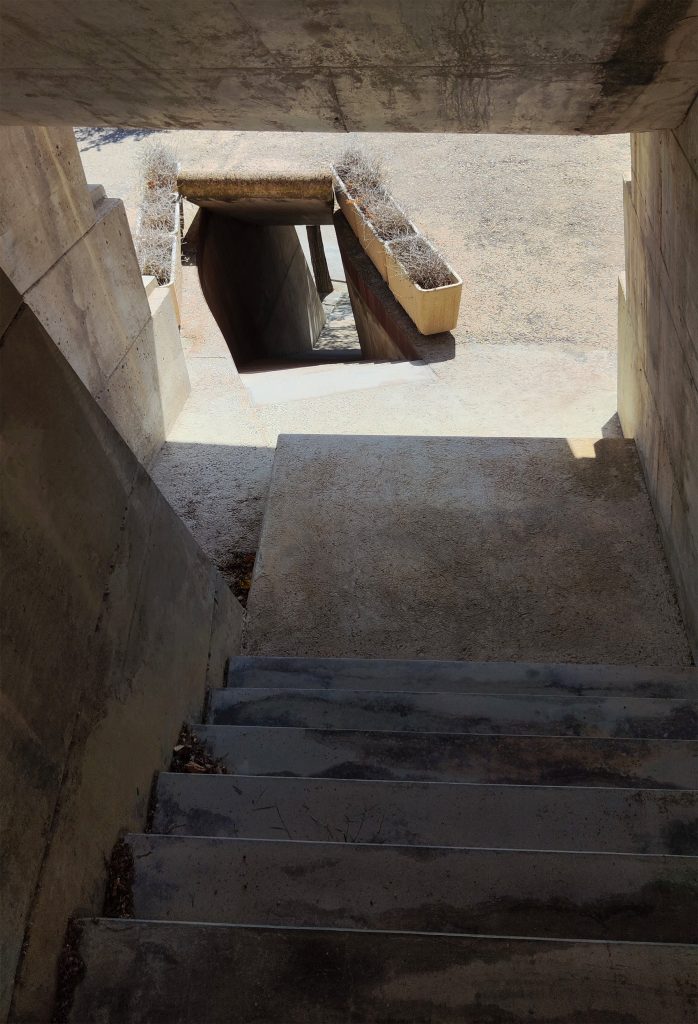
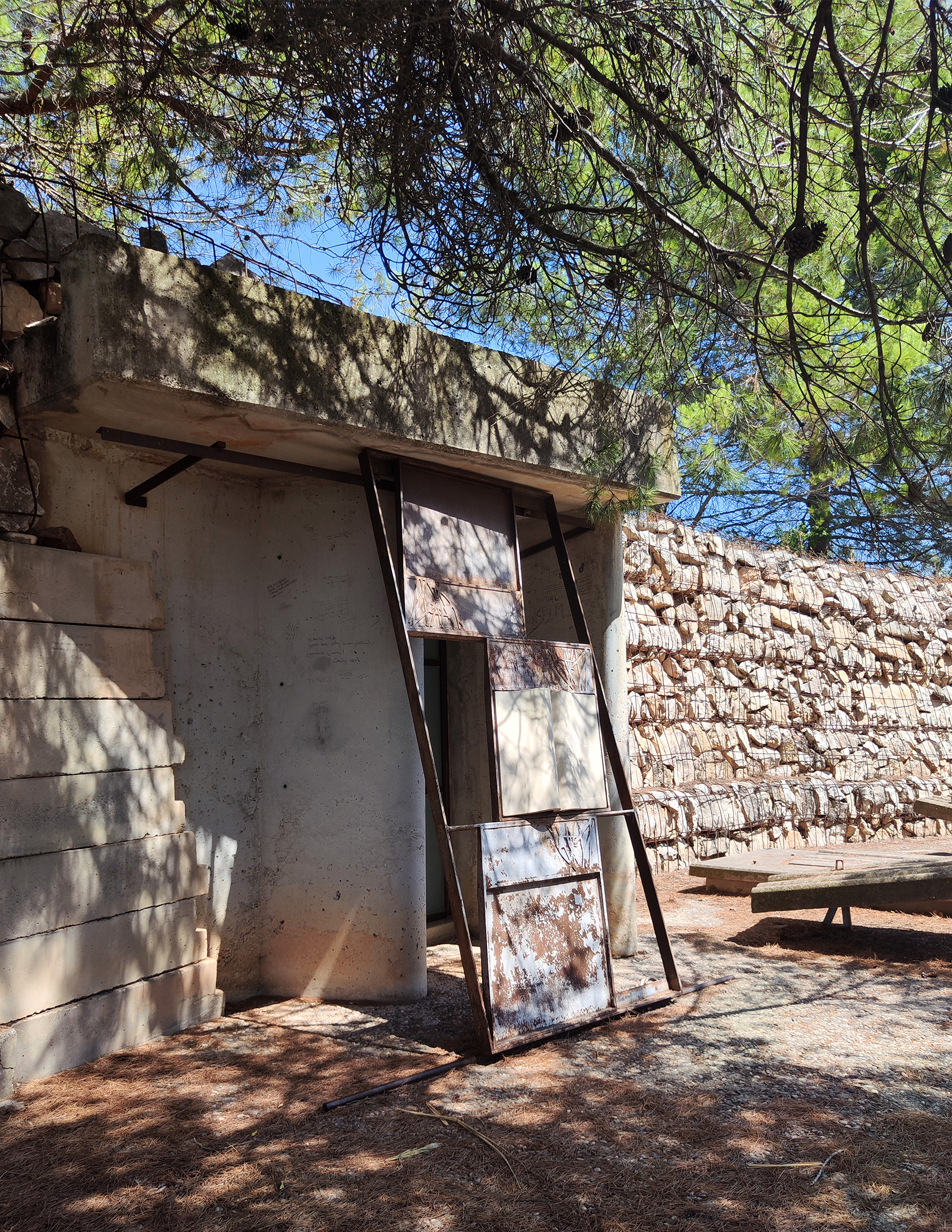
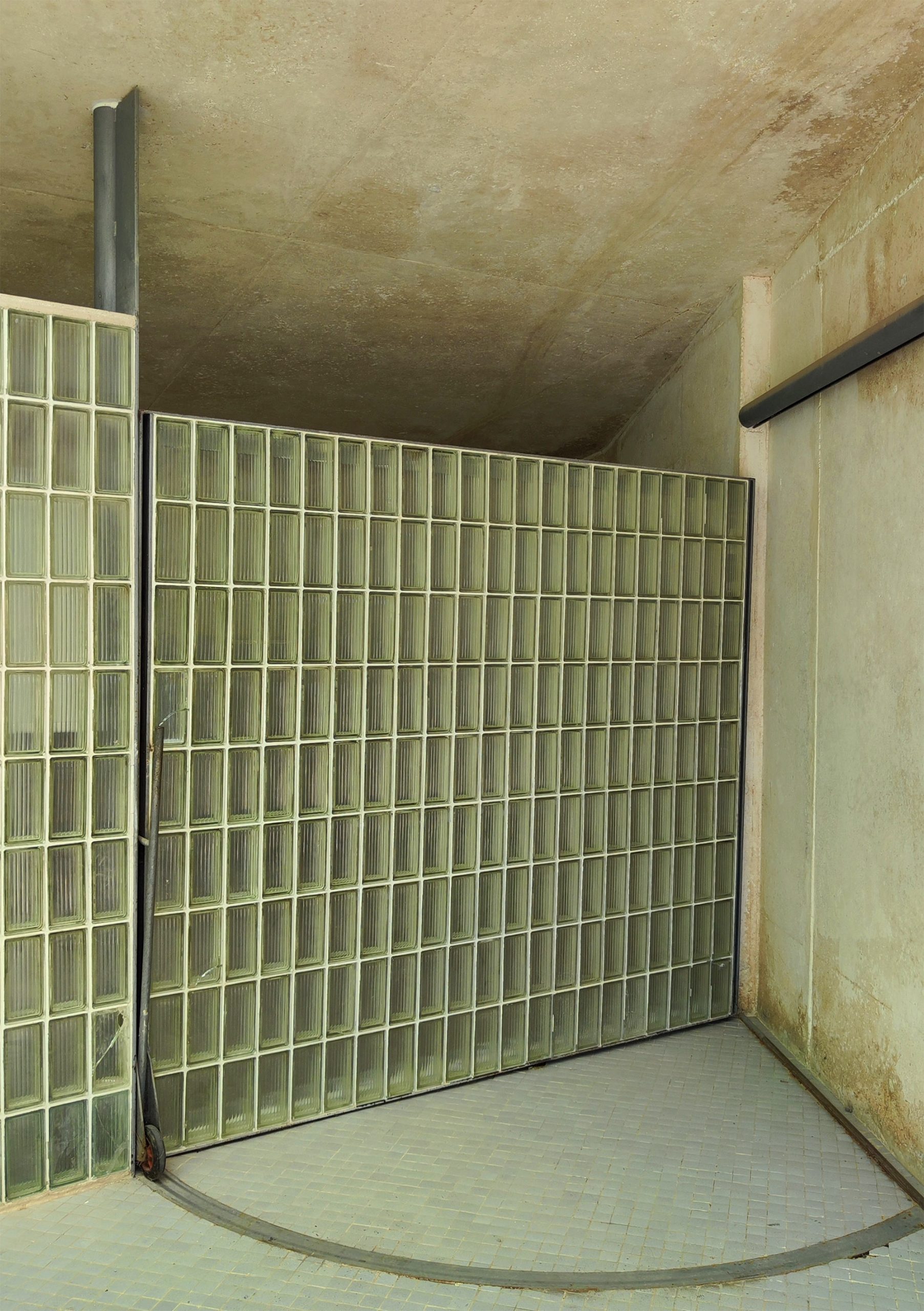
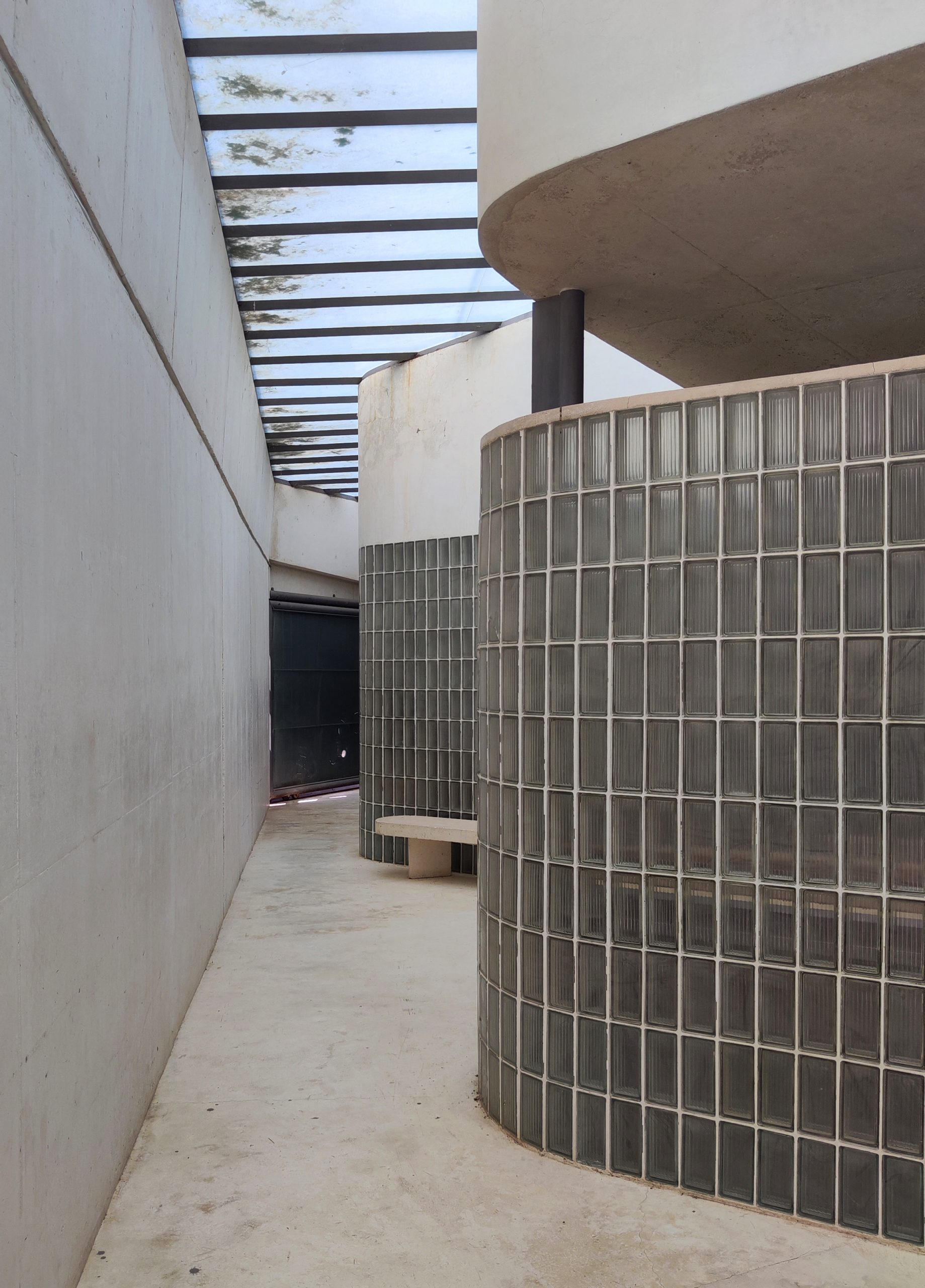
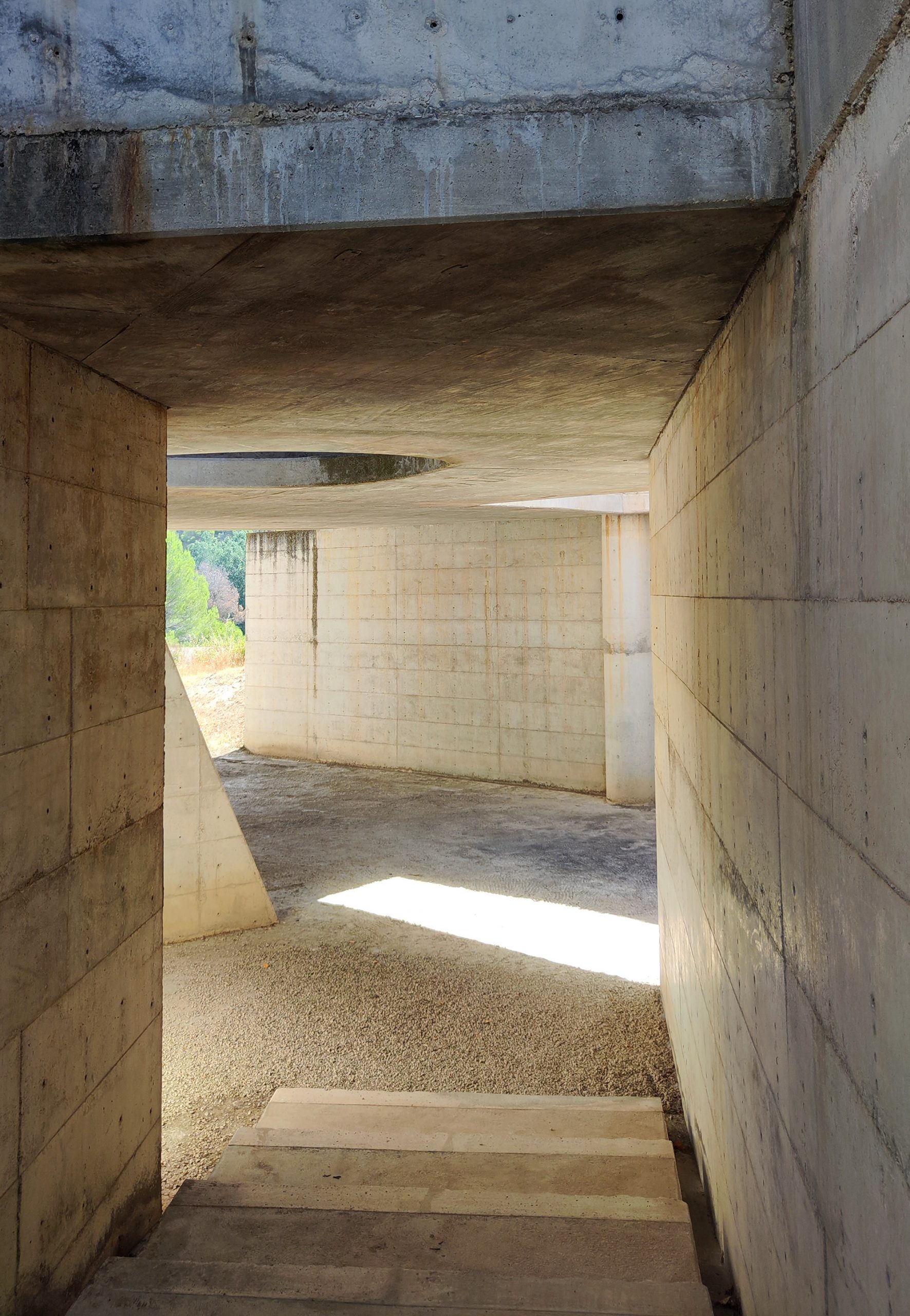
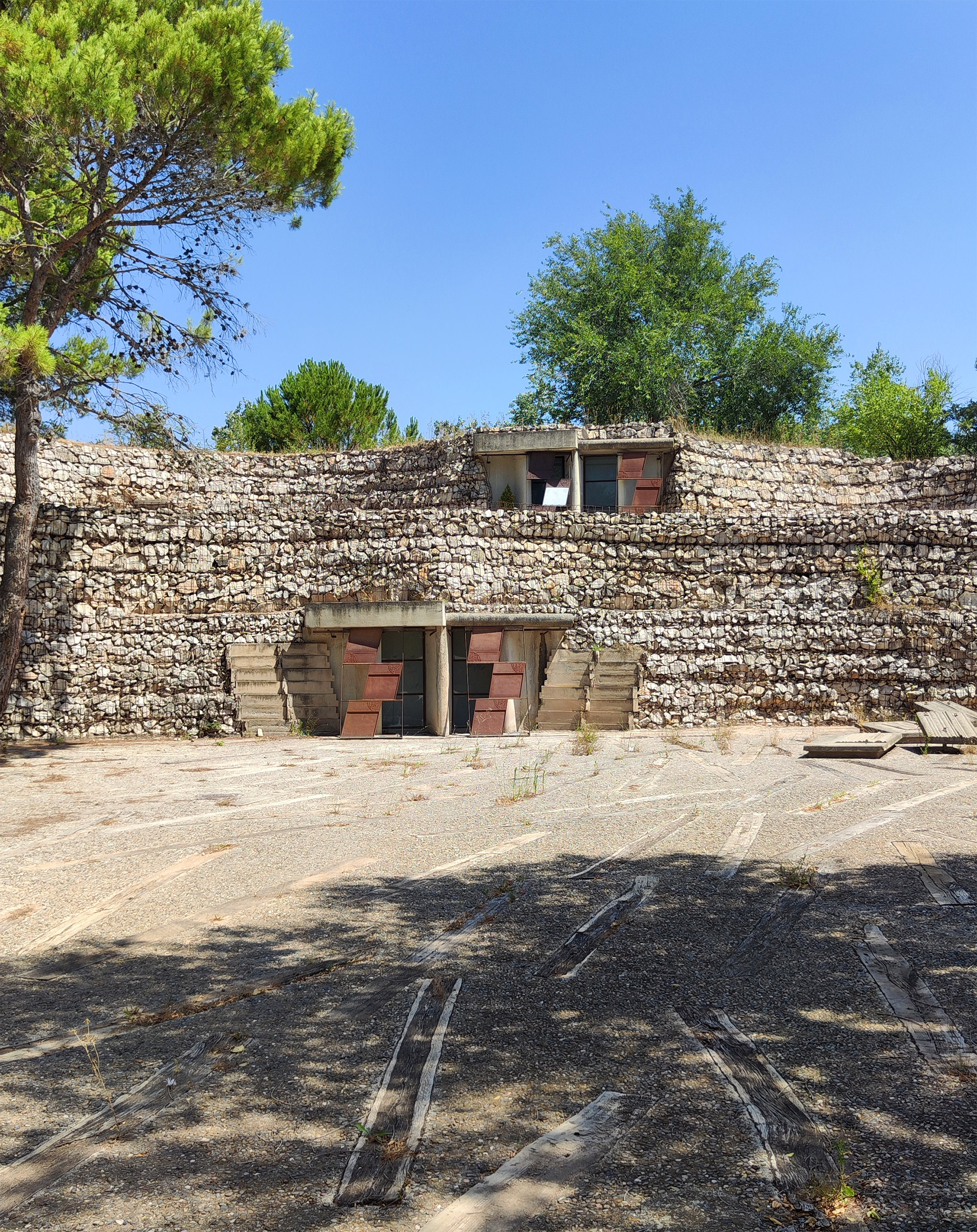
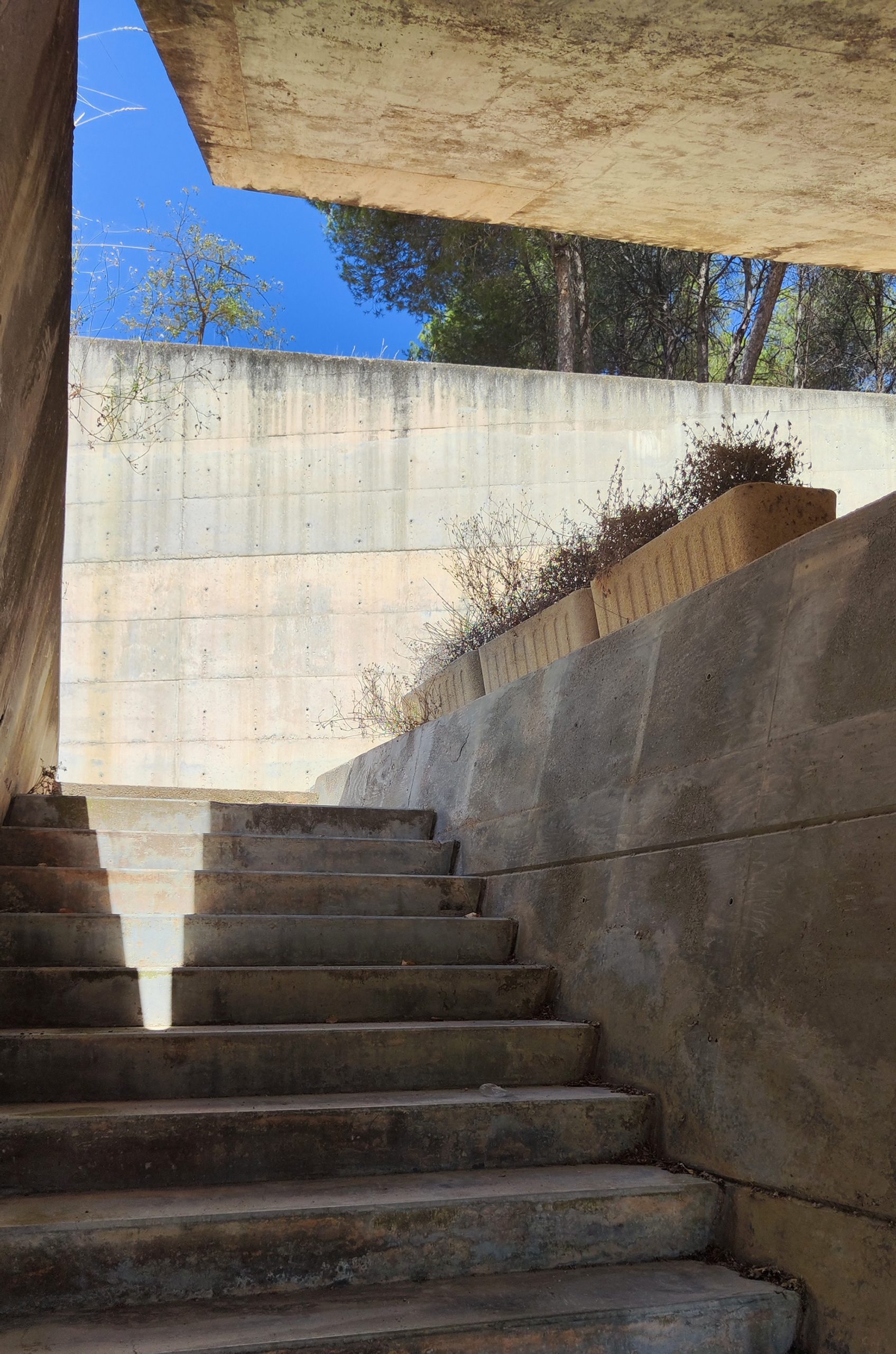
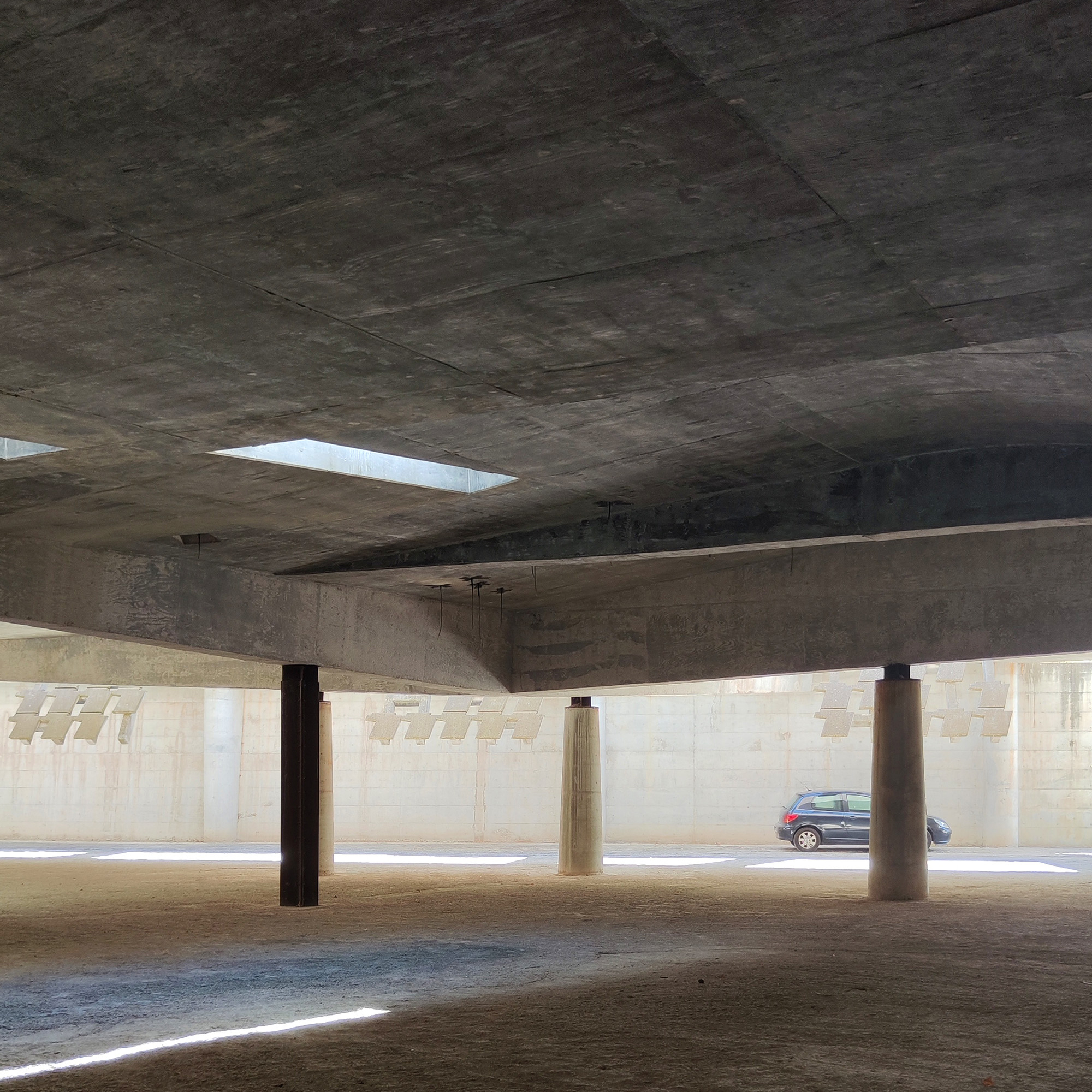
Superimposed on the rhythm of the seasons are ritual ceremonies, which take place according to their own calendar. The chapel, which also serves as a vestibule and entrance, leads to the funeral parlour chambers. A small staircase leads us to the different levels. At this point, the coffin is placed in one of the burial chambers. After the funeral ceremony, the procession moves to a round platform. Steps, stones, and corners along the way give it a labyrinthine character. Each point has its meaning, all with equal importance, without hierarchy.
Superpuestas al ritmo de las estaciones se hallan las ceremonias rituales, que toman lugar según su propio calendario. La capilla, que a la vez sirve de vestíbulo y entrada, lleva a las cámaras de la capilla ardiente. Unas pequeñas escaleras nos conducen a los diferentes niveles. Llegado a este punto, el ataúd se coloca en una de las cámaras de enterramiento. Después de la ceremonia del funeral, la procesión se traslada a una plataforma redonda. Escalones, piedras, esquinas a lo largo del camino le otorgan un carácter laberíntico. Cada punto tiene su significado, todos con igual importancia, sin jerarquía.
The circulation of air in the incision, the variety of details, the abstract forms convey the idea of being in an interior space. I often imagine that I am a fish in an aquarium and that I am able to swim around. Also in my latest design, in the Park in Mollet, near Barcelona, my thoughts wander, transferring images to my imagination, while my mind confuses an administrative building with a sketch made by David Hockney during his travels in China. Suddenly, one of those Chinese dancing dragons emerges from the fireworks and seems to hijack the drawing. As if my project were looking for a new location.
La circulación del aire en la incisión, la variedad de detalles, las formas abstractas transmiten la idea de estar en un recinto interior. A menudo me imagino que soy un pez en un acuario y que soy capaz de moverme a nado. También en mi último diseño, en el Parque en Mollet, cerca de Barcelona, mis pensamientos divagan, trasladando imágenes a mi fantasía, mientras mi mente confunde un edificio administrativo con un esbozo hecho por David Hockney durante sus viajes a China. De pronto uno de esos dragones bailarines chinos surge de entre los fuegos artificiales y parece secuestrar el dibujo. Como si mi proyecto buscara un nuevo emplazamiento.
Enric Miralles. For What Time is This Place?
Published originally on TOPOS 8. European Lanscape Magazine, 1994